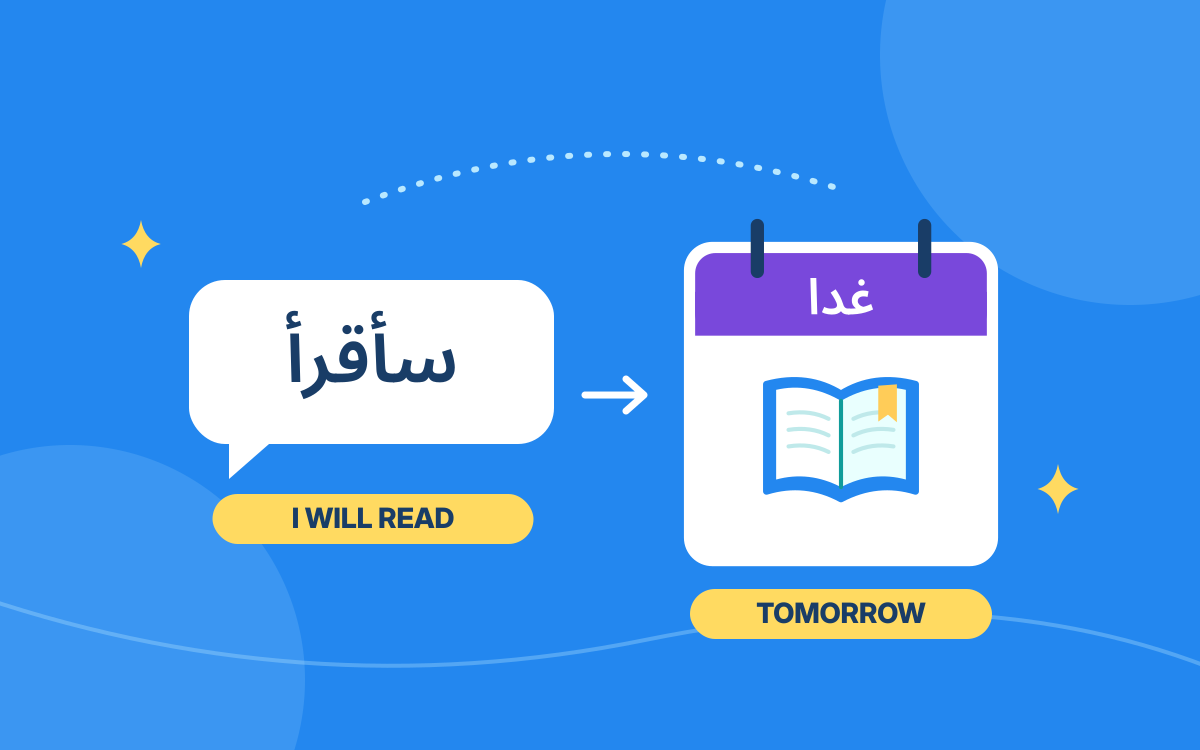
Saaqrau means “I will read.” Attach sa to the present tense I form, aqrau, to make the future explicit. Add ghadan, tomorrow, when you want to name the day. Start with four everyday actions in Modern Standard Arabic, then meet sawfa as another way to express the future.
01Keep sa attached to the verb
aqrau
I read
saaqrau
I will read
The prefix sa joins directly to aqrau. Together they form one written word. Aqrau already means I read, so you do not need an extra ana to identify the speaker.
02Give the action a day
سَأَقْرَأُ كِتَابًا غَدًا
saaqrau kitab ghadan
I will read a book tomorrow.
Ghadan means tomorrow. In this sentence it comes last, after the verb and the book. Sa marks the future; ghadan makes the time more specific.
Keep the book as the object of reading. You are now combining an action, an object and a time. Other word orders are possible, but we will practise this clear sequence first.
03Choose writing or studying
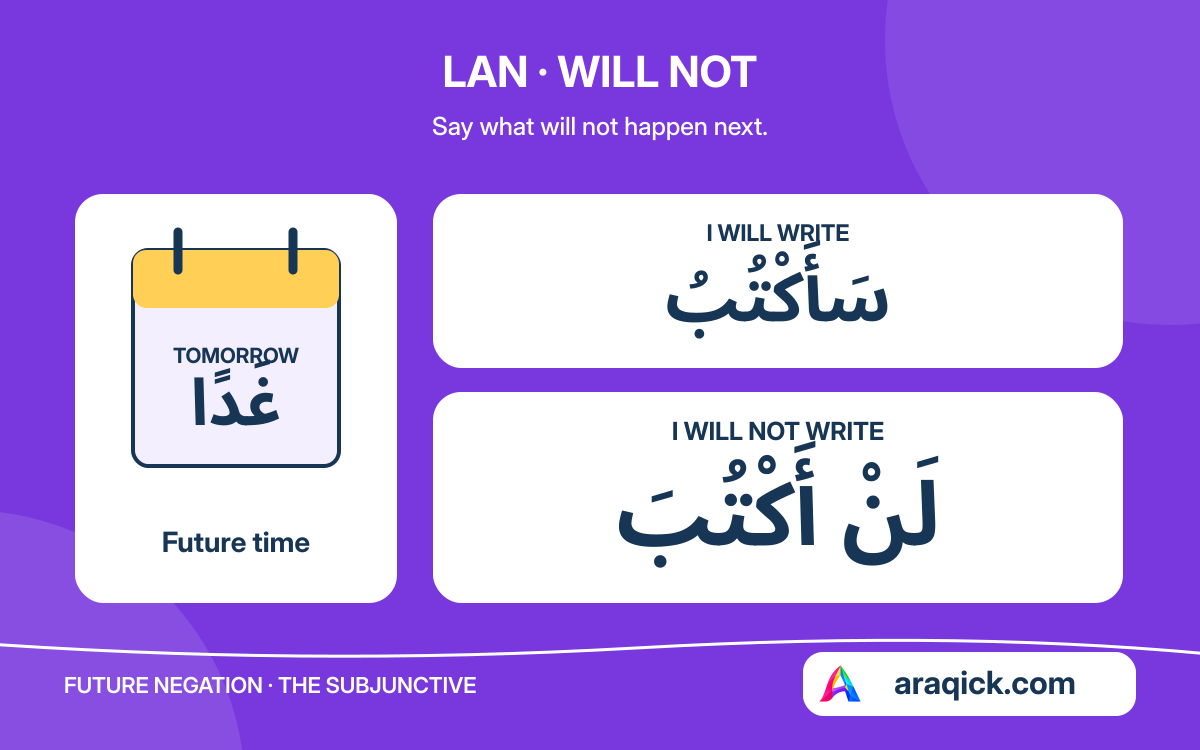
saaktubu risala ghadan
I will write a letter tomorrow.
saadrusu alarabiyya ghadan
I will study Arabic tomorrow.
Aktubu is I write; adrusu is I study. Attach sa to each whole present tense form: saaktubu or saadrusu. Do not remove the initial letter that identifies I.
Risala names a letter, and alarabiyya names the Arabic language. Change the object along with the action so your sentence expresses what you intend to do.
04Add a destination
سَأَذْهَبُ إِلَى الْمَدْرَسَةِ غَدًا
saadhhabu ila almadrasa ghadan
I will go to school tomorrow.
Adhhabu means I go. Saadhhabu means I will go. Ila almadrasa supplies the destination, to school, while ghadan still names the time.
The opening verb is one word even though English uses three: I will go. Keep ila with the destination after it when practising this example. Say the whole destination phrase before adding tomorrow at the end.
05Recognise a second future pattern
سَوْفَ أَقْرَأُ غَدًا
sawfa aqrau ghadan
I will read tomorrow.
Sawfa is a separate word before the present tense verb. Sa attaches to that verb. Compare sawfa aqrau with saaqrau: both express I will read.
You do not need to learn a rule that assigns tomorrow to only one of them. Both can be used with ghadan. Practise the attached sa pattern first, and recognise sawfa when you meet it.
These sentences use I for any speaker. The plain reading aids simplify sounds and omit noun case endings; use them alongside the Arabic spelling.
What to remember
- Attach sa to the whole present tense I form to express the future.
- Use ghadan for tomorrow; practise it at the end of these sentences.
- Sawfa is a separate future word before the verb and can also be used with tomorrow.
Your reference shelf
Open a guide whenever you need it.
Four sentences about tomorrowOpen the complete sa examples and a sawfa comparison
On small screens, scroll the table sideways to see every column.
| Meaning | Arabic | Plain reading aid |
|---|---|---|
| I will read a book tomorrow. | سَأَقْرَأُ كِتَابًا غَدًا | saaqrau kitab ghadan |
| I will write a letter tomorrow. | سَأَكْتُبُ رِسَالَةً غَدًا | saaktubu risala ghadan |
| I will study Arabic tomorrow. | سَأَدْرُسُ الْعَرَبِيَّةَ غَدًا | saadrusu alarabiyya ghadan |
| I will go to school tomorrow. | سَأَذْهَبُ إِلَى الْمَدْرَسَةِ غَدًا | saadhhabu ila almadrasa ghadan |
For comparison, سَأَقْرَأُ غَدًا saaqrau ghadan and سَوْفَ أَقْرَأُ غَدًا sawfa aqrau ghadan both mean I will read tomorrow. In these affirmative patterns, the present tense verb keeps its final vowel after sa or sawfa.
The reading aids simplify Arabic sounds and omit noun case endings. They are memory aids beside the Arabic, not exact phonetic transcriptions. This lesson stays with affirmative I statements; other speakers and negative future forms need their own patterns.
Sources & further learning
References for the language explanations and learning guidance.