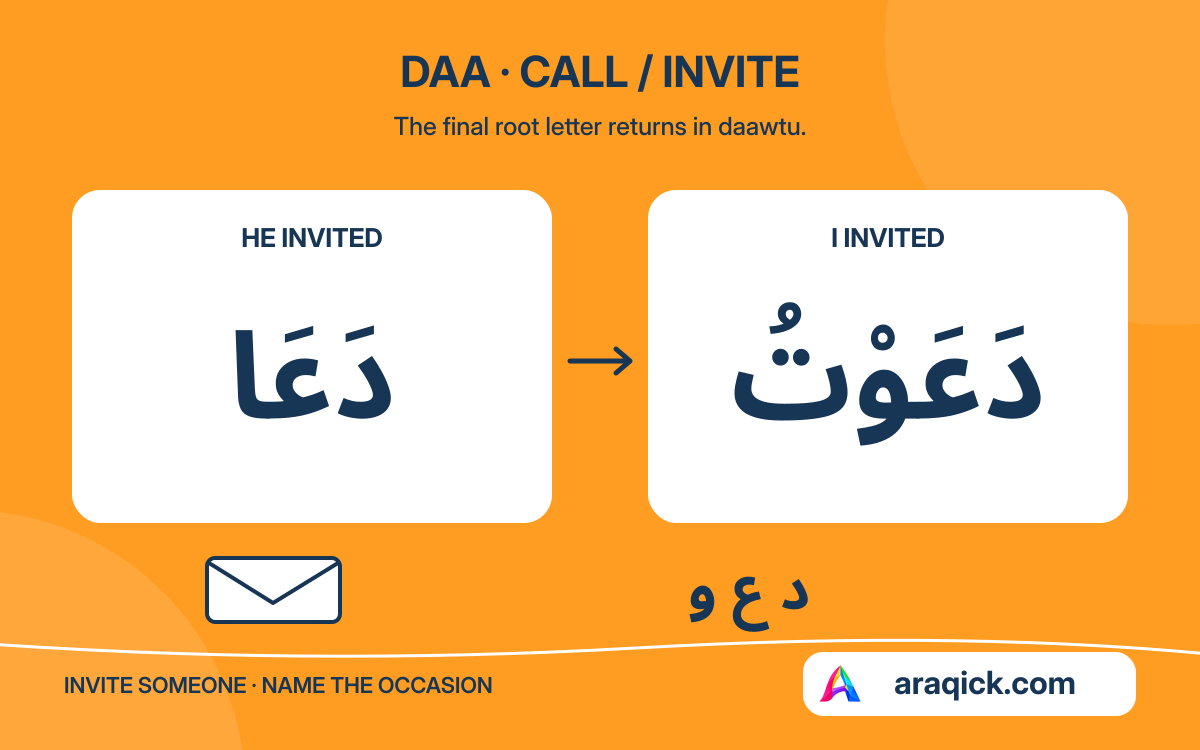
Daa can mean he called or he invited; its exact meaning depends on the surrounding words. This guide uses invitations to practise the weak-final root د ع و. Watch the final waw: it returns in some past forms, stays in the ordinary present, and disappears in the singular jussive and command.
01Add the invited person and occasion
دَعَا جَارًا إِلَى الْغَدَاءِ
daa jaran ila alghadai
He invited a neighbour to lunch.
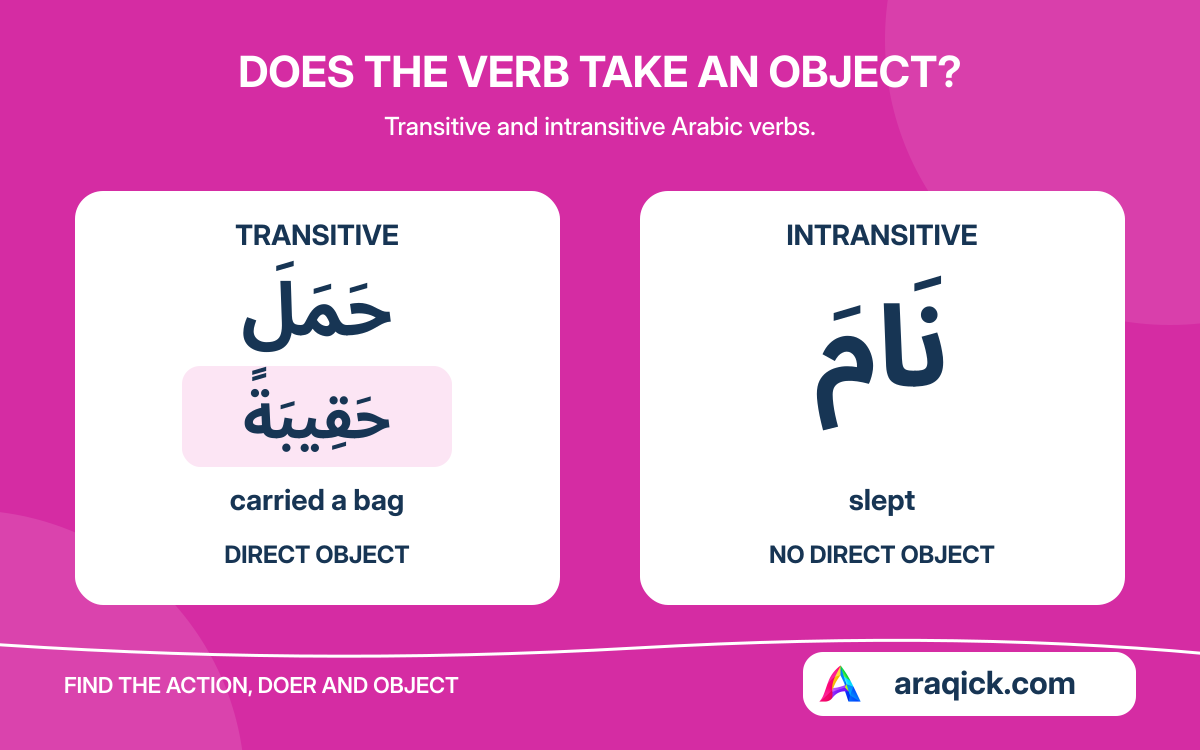
Jaran is the person invited, so it is a direct object. Ila alghadai identifies the occasion: to lunch. The verb is transitive in this invitation pattern.
Daa also appears with meanings such as call upon or supplicate. Do not translate every use mechanically as invite; read its object and any following preposition.
02Recover waw before a past subject ending
دَعَوْتُ جَارًا — دَعَوْنَا صَدِيقًا
daawtu jaran — daawna sadiqan
I invited a neighbour — We invited a friend
The past I and we forms show the original waw before tu and na. The dictionary form daa ends with alif, but that spelling cannot simply be kept before every suffix.
For she invited, use دَعَتْ (daat). For a male or mixed group, they invited is دَعَوْا (daaw). Notice how different endings change the whole final part of the verb.
03Read the final waw in yadu
أَدْعُو جَارًا — نَدْعُو صَدِيقًا
adu jaran — nadu sadiqan
I invite a neighbour — We invite a friend
The ordinary singular and we forms end in long u, written waw. Its indicative dammah is estimated: you do not add another visible dammah to the final waw.
The root waw takes no extra alif in أَدْعُو. Compare the male or mixed plural يَدْعُونَ, they invite, where the ending also carries information about the group.
04Compare the endings after lan and lam
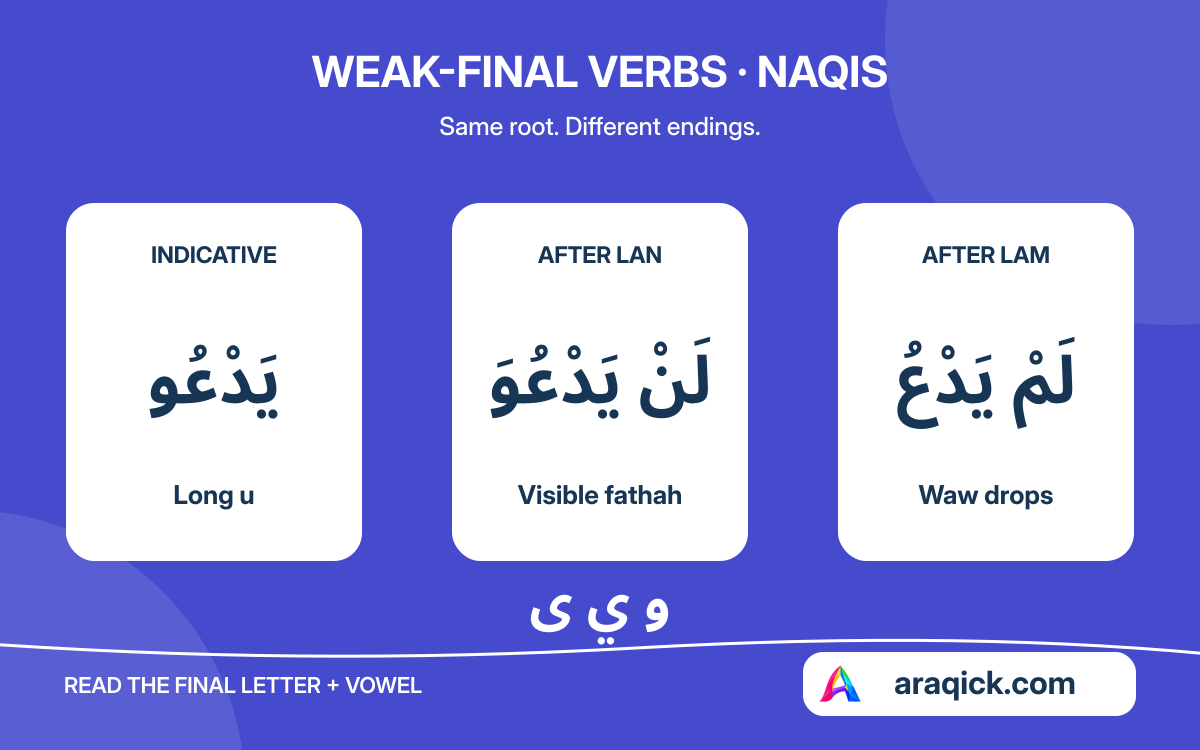
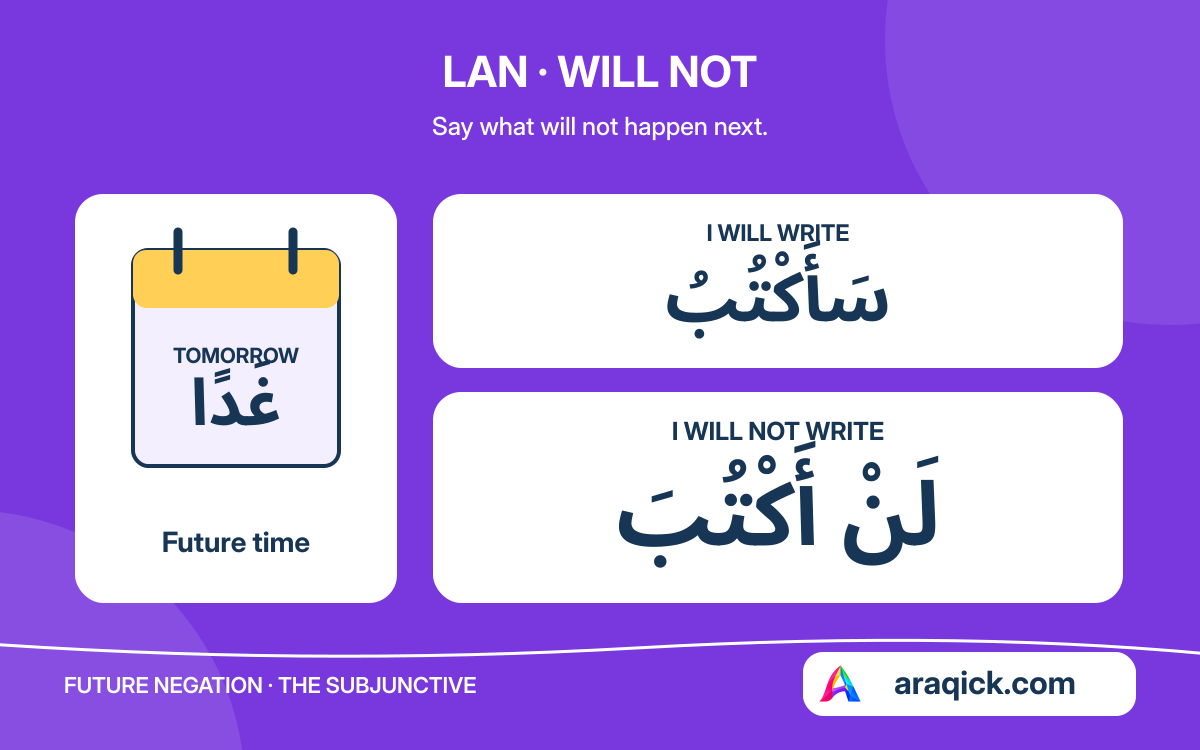
لَنْ أَدْعُوَ جَارًا — لَمْ أَدْعُ جَارًا
lan aduwa jaran — lam adu jaran
I will not invite a neighbour — I did not invite a neighbour
After lan, the subjunctive retains waw and puts a visible fathah on it. After lam, the singular jussive removes that waw but keeps the preceding short u.
Do not replace the remaining short vowel with sukun. The difference between أَدْعُو and أَدْعُ is visible in Arabic even though the simplified reading aid uses adu for both.
05Invite someone with the right command
اُدْعُ جَارًا
udu jaran
Invite a neighbour. — to one man
The command udu has an initial helping alif and no final root waw. To one woman use اُدْعِي (udi); to a male or mixed group use اُدْعُوا (udu). The latter has a plural waw and silent alif.
The female-group command is اُدْعُونَ. Its nun identifies the listeners and stays. Review weak-final verbs and direct objects. The reference tables and Arabic letters are essential where simple readings hide vowel length.
What to remember
- Daa uses a direct object for the invited person and can add ila for the occasion.
- Daawtu reveals the final root waw; yadu retains it in the indicative.
- The singular jussive and command drop the weak letter, while other person forms have their own endings.
Your reference shelf
Open a guide whenever you need it.
Invite: past and present formsPast and ordinary indicative present; use the lesson for other moods
| Person | Past | Present |
|---|---|---|
| He | دَعَا | يَدْعُو |
| They: two men | دَعَوَا | يَدْعُوَانِ |
| They: male or mixed group | دَعَوْا | يَدْعُونَ |
| She | دَعَتْ | تَدْعُو |
| They: two women | دَعَتَا | تَدْعُوَانِ |
| They: female group | دَعَوْنَ | يَدْعُونَ |
| You: one man | دَعَوْتَ | تَدْعُو |
| You: two people | دَعَوْتُمَا | تَدْعُوَانِ |
| You: male or mixed group | دَعَوْتُمْ | تَدْعُونَ |
| You: one woman | دَعَوْتِ | تَدْعِينَ |
| You: female group | دَعَوْتُنَّ | تَدْعُونَ |
| I | دَعَوْتُ | أَدْعُو |
| We | دَعَوْنَا | نَدْعُو |
The dual you form serves two listeners of either gender. Shared spellings depend on context. The present column is indicative; do not use it unchanged after every mood particle.
Commands by listenerCompare the whole form, including the weak letter or doubled consonant
| Listener | Command |
|---|---|
| One man | اُدْعُ |
| One woman | اُدْعِي |
| Two people | اُدْعُوَا |
| Male or mixed group | اُدْعُوا |
| Female group | اُدْعُونَ |
The two-listener command contains a pronounced dual alif after waw; the male-plural command has a silent distinguishing alif. Male and female group present forms can share the spelling يَدْعُونَ, but after lam the male group becomes لَمْ يَدْعُوا while the female group keeps لَمْ يَدْعُونَ. The two nuns have different grammatical jobs.
Sources & further learning
References for the language explanations and learning guidance.