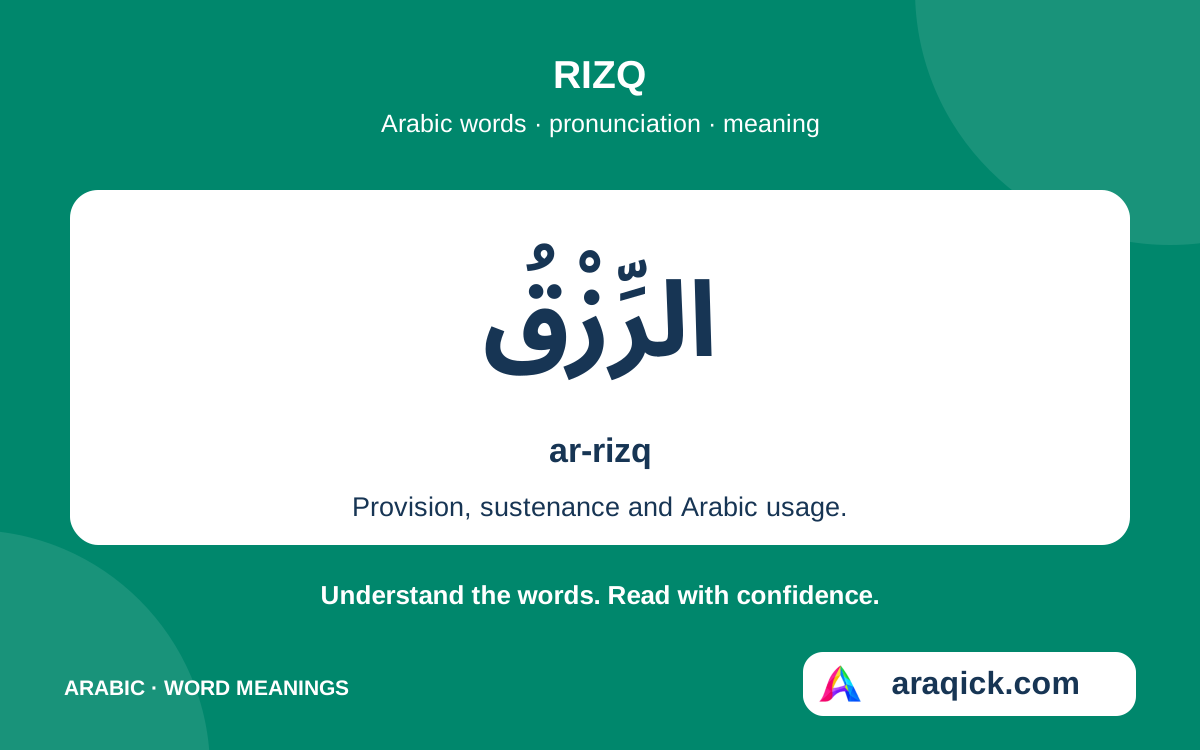
Rizq, رِزْقٌ, means provision or sustenance. It can refer to what supports life, including food and material means, rather than money alone. In Islamic language, rizq is understood in relation to Allah as Provider. The sentence tells you whether the focus is food, resources, giving or another aspect of provision.
01Rizq means provision or sustenance
“Provision” is a useful broad translation because it refers to what is supplied for someone’s needs. “Sustenance” especially highlights what maintains life. Food can be rizq, and the word can also be used more broadly for the means through which a person is supported.
Money may be part of the discussion, but translating every occurrence as “cash” narrows the meaning too much. Start with provision, then ask what the passage actually describes. A verse about food and a conversation about a livelihood may use related vocabulary while bringing different parts of that meaning into view.
02Spell and pronounce rizq
The Arabic letters are ra, zay and qaf: ر ز ق. In رِزْق, the kasrah gives a short i, and the sukun over zay means there is no vowel after it. The paused word rizq is one syllable; avoid inserting an extra vowel between z and q.
Qaf is pronounced farther back in the mouth than the English k. The fully marked noun رِزْقٌ is rizqun when the ending is read, and rizq at a pause. Familiar spellings such as rizk approximate the sound but do not replace learning the Arabic letter qaf.
03Recognise the r-z-q word family
The verb رَزَقَ, razaqa, means “he provided”; يَرْزُقُ, yarzuqu, means “he provides.” The short i of the noun changes to other vowels in these verb forms. Shared root consonants link the meanings without requiring every form to sound the same.
Quran 51:58 uses الرَّزَّاقُ, arrazzaaq when paused, for Allah as the Provider. Notice the doubled z and long aa in this form, compared with the short i in rizq. Our Arabic root guide helps separate root letters from the patterns carrying them.
04Read provision in Quranic context
Quran 11:6 speaks of the provision of creatures on earth. Its scope makes “monthly salary” an unsuitable translation for rizq there. Provision is the broader concept, and the verse places it within a statement about Allah’s knowledge and care for creation.
Quran 2:3 uses the related verb in describing people who spend from what they have been provided. The word family therefore connects receiving with how resources are used. These are two different contexts to study together. Our common Quranic Arabic words reference can help you notice familiar forms while reading.
05Distinguish rizq, money and barakah
مَالٌ, maal at a pause, means wealth or property; رَاتِبٌ, raatib, can mean a salary. These words identify something more specific than the broad idea of provision. A salary can be described as a means of livelihood without making rizq and salary identical dictionary entries.
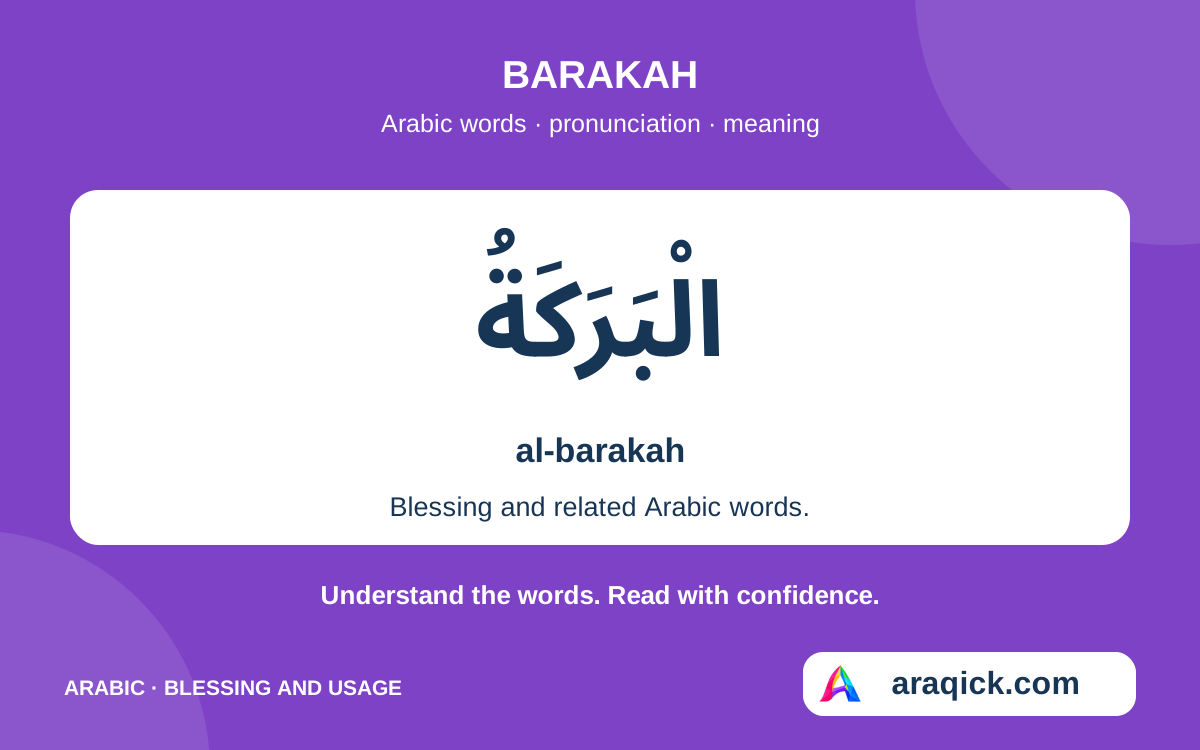
بَرَكَةٌ, barakah, means blessing. Provision and blessing can be discussed together, but they name different ideas. See barakah in Arabic for that distinction. A large amount of money is not, by its size alone, the definition of either Arabic word.
06Use the word without adding promises
An ordinary practice sentence is هَذَا رِزْقٌ مِنَ اللَّهِ, “This is provision from Allah.” It illustrates the noun in a sentence; it is not presented here as a required response to receiving something. The phrase رِزْقٌ طَيِّبٌ can describe good or wholesome provision.
Keep a vocabulary explanation separate from a claim about future results. The meaning of rizq does not establish that repeating a particular word a fixed number of times will produce a certain income. For useful practice, identify the noun or verb, translate the surrounding phrase, and explain what kind of provision the context discusses.
What to remember
- Rizq means provision or sustenance and is broader than cash or salary.
- Its root is r-z-q; the paused noun rizq has a short i and no added vowel after z.
- Rizq, maal, raatib and barakah are useful related vocabulary, with different meanings.
Your reference shelf
Open a guide whenever you need it.
Rizq and its related formsCompare provision, providing and the Quranic name Ar-Razzaq; noun readings below pause at the end.
| Arabic | Plain-letter reading | Meaning or use |
|---|---|---|
| رِزْقٌ | rizq | Provision; sustenance — paused noun |
| رَزَقَ | razaqa | He provided |
| يَرْزُقُ | yarzuqu | He provides — full grammatical ending |
| رَزَقْنَا | razaqnaa | We provided |
| رَزَقْنَاهُمْ | razaqnaahum | We provided them — form occurring in Quran 2:3 |
| الرَّزَّاقُ | arrazzaaq | The Provider — divine name in Quran 51:58, paused reading |
In arrazzaaq, the article’s l assimilates to r; rr and zz mark doubled consonants, and aa marks the long vowel. These are different sound features.
Provision and nearby vocabularyThe first two rows are original language examples; the remaining rows distinguish words often discussed alongside rizq.
| Arabic | Plain-letter reading | Meaning or use |
|---|---|---|
| هَذَا رِزْقٌ مِنَ اللَّهِ | haadhaa rizqun minallaah | This is provision from Allah — practice sentence, paused at the end |
| رِزْقٌ طَيِّبٌ | rizqun tayyib | Good or wholesome provision — phrase paused at the end |
| مَالٌ | maal | Wealth; property — paused noun |
| رَاتِبٌ | raatib | Salary — paused noun in this context |
| بَرَكَةٌ | barakah | Blessing — paused noun |
Read the noun ending in rizqun when it connects to the next word. At the end of a phrase, the table uses a paused reading, so tayyib and Allah do not carry their final short case vowel.
Sources & further learning
References for the language explanations and learning guidance.