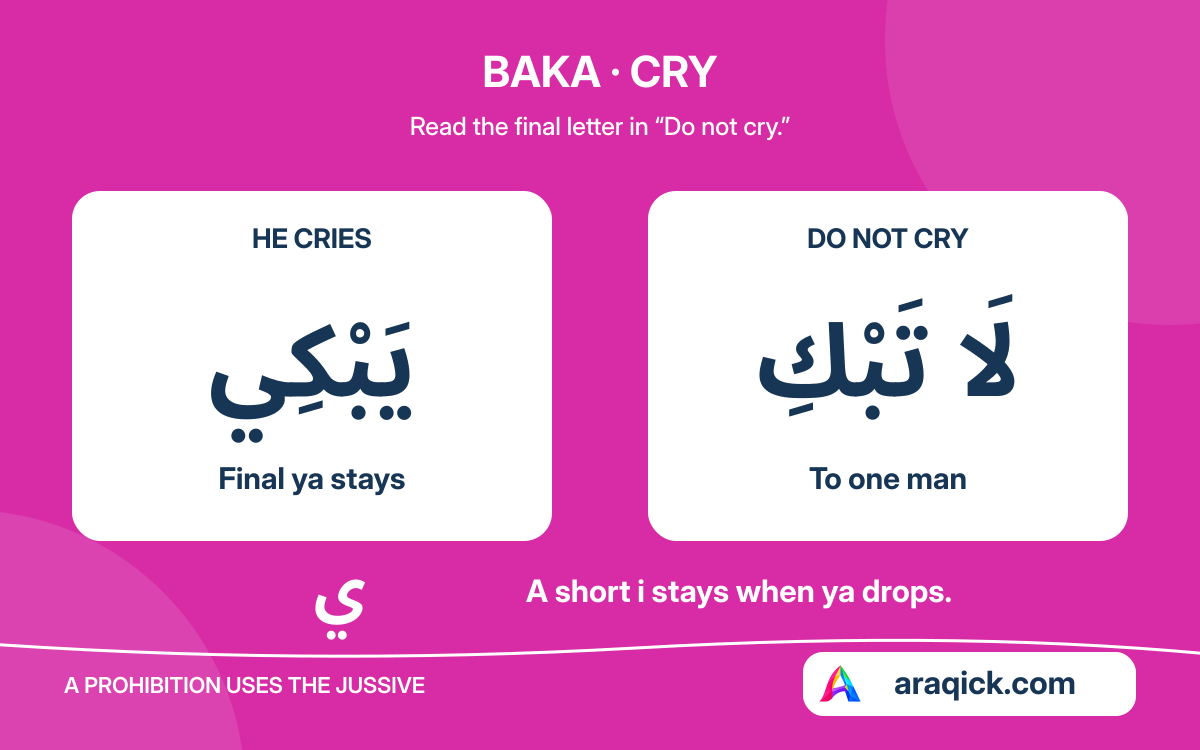
Baka means he cried, while yabki means he cries. The final root letter is ya, even though the past dictionary form ends in alif maqsura. This verb helps you see how a long final i changes before different endings, and why the singular instruction do not cry is written without final ya.
01Tell someone what happened
بَكَيْتُ قَلِيلًا
bakaytu qalilan
I cried a little.
Bakaytu is the past I form. The original ya appears before tu, and qalilan adds a little. The root is ب ك ي; do not treat the final shape of baka as a new root letter.
Compare بَكَى (he cried), بَكَتْ (she cried) and بَكَيْنَا (we cried). Each ending has a complete stem pattern.
02Use final ya in the ordinary present
يَبْكِي أَخِي
yabki akhi
My brother is crying.
The indicative yabki ends with long i, written ya. Akhi identifies the subject, my brother. The indicative dammah is estimated on that ya rather than added visibly.
أَبْكِي أَحْيَانًا
abki ahyanan
I cry sometimes.
The a prefix changes the doer to I. Ahyanan means sometimes. The long final i stays in this ordinary indicative form.
03Read did not cry and will not cry
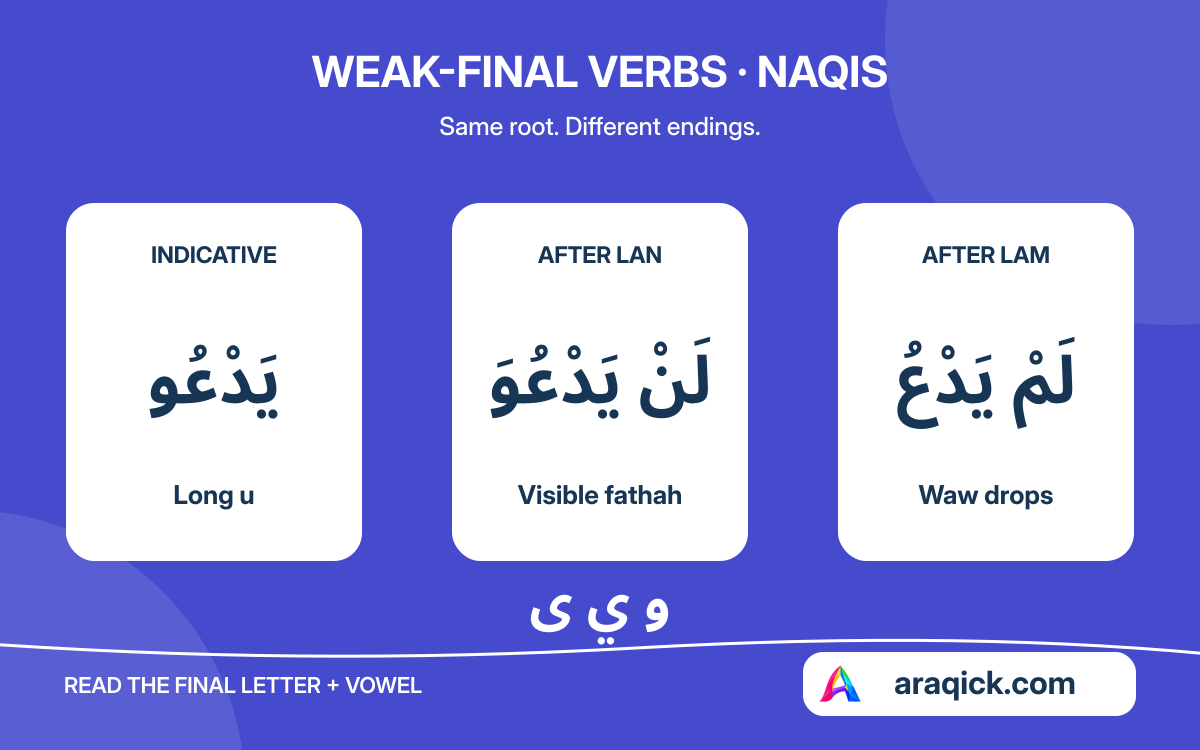
لَمْ يَبْكِ — لَنْ يَبْكِيَ
lam yabki — lan yabkiya
He did not cry — He will not cry
The jussive after lam drops final ya but leaves the short kasrah on k. The subjunctive after lan keeps ya and adds fathah to it. The three forms yabki, yabkiya and jussive yabki are not interchangeable.
The simplified reading aid hides the difference between a long and short final i. Check the actual ya in يَبْكِي and its absence in يَبْكِ.
04Say do not cry to the right listener
لَا تَبْكِ
la tabki
Do not cry. — to one man
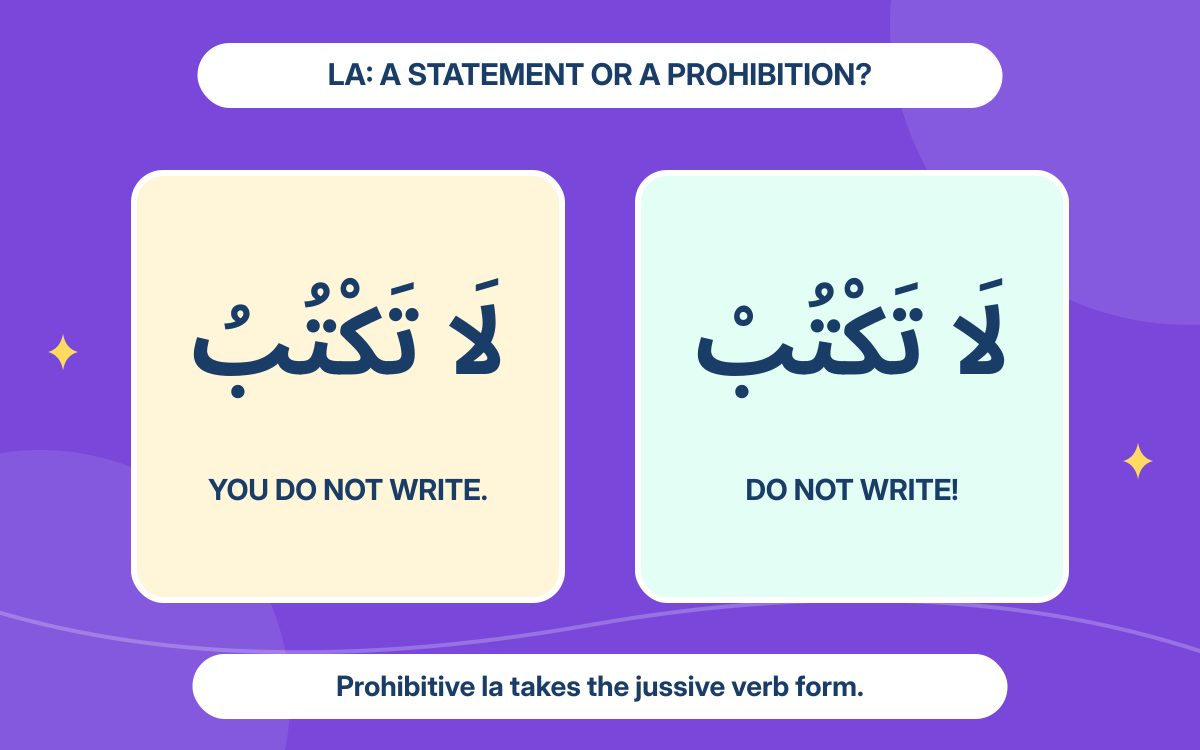
Prohibitive la takes the jussive, so the masculine singular form loses final ya. To one woman, say لَا تَبْكِي. Her person ending ya stays, while the indicative mood nun of tabkina disappears.
For a male or mixed group use لَا تَبْكُوا. For a female group use لَا تَبْكِينَ, retaining the subject nun. These are different people, not optional spellings of one form.
05Separate a positive command from a prohibition
اِبْكِ — لَا تَبْكِ
ibki — la tabki
Cry — Do not cry. — to one man
A direct positive command is ibki. It begins with a helping alif and lacks final root ya. A prohibition keeps the imperfect t prefix after la instead of using that command form.
Ibki and la tabki have different beginnings even when both end with short i. Do not build the prohibition by putting la directly before ibki. Review prohibitive la and weak-final verbs to practise the underlying rule. The charts keep the person endings visible.
What to remember
- Baka and bakaytu belong to the root ب ك ي.
- The singular jussive drops final ya but leaves short kasrah.
- La tabki has different written endings for one man, one woman and groups.
Your reference shelf
Open a guide whenever you need it.
Cry: past and present formsPast and ordinary indicative present; use the lesson for other moods
| Person | Past | Present |
|---|---|---|
| He | بَكَى | يَبْكِي |
| They: two men | بَكَيَا | يَبْكِيَانِ |
| They: male or mixed group | بَكَوْا | يَبْكُونَ |
| She | بَكَتْ | تَبْكِي |
| They: two women | بَكَتَا | تَبْكِيَانِ |
| They: female group | بَكَيْنَ | يَبْكِينَ |
| You: one man | بَكَيْتَ | تَبْكِي |
| You: two people | بَكَيْتُمَا | تَبْكِيَانِ |
| You: male or mixed group | بَكَيْتُمْ | تَبْكُونَ |
| You: one woman | بَكَيْتِ | تَبْكِينَ |
| You: female group | بَكَيْتُنَّ | تَبْكِينَ |
| I | بَكَيْتُ | أَبْكِي |
| We | بَكَيْنَا | نَبْكِي |
The dual you form serves two listeners of either gender. Shared spellings depend on context. The present column is indicative; do not use it unchanged after every mood particle.
Commands and prohibitions by listenerCompare the prefix and the surviving person ending
| Listener | Positive command | Prohibition |
|---|---|---|
| One man | اِبْكِ | لَا تَبْكِ |
| One woman | اِبْكِي | لَا تَبْكِي |
| Two people | اِبْكِيَا | لَا تَبْكِيَا |
| Male or mixed group | اِبْكُوا | لَا تَبْكُوا |
| Female group | اِبْكِينَ | لَا تَبْكِينَ |
The feminine singular indicative and female-group indicative share تَبْكِينَ. After a jussive particle, the singular loses mood nun while the female group retains subject nun. This explains why the last two letters cannot be judged without knowing the listener.
Sources & further learning
References for the language explanations and learning guidance.