Ahtaju ila musaada means I need help. Add five short phrases to ask someone directly, explain that you do not understand, request slower speech or repetition, and say thank you. These Modern Standard Arabic examples make everyday conversations easier to continue.
01Say what you need
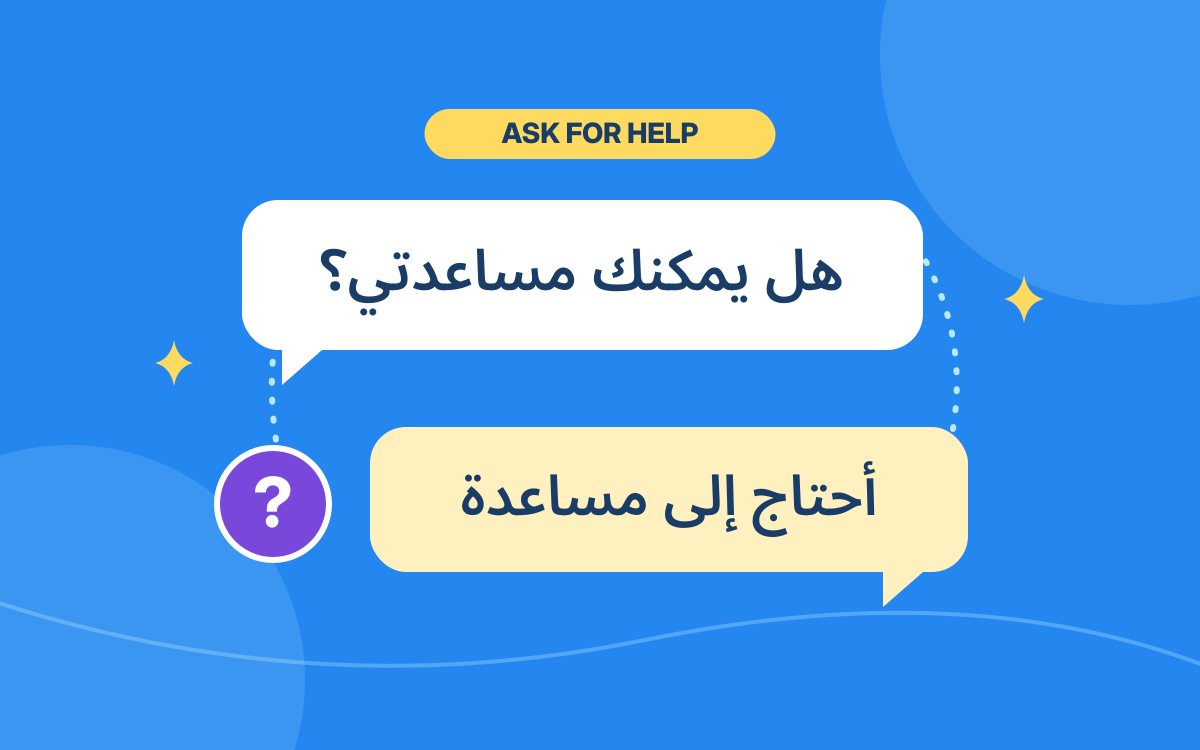
ahtaju ila musaada
I need help.
Use this when you need assistance with a task, a question or an unfamiliar place. Ahtaju means I need; ila connects it to musaada, help. Keep the three words together.
A man or a woman says the same sentence. It describes the speaker’s need without yet addressing a particular person.
02Ask one person directly
هَلْ يُمْكِنُكَ مُسَاعَدَتِي؟
hal yumkinuka musaadati
Can you help me? To one man.
هَلْ يُمْكِنُكِ مُسَاعَدَتِي؟
hal yumkinuki musaadati
Can you help me? To one woman.
Hal opens this yes-or-no question. Musaadati means helping me here. Choose yumkinuka or yumkinuki according to the person you are addressing, not your own gender. Both versions make a polite, direct request.
03Explain the difficulty
لَا أَفْهَمُ
la afhamu
I do not understand.
This tells the other person that the meaning is unclear to you. La makes the present statement negative; afhamu means I understand. Keep la when you need to say you do not understand.
You can use this before asking for a slower explanation or another repetition. The sentence stays the same whether you speak to a man or a woman.
04Ask for slower speech or repetition
| Meaning | Arabic | Plain reading aid |
|---|---|---|
| Speak slowly, please: to a man | تَكَلَّمْ بِبُطْءٍ، مِنْ فَضْلِكَ | takallam bibut min fadlika |
| Speak slowly, please: to a woman | تَكَلَّمِي بِبُطْءٍ، مِنْ فَضْلِكِ | takallami bibut min fadliki |
| Repeat, please: to a man | كَرِّرْ، مِنْ فَضْلِكَ | karrir min fadlika |
| Repeat, please: to a woman | كَرِّرِي، مِنْ فَضْلِكِ | karriri min fadliki |
Choose slowly when you need more time between words. Choose repeat when you want to hear something again. Min fadlika and min fadliki mean please; match them to the same listener as the command.
05Finish with thanks
شُكْرًا عَلَى مُسَاعَدَتِكَ
shukran ala musaadatika
Thank you for your help. To one man.
شُكْرًا عَلَى مُسَاعَدَتِكِ
shukran ala musaadatiki
Thank you for your help. To one woman.
Shukran means thank you. The rest makes the reason specific: for your help. Notice the ending in musaadatika or musaadatiki; it points to the person being thanked.
Try a short conversation: ask for help, say what is unclear, then thank the person. Choose only the phrases the situation needs. You do not have to recite all six in one exchange.
What to remember
- Ahtaju ila musaada states a need; hal yumkinuka musaadati asks one man directly.
- Choose slower speech or repetition according to the difficulty.
- Match the listener endings when asking politely and giving thanks.
Your reference shelf
Open a guide whenever you need it.
Keep all six help phrases togetherOpen the six phrases, including forms for a male or female listener
| Meaning | Arabic | Plain reading aid |
|---|---|---|
| 1. I need help | أَحْتَاجُ إِلَى مُسَاعَدَة | ahtaju ila musaada |
| 2. Can you help me? To one man | هَلْ يُمْكِنُكَ مُسَاعَدَتِي؟ | hal yumkinuka musaadati |
| 2. Can you help me? To one woman | هَلْ يُمْكِنُكِ مُسَاعَدَتِي؟ | hal yumkinuki musaadati |
| 3. I do not understand | لَا أَفْهَمُ | la afhamu |
| 4. Speak slowly, please. To one man | تَكَلَّمْ بِبُطْءٍ، مِنْ فَضْلِكَ | takallam bibut min fadlika |
| 4. Speak slowly, please. To one woman | تَكَلَّمِي بِبُطْءٍ، مِنْ فَضْلِكِ | takallami bibut min fadliki |
| 5. Repeat, please. To one man | كَرِّرْ، مِنْ فَضْلِكَ | karrir min fadlika |
| 5. Repeat, please. To one woman | كَرِّرِي، مِنْ فَضْلِكِ | karriri min fadliki |
| 6. Thank you for your help. To one man | شُكْرًا عَلَى مُسَاعَدَتِكَ | shukran ala musaadatika |
| 6. Thank you for your help. To one woman | شُكْرًا عَلَى مُسَاعَدَتِكِ | shukran ala musaadatiki |
Repeated numbers show listener variants of the same phrase. Plain reading aids simplify Arabic sounds and some grammatical endings. In bibut, the Arabic spelling بِبُطْءٍ includes a final hamza that the plain aid does not mark.
Sources & further learning
References for the language explanations and learning guidance.