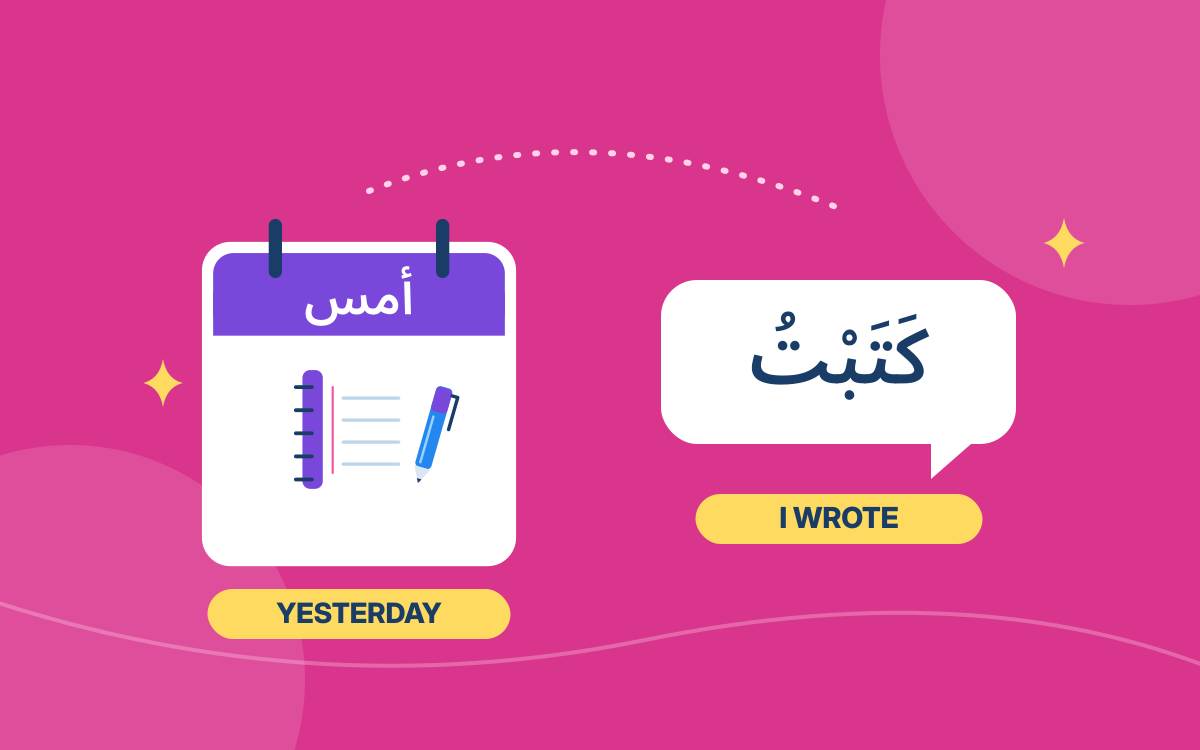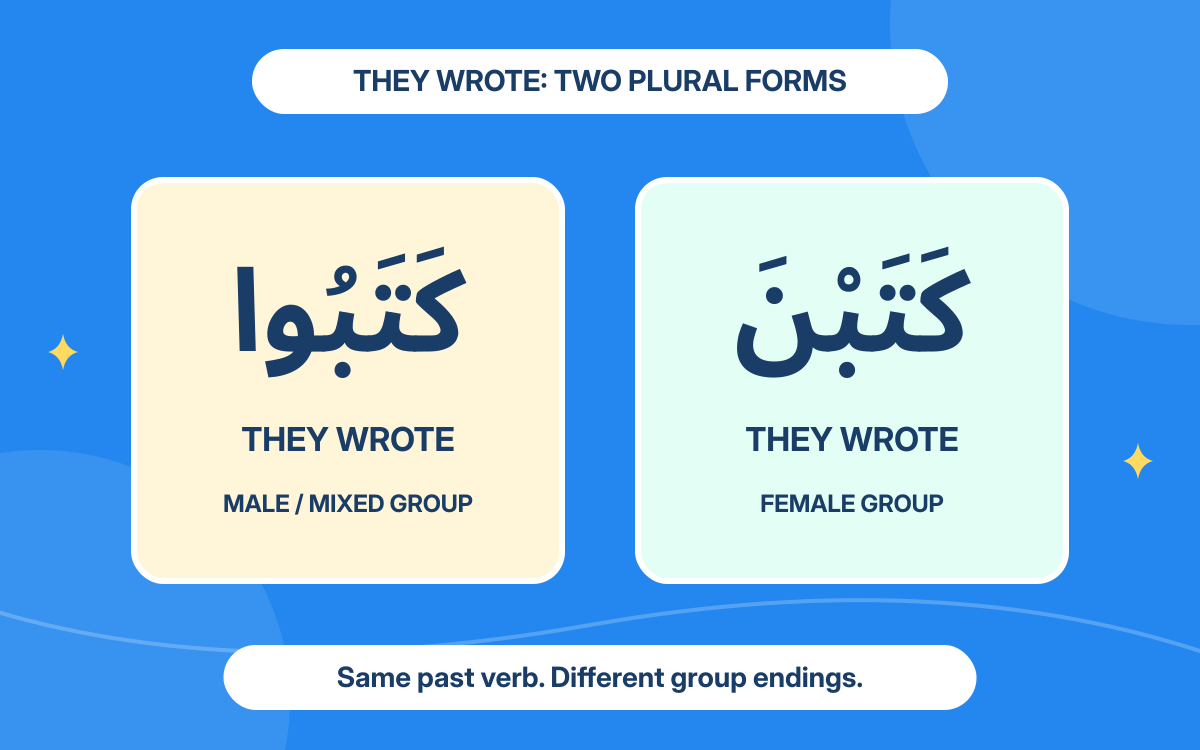
You already know kataba, “he wrote,” and katabat, “she wrote.” To talk about several people who completed the same action, Arabic has two plural forms of they wrote. Learn katabu for a male or mixed group and katabna for a female group, then keep their endings clear in short sentences.
01Talk about a male or mixed group
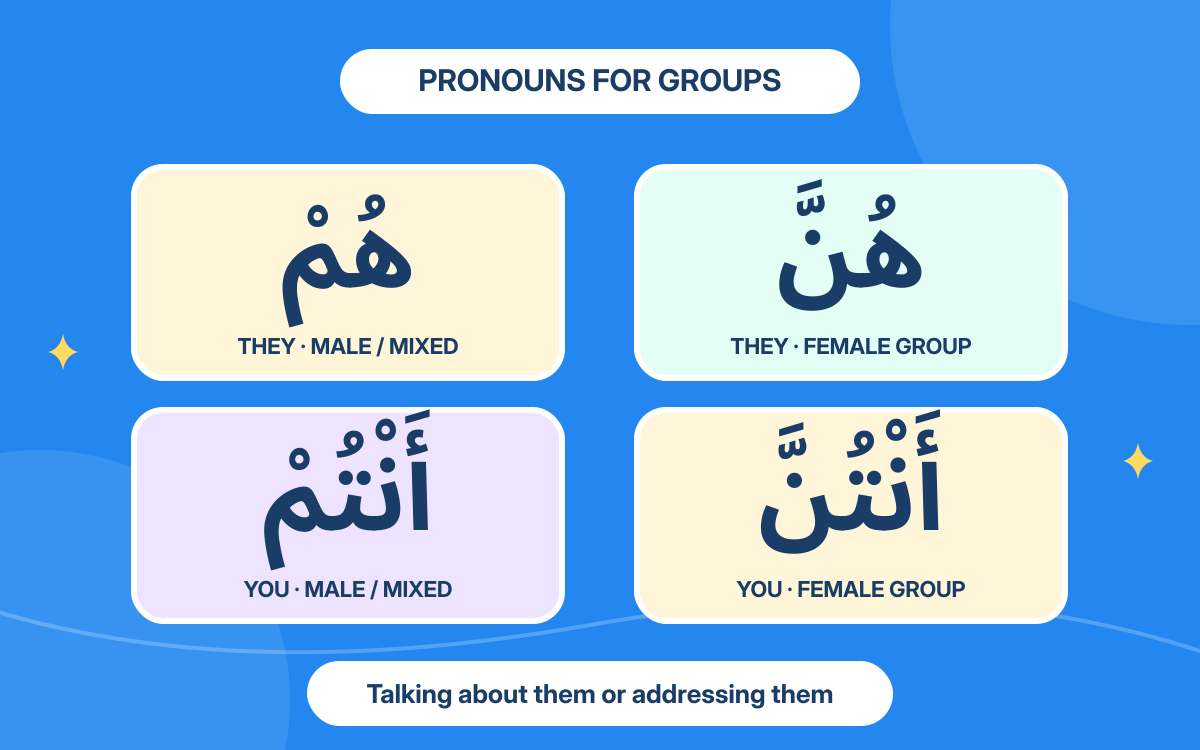
Use hum when discussing a group of men or a mixed group of men and women. Match it with katabu for the completed writing action. These people are being talked about; they are not the listeners addressed as you.
هُمْ كَتَبُوا
hum katabu
They wrote. — a male or mixed group
The ending contains a long u sound. Our plain reading aid writes one u, but the Arabic shows it with waw. For human groups, plural normally means three or more; exactly two people use dual forms.
02Change the ending for a female group
Use hunna when discussing a group consisting only of women. The matching verb is katabna, with a short final a.
هُنَّ كَتَبْنَ
hunna katabna
They wrote. — a female group
Notice بْ before the ending: its sukun removes the vowel after b. The final نَ is one n with a short a. It has no shaddah. Hunna, the separate pronoun, does have a doubled n.
The action stays writing. The changed ending identifies a different group of doers; it does not change the verb to the present tense.
03Write the alif without pronouncing it
كَتَبُوا
katabu
They wrote. — masculine plural form
The alif after the plural waw in وا is a spelling mark called the distinguishing alif. It is silent: do not add a final a to the reading katabu. Keep the alif when writing this complete verb.
This is a rule about the plural verb ending used here. It does not mean every Arabic word ending in waw receives an extra alif.
04Separate they wrote from we wrote
هُنَّ كَتَبْنَ
hunna katabna
They wrote. — a female group
نَحْنُ كَتَبْنَا
nahnu katabna
We wrote.
The first verb ends in نَ, with short a; the second ends in نَا, with long a. The plain labels look identical because they simplify vowel length. Read the Arabic too.
We includes the speaker and works for male, female or mixed groups. Hunna talks about a female group without making the speaker part of that group.
05Add what the group wrote
هُمْ كَتَبُوا رِسَالَةً
hum katabu risalatan
They wrote a letter. — a male or mixed group
هُنَّ كَتَبْنَ رِسَالَةً
hunna katabna risalatan
They wrote a letter. — a female group
Risalatan means a letter and names what was written. It is the object, so its formal ending is accusative. The object stays the same when the writers change.
The verb ending already identifies they, so the separate hum or hunna can be omitted when the context is clear. We put it first in these models to make the group easy to recognise. Choose the doers first, then check the complete verb.
What to remember
- Hum katabu describes a male or mixed human group; hunna katabna describes a female group.
- The alif after the plural waw in katabu is written but silent.
- كَتَبْنَ has short final a for they feminine; كَتَبْنَا has long final a for we.
Your reference shelf
Open a guide whenever you need it.
Compare they, she and weCheck the complete forms and their endings
| People | Arabic | Reading |
|---|---|---|
| He | كَتَبَ | kataba |
| She | كَتَبَتْ | katabat |
| They — male or mixed group | كَتَبُوا | katabu |
| They — female group | كَتَبْنَ | katabna |
| We — any group including the speaker | كَتَبْنَا | katabna |
The ordinary human plural forms here describe three or more people. Nonhuman plurals commonly use feminine singular agreement and need their own guide. These kataba forms provide a regular model; other verbs can change internally, so learn their complete forms.
The examples place hum or hunna first. A named human subject placed after the verb follows a different agreement pattern; do not transfer the full plural model automatically to that structure. The plain labels simplify sounds and vowel length, while the Arabic retains the distinctions.
Sources & further learning
References for the language explanations and learning guidance.