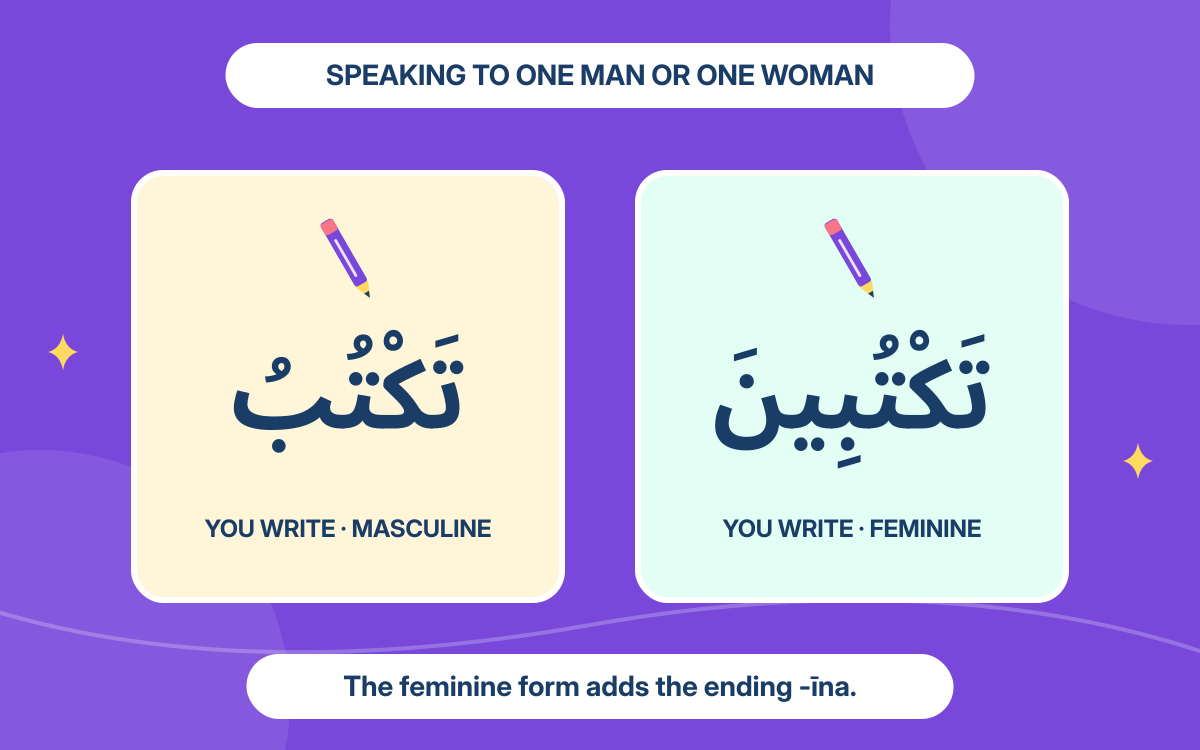
English uses “you write” for either listener. Formal Arabic distinguishes one male listener from one female listener. Both verbs begin with t, but the feminine form has an extra ending. Learn that complete form and keep it separate from “she writes.”
01Add the feminine listener ending
Use taktubina when speaking to one woman or girl. It begins with t and ends in ينَ.
أَنْتِ تَكْتُبِينَ
anti taktubina
You write. — to one female
The i before n is long; the final a is short. Our simplified spelling uses one i, while the Arabic ya shows its length. Keep the ending ina when practising this full form.
02Match the listener, not the speaker
Choose anta taktubu for one male listener and anti taktubina for one female listener. The speaker’s gender does not determine this choice.
أَنْتَ تَكْتُبُ
anta taktubu
You write. — to one male
أَنْتِ تَكْتُبِينَ
anti taktubina
You write. — to one female
Anti ends in short i. The verb taktubina has long i before n. These two vowel lengths are not the same.
03Read both the beginning and the ending
A second regular present verb shows the same listener contrast. Learn the present stem first, then match the person.
أَنْتَ تَدْرُسُ
anta tadrusu
You study. — to one male
أَنْتِ تَدْرُسِينَ
anti tadrusina
You study. — to one female
Both feminine listener verbs start with t and have the long i plus na ending. The t prefix alone does not identify a female listener.
04Separate you feminine from she
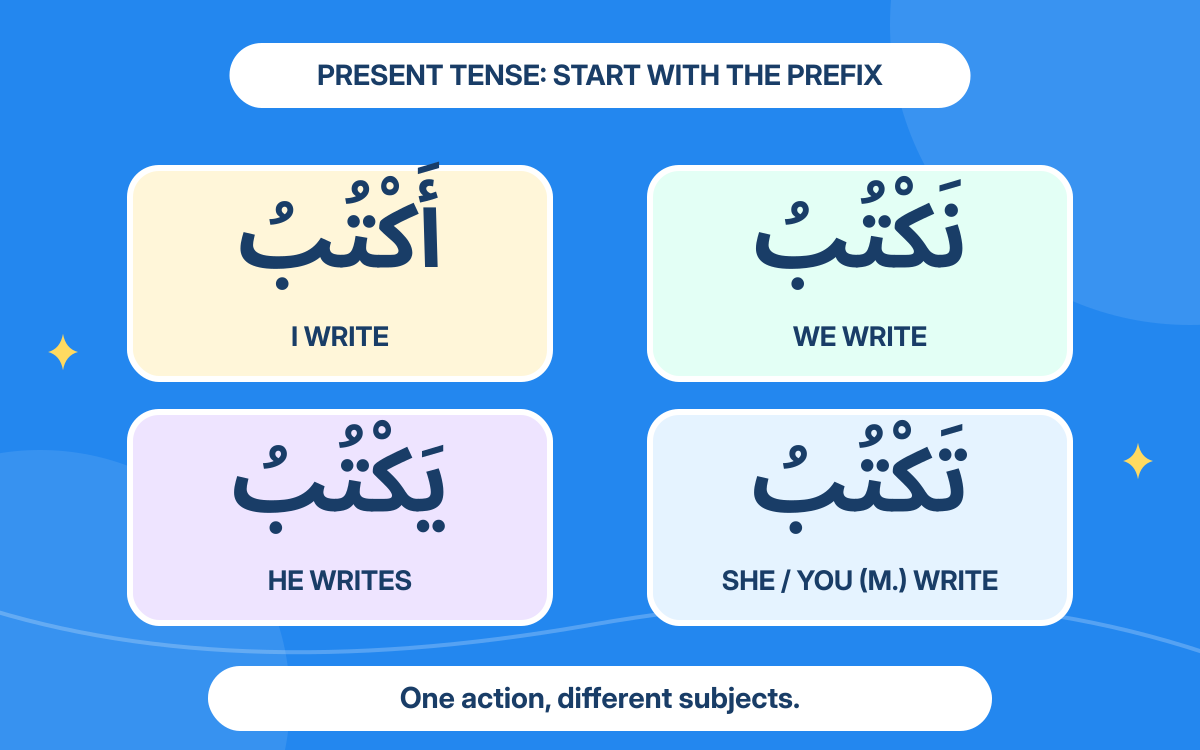
She is the person being discussed. You feminine is the person being addressed. They require different complete verbs.
هِيَ تَكْتُبُ
hiya taktubu
She writes.
أَنْتِ تَكْتُبِينَ
anti taktubina
You write. — to one female
Do not choose taktubina merely because the doer is female. Choose it when that one female is the listener.
05Put the verb in a short sentence
Add risalatan, a letter, to say what the female listener writes. The object does not change the listener ending.
أَنْتِ تَكْتُبِينَ رِسَالَةً
anti taktubina risalatan
You write a letter. — to one female
The separate anti can be omitted when the context is clear. تَكْتُبِينَ رِسَالَةً still addresses one female because the verb retains the complete ending.
What to remember
- Anta taktubu addresses one male; anti taktubina addresses one female.
- Choose the you form by the listener’s gender, regardless of who is speaking.
- Hiya taktubu means she writes; feminine you needs the additional ينَ ending.
Your reference shelf
Open a guide whenever you need it.
Compare the listener and she formsWriting and studying with one male, one female or she
| Person | Writing | Studying |
|---|---|---|
| You — one male | أَنْتَ تَكْتُبُ anta taktubu | أَنْتَ تَدْرُسُ anta tadrusu |
| You — one female | أَنْتِ تَكْتُبِينَ anti taktubina | أَنْتِ تَدْرُسِينَ anti tadrusina |
| She | هِيَ تَكْتُبُ hiya taktubu | هِيَ تَدْرُسُ hiya tadrusu |
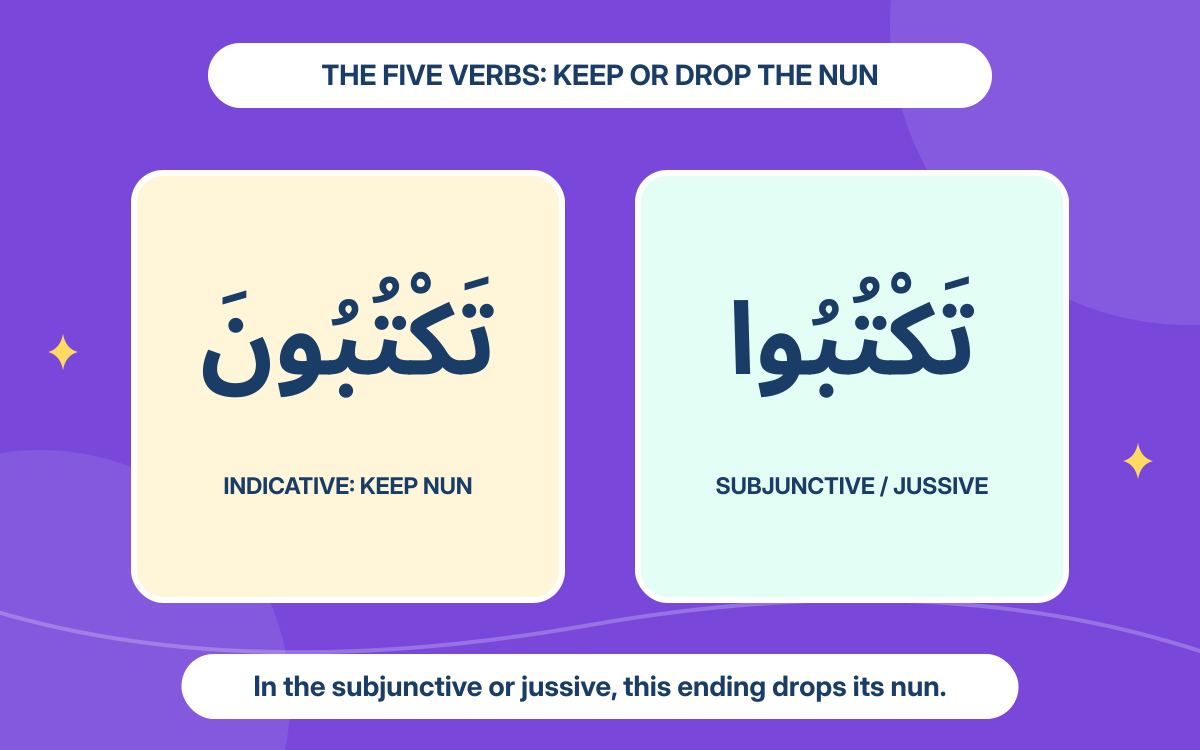
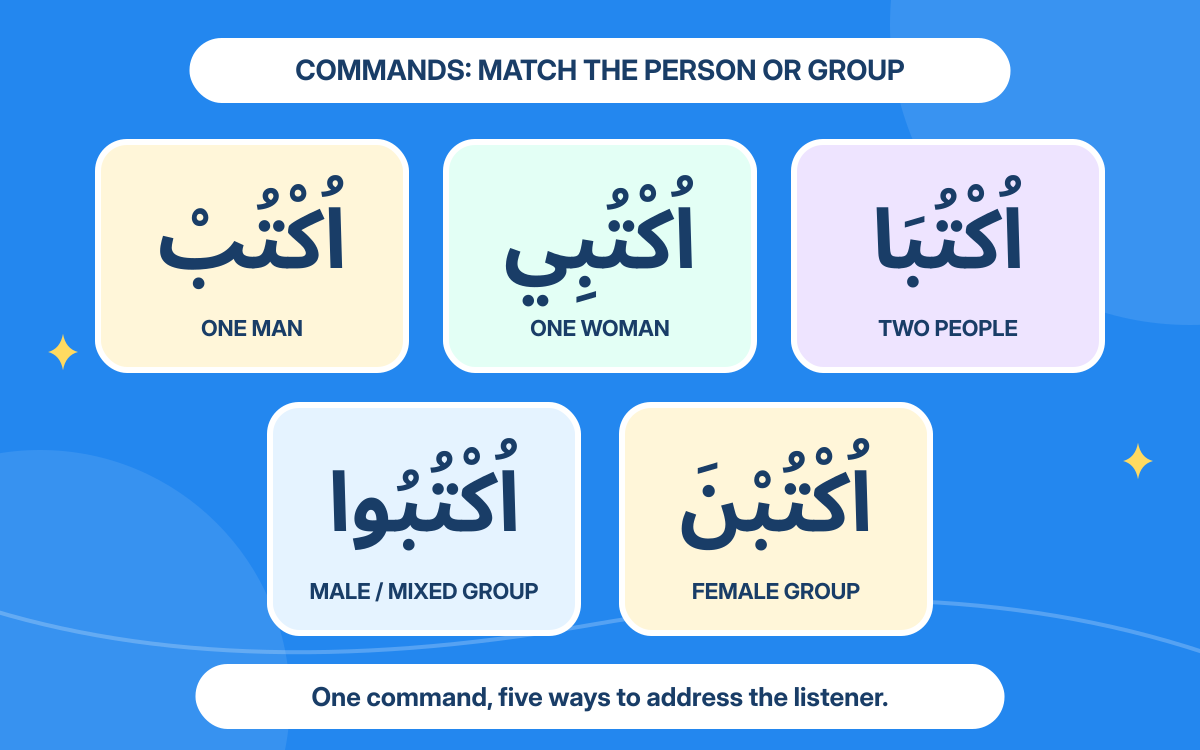
This guide teaches ordinary indicative present statements with one listener. Groups and exactly two listeners have different forms. Other grammatical constructions can change the final nun, but those changes belong to the later verb moods guide.
The simple readings use no hyphens and simplify vowel length. In taktubina and tadrusina, the i before n is long. Read the Arabic alongside the Latin aid.
Sources & further learning
References for the language explanations and learning guidance.