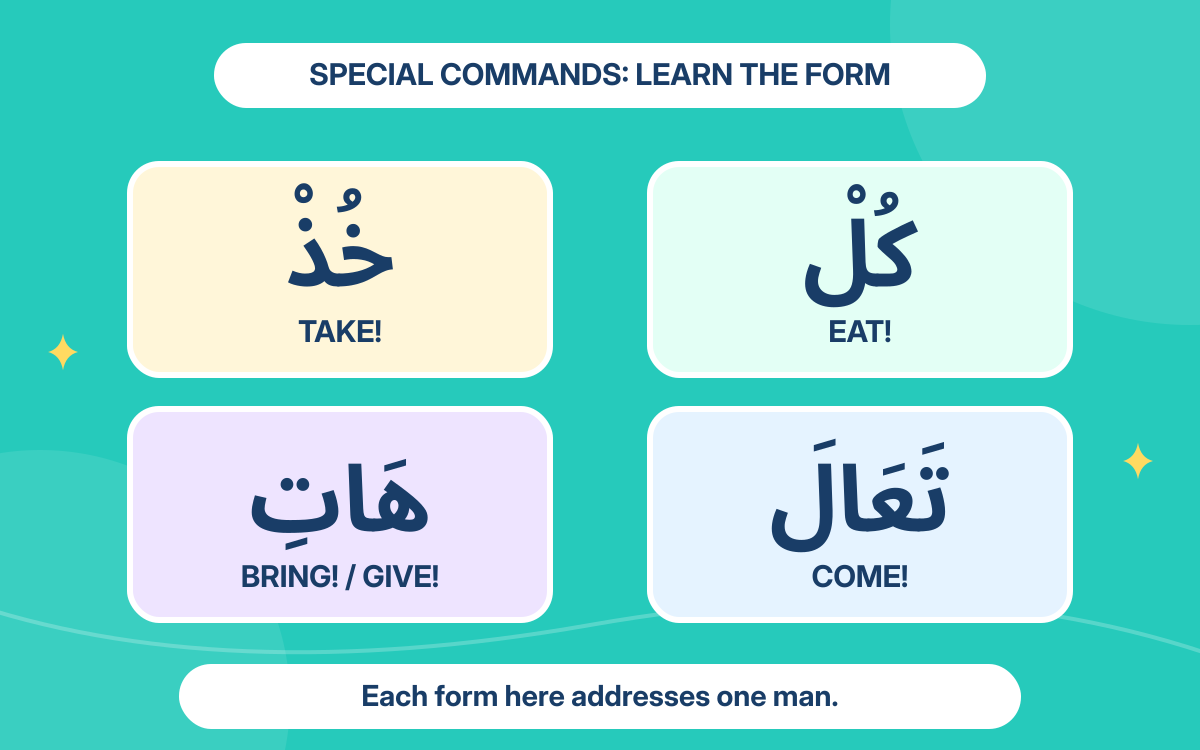
Some useful commands need a learned stem. Take and eat lose the initial hamzah found in their past forms. Bring and come have special command forms too. Learn the action first, then choose the form that matches your listener.
01Learn khudh for take
The past verb أَخَذَ means he took. Its command to one male is khudh, without that initial hamzah. For one female use khudhi; for a male or mixed group use khudhu.
خُذْ قَلَمًا
khudh qalaman
Take a pen. — to one male
خُذِي قَلَمًا
khudhi qalaman
Take a pen. — to one female
The group form is خُذُوا. The final written alif is silent.
02Learn kul for eat
The command from أَكَلَ, he ate, is kul for one male. Keep the learned stem when changing the listener: kuli for one female, kulu for a male or mixed group.
كُلِي خُبْزًا
kuli khubzan
Eat bread. — to one female
كُلُوا خُبْزًا
kulu khubzan
Eat bread. — to a male or mixed group
The written forms are كُلْ، كُلِي، كُلُوا. None begins with a written hamzah.
03Use hati for bring or give here
Hati asks one male to bring or hand something over. Use hati for one female and hatu for a male or mixed group. Learn these as special command forms.
هَاتِ كِتَابَكَ
hati kitabaka
Bring your book. — to one male
هَاتِي كِتَابَكِ
hati kitabaki
Bring your book. — to one female
The male singular form هَاتِ already ends in a short i. The female form adds ya: هَاتِي. The group form is هَاتُوا.
04Keep the a before the listener ending in come
Use taala to call one male and taalay to call one female. In the marked formal female form, lam keeps its fathah before the ya with sukun. For a male or mixed group use taalaw.
تَعَالَ هُنَا
taala huna
Come here. — to one male
تَعَالَيْ هُنَا
taalay huna
Come here. — to one female
The group form is تَعَالَوْا. These come commands keep the a sound before the listener ending; do not copy hati’s ending mechanically.
05Choose the action and listener together
Khudh asks someone to take something; hati asks them to bring or hand it over. Kul asks them to eat; taala asks them to come. Check both the intended action and whom you address.
خُذْ كِتَابَكَ
khudh kitabaka
Take your book. — to one male
Here the command comes first, followed by what to take. Kitabaka also marks a male possessor. A command already identifies its listener, so a separate anta is not needed here.
What to remember
- Learn khudh for take and kul for eat; their initial past-form hamzah is absent in these commands.
- Hati for one male has short final i; hati for one female has long i; hatu addresses a male or mixed group.
- Taala, taalay and taalaw keep lam’s fathah; choose the complete listener form.
Your reference shelf
Open a guide whenever you need it.
Compare the special commands in this guideFour actions with singular and group listener forms
| Action | One male | One female | Male or mixed group |
|---|---|---|---|
| Take | خُذْ khudh | خُذِي khudhi | خُذُوا khudhu |
| Eat | كُلْ kul | كُلِي kuli | كُلُوا kulu |
| Bring | هَاتِ hati | هَاتِي hati | هَاتُوا hatu |
| Come | تَعَالَ taala | تَعَالَيْ taalay | تَعَالَوْا taalaw |
These are commands, فِعْلُ الْأَمْرِ, with fixed grammatical construction, not present verbs in the jussive mood. Hati and taala are traditionally described as fixed command verbs; do not invent an ordinary past or present partner for these meanings by reversing the regular command rule.
Our reading aids use plain Latin without hyphens and simplify vowel length. Hati represents both male هَاتِ with short final i and female هَاتِي with long i; the marked Arabic distinguishes them. Taala keeps the male form’s final short a. The ya in taalay follows a fathah and forms ay. Consult the marked Arabic for these differences.
Keep the regular command formation guide as your starting rule. This chart supplements it with learned stems and selected listener forms.
Sources & further learning
References for the language explanations and learning guidance.