Arabic uses a singular noun after both one hundred and one thousand. Its ending differs from the accusative noun after eleven to ninety nine. Build these larger counts as idafa phrases, then change only the number’s ending when its sentence role changes.
01Put a singular genitive noun after hundred
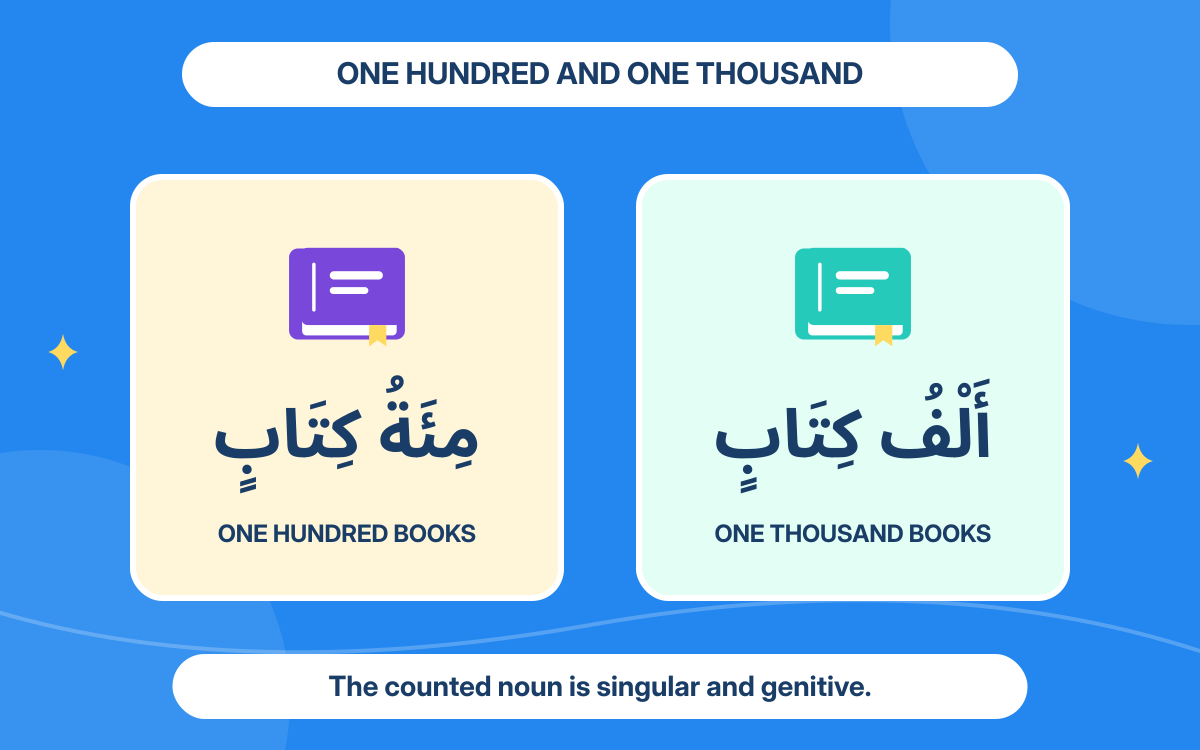
مِئَةٌ means one hundred. After it, use the singular counted noun in the genitive, even though the English translation is plural.
مِئَةُ كِتَابٍ
miatu kitabin
One hundred books
Kitabin is one book in its genitive form. It is not the plural kutub, and it does not take the accusative ending an used after eleven to ninety nine. You may also see hundred written مِائَةٌ; the extra alif is not pronounced.
02Keep hundred and thousand unchanged for gender
أَلْفٌ means one thousand and follows the same counted noun pattern. Neither hundred nor thousand changes its form to match a masculine or feminine counted noun.
أَلْفُ كِتَابٍ
alfu kitabin
One thousand books
أَلْفُ سَيَّارَةٍ
alfu sayyaratin
One thousand cars
Kitab is masculine; sayyarah is feminine. The number stays alfu in both phrases. Likewise, مِئَةُ سَيَّارَةٍ means one hundred cars. Each counted noun remains singular and genitive.
03Treat the two words as an idafa
The number is the first term of an idafa; the counted noun is the second term. In these basic phrases the number takes neither al nor tanween. The counted noun is indefinite here, so it keeps its genitive tanween.
عِنْدِي مِئَةُ كِتَابٍ
indi miatu kitabin
I have one hundred books.
Write miatu kitabin, with u on the number and in on the noun. A standalone number can have tanween; a number directly linked to its counted noun in this idafa cannot.
04Change the number’s case, keeping the noun genitive
The number follows its job in the sentence. Compare nominative after indi, accusative as what I read, and genitive after the preposition bi.
عِنْدِي مِئَةُ كِتَابٍ
indi miatu kitabin
I have one hundred books.
قَرَأْتُ مِئَةَ كِتَابٍ
qaratu miata kitabin
I read one hundred books.
بِمِئَةِ كِتَابٍ
bimiati kitabin
With one hundred books
The number changes u, a, i. Kitabin stays genitive as the second idafa term. The same distinction applies to alfu, alfa and alfi before a counted noun.
05Use the pattern in a price
Bi can introduce a price. It makes the number genitive; the counted currency noun is already genitive through idafa.
هَذَا الْقَلَمُ بِمِئَةِ رِيَالٍ
hadha lqalamu bimiati riyalin
This pen costs one hundred riyals.
Riyalin is singular, although the price is one hundred riyals. In this model put this first, then the pen, then the bi phrase and the currency. The reading aids retain full endings and pronounce ة as t inside the phrase.
What to remember
- Hundred and thousand take a singular genitive counted noun, not a plural or a singular accusative noun.
- Neither number changes its form for the counted noun’s gender; the first idafa term has no al or tanween.
- The number’s own case follows its sentence role; the counted noun stays genitive.
Your reference shelf
Open a guide whenever you need it.
Compare the number’s three casesThe counted noun keeps its genitive ending
| Number case | Hundred books | Thousand books |
|---|---|---|
| Nominative | مِئَةُ كِتَابٍ | أَلْفُ كِتَابٍ |
| Accusative | مِئَةَ كِتَابٍ | أَلْفَ كِتَابٍ |
| Genitive | مِئَةِ كِتَابٍ | أَلْفِ كِتَابٍ |
These forms show only exact one hundred and one thousand directly before a counted noun. Larger combinations, such as one hundred and twenty five, require the rule for their final number component. Do not put a genitive counted noun after every number above ninety nine.
The two spellings مِئَةٌ and مِائَةٌ represent the same number. Their reading is miatun when standing alone with nominative tanween; inside the phrases above the first term has no tanween.
Sources & further learning
References for the language explanations and learning guidance.
- Al Jazeera Learning Arabic: hundred and thousand, number case and singular genitive counted nouns
- Madinah Arabic: idafa, the first term’s case and the genitive second term
- King Salman Global Academy for Arabic Language: accepted spellings with and without the extra alif
- King Salman Global Academy for Arabic Language: the unpronounced alif in the spelling of hundred