A doubled verb has the same consonant in its second and third root positions. In many forms those two consonants merge under a shaddah. In others they appear separately again. Use madda, he extended or stretched, as a practical model for following the same root through these spelling and pronunciation changes.
01Count the root letters, not the visible shapes
مَدَّ حَبْلًا
madda hablan
He stretched a rope.
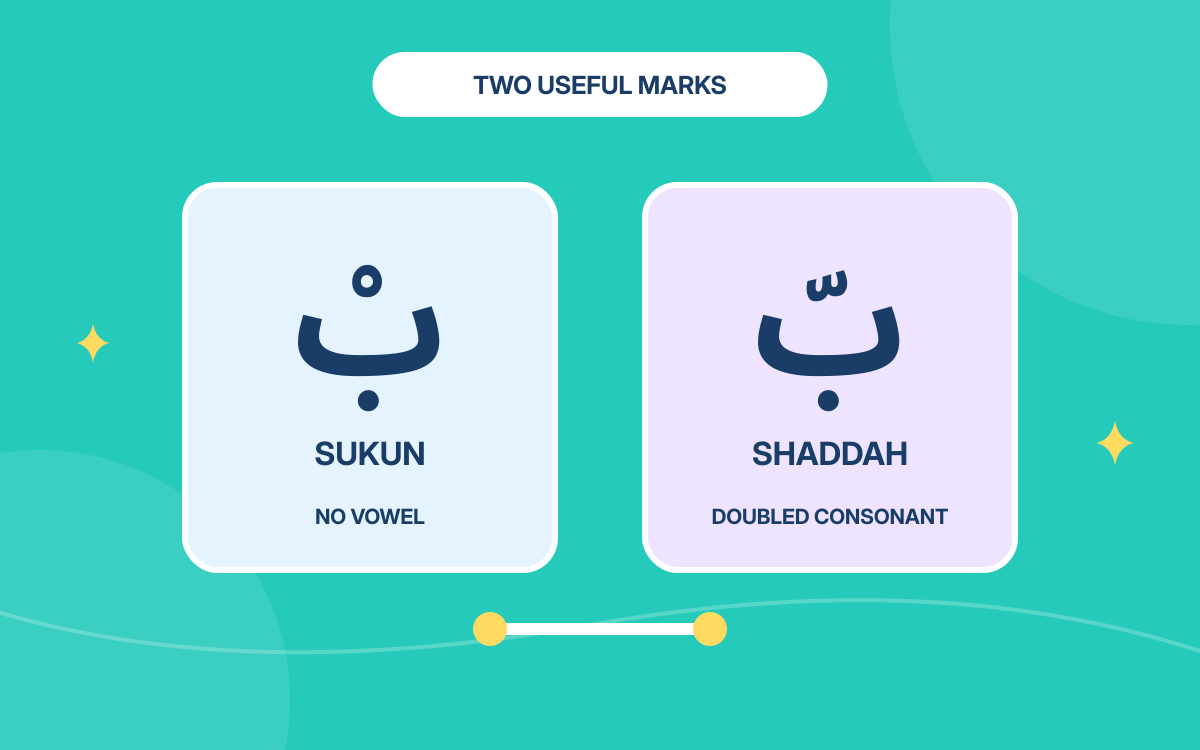
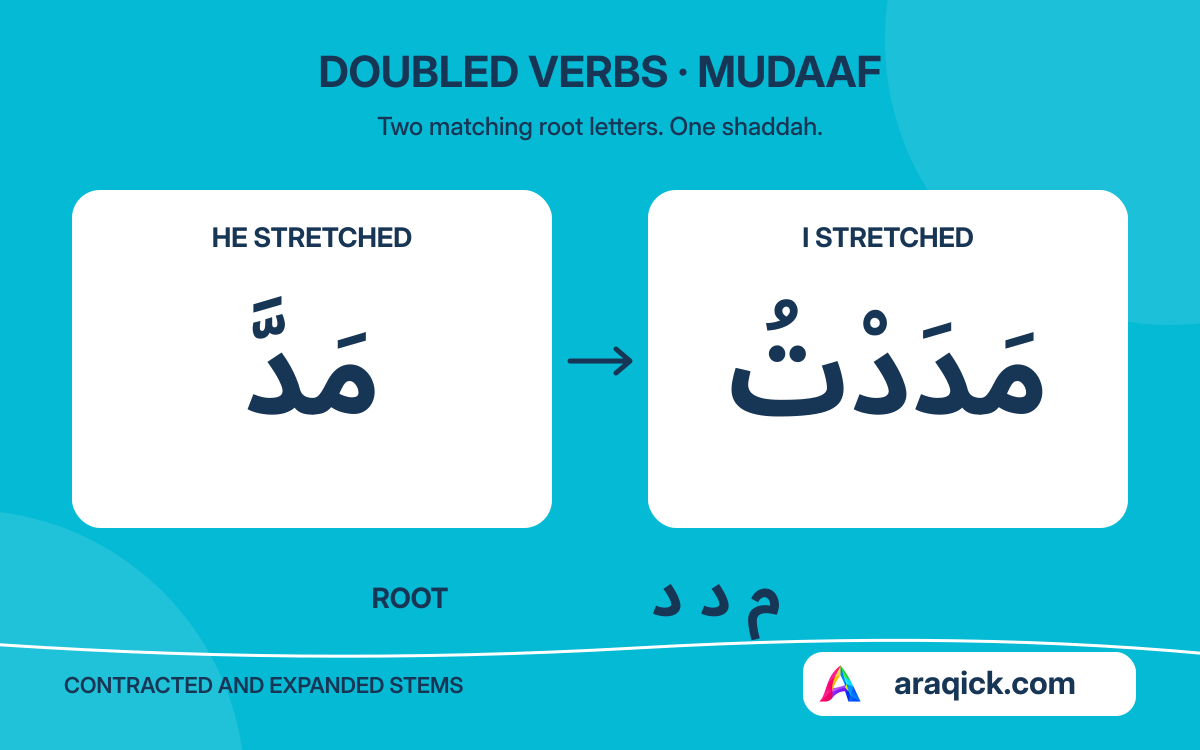
The root is م د د. The shaddah on dal represents two consonants, so madda is still built from a three-letter root. One written dal with shaddah is not a two-letter root.
This family is called mudaaf, مُضَعَّفٌ. The example’s object is hablan, a rope. The verb can also mean extend, with the intended sense supplied by its object.
02Open the doubled consonant before tu and na
مَدَدْتُ حَبْلًا — مَدَدْنَا حَبْلًا
madadtu hablan — madadna hablan
I stretched a rope — We stretched a rope
The two dals separate in these past forms. Tu identifies I and na identifies we. Do not attach the endings to unchanged madda while keeping the same contraction.
She stretched is مَدَّتْ (maddat), which keeps the shaddah. They stretched for a female group is مَدَدْنَ (madadna), with the consonants separate. The person ending determines which pattern you need.
03Learn the present vowel with the verb
يَمُدُّ حَبْلًا — أَمُدُّ حَبْلًا
yamuddu hablan — amuddu hablan
He stretches a rope — I stretch a rope
The ordinary singular present keeps the contraction. Madda has yamuddu with u in the present stem; being a doubled verb alone does not tell you every verb’s present vowel.
A female group uses يَمْدُدْنَ (yamdudna), with the two consonants separate. Compare the contracted he form with the expanded female-group form before memorising the chart.
04Allow for a doubled jussive
لَنْ يَمُدَّ — لَمْ يَمُدَّ
lan yamudda — lam yamudda
He will not stretch — He did not stretch
The contracted singular form can end in fathah in both constructions. After lan it is subjunctive; after lam it is jussive despite that visible vowel. The lam form is not an exception that turns lam into a subjunctive particle.
An expanded jussive is also possible: لَمْ يَمْدُدْ. Here the two dals appear separately and the final one has sukun. These are accepted alternative patterns, not evidence that either sentence needs a different negative particle.
05Keep doubled roots separate from Form II
مُدَّ حَبْلًا
mudda hablan
Stretch a rope. — to one man
Mudda is a contracted command; اُمْدُدْ (umdud) is an expanded alternative. The table gives useful listener forms. A shaddah can therefore stay in a direct command too.
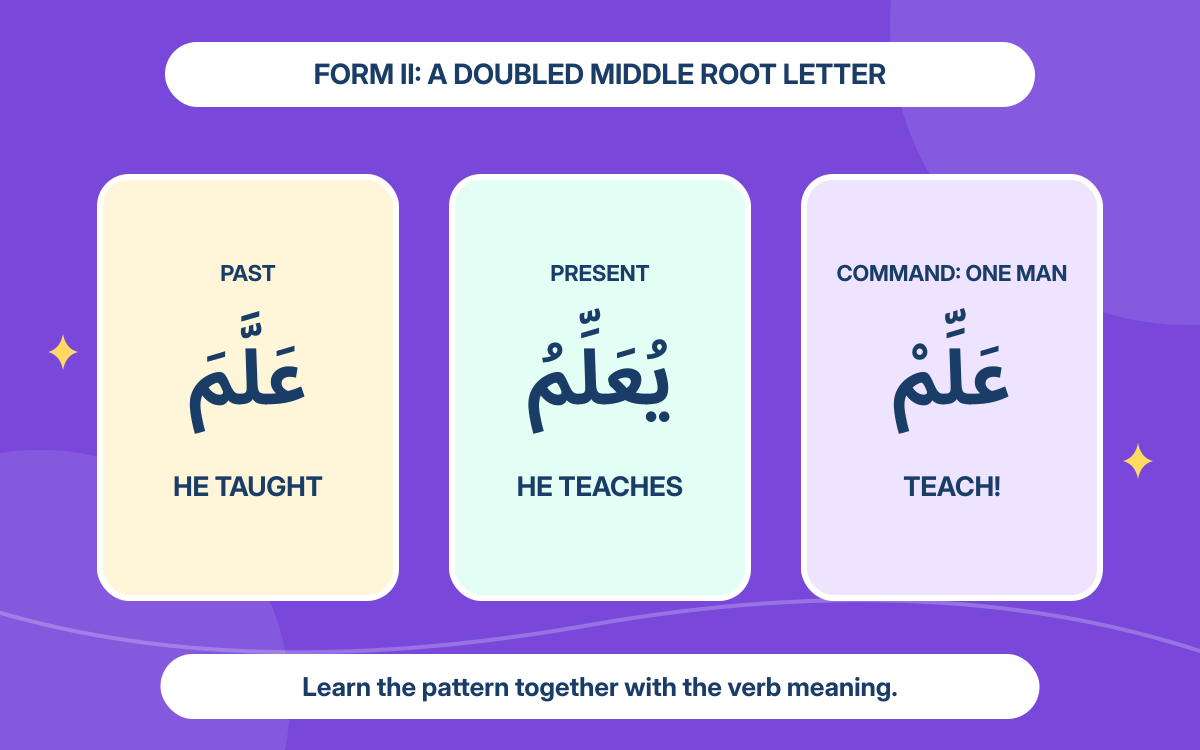
Do not classify every shaddah verb as Form II. In عَلَّمَ (allama, he taught), doubling is part of the derived Form II pattern; its root is ع ل م, with different second and third radicals. Compare Form II verbs and shaddah. Simple reading aids simplify Arabic sounds, so read the full root and form together.
What to remember
- A doubled root repeats its second and third consonants, often written with shaddah.
- Person endings can separate the consonants, as in madadtu and yamdudna.
- Doubled jussives and commands allow contracted forms; a shaddah alone does not identify Form II.
Your reference shelf
Open a guide whenever you need it.
Madda: past and present formsPast and ordinary indicative present; use the lesson for other moods
| Person | Past | Present |
|---|---|---|
| He | مَدَّ | يَمُدُّ |
| They: two men | مَدَّا | يَمُدَّانِ |
| They: male or mixed group | مَدُّوا | يَمُدُّونَ |
| She | مَدَّتْ | تَمُدُّ |
| They: two women | مَدَّتَا | تَمُدَّانِ |
| They: female group | مَدَدْنَ | يَمْدُدْنَ |
| You: one man | مَدَدْتَ | تَمُدُّ |
| You: two people | مَدَدْتُمَا | تَمُدَّانِ |
| You: male or mixed group | مَدَدْتُمْ | تَمُدُّونَ |
| You: one woman | مَدَدْتِ | تَمُدِّينَ |
| You: female group | مَدَدْتُنَّ | تَمْدُدْنَ |
| I | مَدَدْتُ | أَمُدُّ |
| We | مَدَدْنَا | نَمُدُّ |
The dual you form serves two listeners of either gender. Shared spellings depend on context. The present column is indicative; do not use it unchanged after every mood particle.
Commands by listenerCompare the whole form, including the weak letter or doubled consonant
| Listener | Command |
|---|---|
| One man | مُدَّ |
| One woman | مُدِّي |
| Two people | مُدَّا |
| Male or mixed group | مُدُّوا |
| Female group | اُمْدُدْنَ |
This chart selects one standard contracted masculine singular command. The expanded اُمْدُدْ is also valid; a contracted مُدِّ variant occurs too. These alternatives should not be mistaken for new verb roots. The female-group command must use the expanded stem shown here.
Sources & further learning
References for the language explanations and learning guidance.