Form VIII normally inserts ta after the first root consonant. In some verbs, neighbouring sounds change the appearance of that addition. Istadama, izdahama and ittasala still belong to Form VIII, even though their spelling does not show the ordinary template unchanged. Learn three common patterns and keep the original root beside each word.
01Start with the ordinary inserted ta
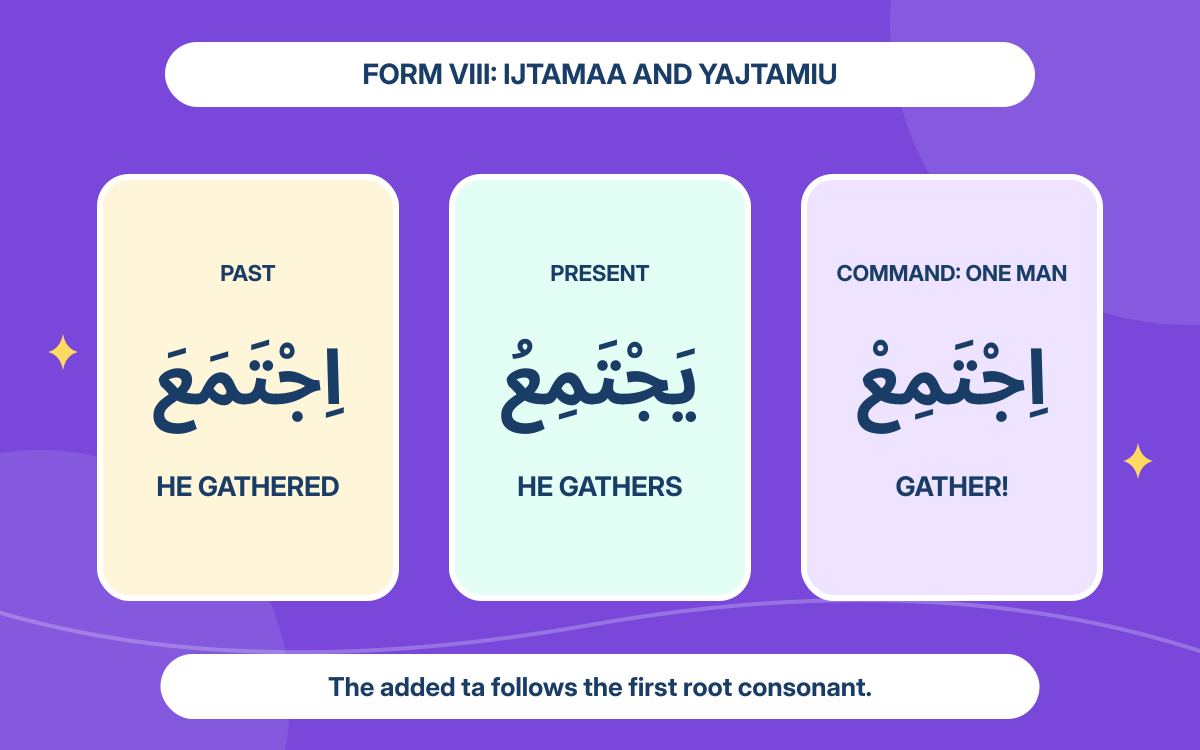
اِجْتَمَعَ — ج م ع
ijtamaa — j m a
He met or gathered — The root letters
In اِفْتَعَلَ, the ta appears after the first root consonant. In ijtamaa, jim is the first root consonant, then comes the added ta. The root remains jim, mim and ain.
This is the starting pattern from the Form VIII introduction. Sound changes affect certain combinations; do not remove a visible letter until you know which role it plays.
02Recognise ta becoming ط after ص
اِصْطَدَمَ الْقَارِبُ بِالصَّخْرَةِ
istadama alqaribu bissakhrati
The boat collided with the rock.
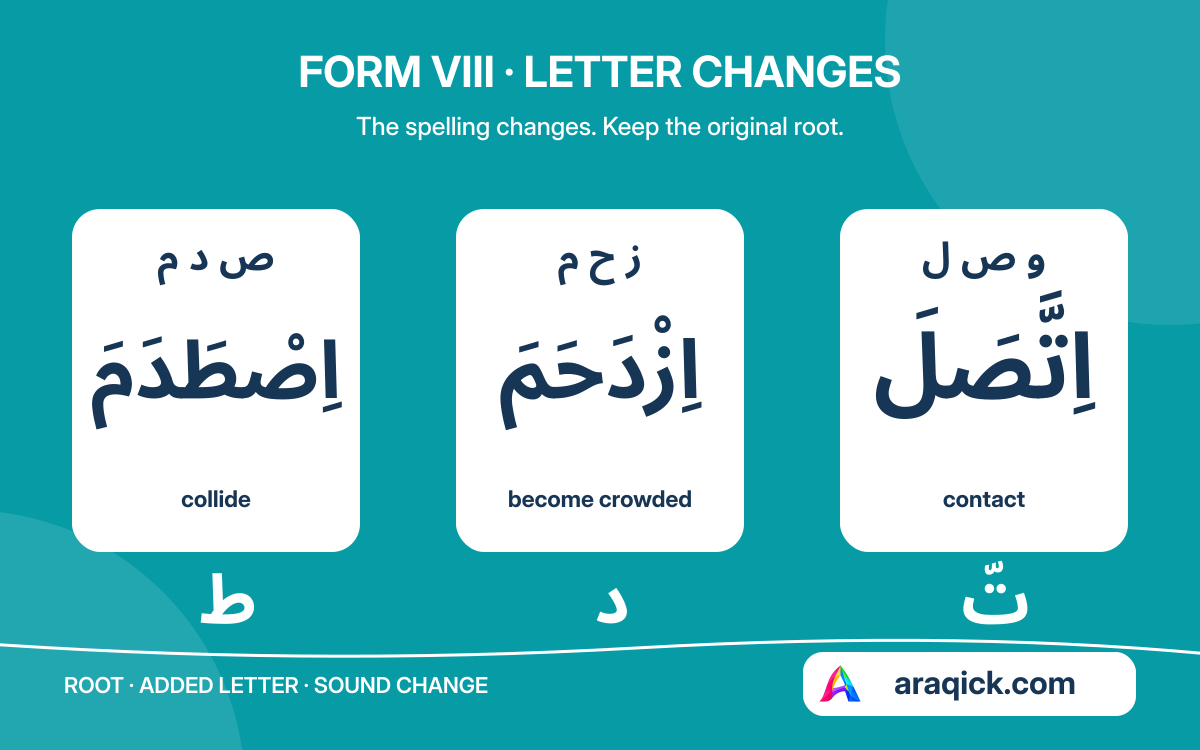
Istadama has root ص د م. After root sad, the added Form VIII ta appears as emphatic ط. That ta is part of the derived pattern, not an extra root consonant.
The related noun اِصْطِدَامٌ means collision and keeps ط. Our plain reading aid writes t for this sound; the Arabic distinguishes ت from ط.
03Recognise the added dal after zay
اِزْدَحَمَ الْمَمَرُّ
izdahama almamarru
The corridor became crowded.
The root is ز ح م. Here the added ta is realised as dal after zay, giving izdahama. The dal is not the second root letter. Ha and mim complete the original root.
The action noun is اِزْدِحَامٌ, crowding or congestion. The description مُزْدَحِمٌ means crowded in this context. All retain the same zd combination.
04Recover a root waw hidden by doubling
اِتَّصَلْتُ بِالْمَكْتَبِ
ittasaltu bilmaktabi
I contacted the office.
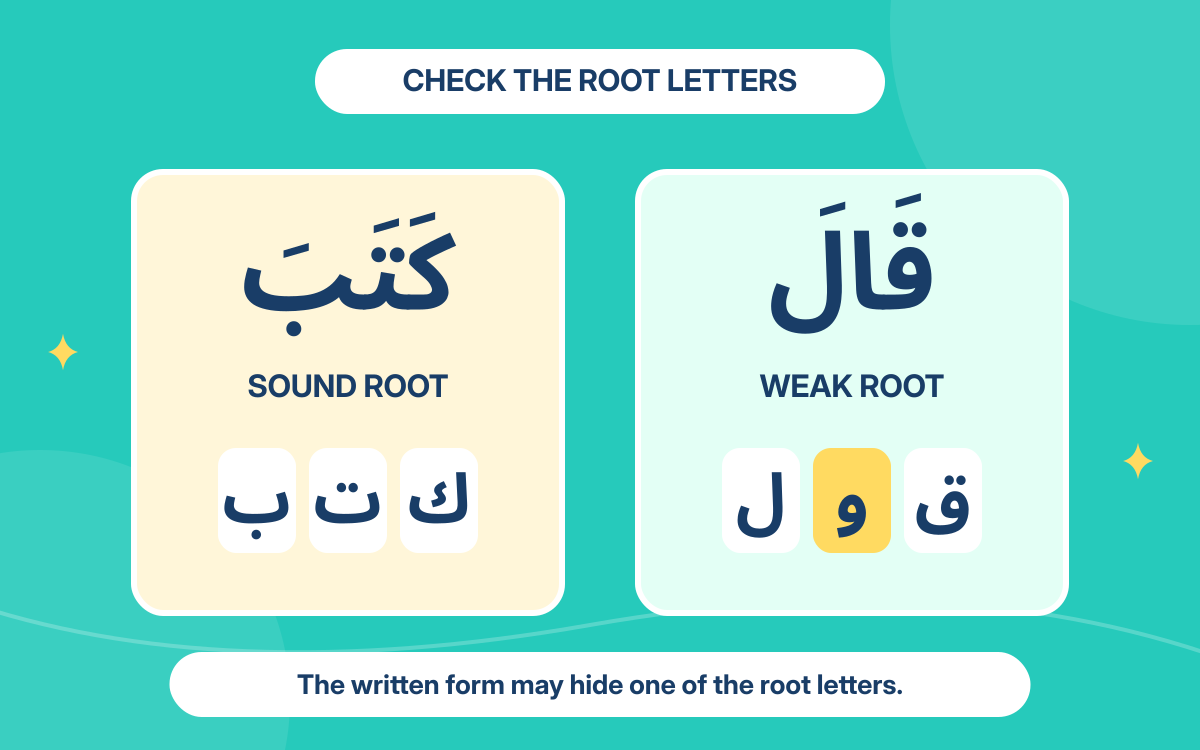
Ittasala belongs to root و ص ل. In this Form VIII verb, initial root waw assimilates with the added ta, producing a doubled ta. A shaddah represents the resulting double consonant; the root has not become t s l.
The present is يَتَّصِلُ, yattasilu, and the action noun is اِتِّصَالٌ, contact or connection. Learn the hidden root with these familiar forms instead of guessing it from the first three written letters.
05Keep a root, word and meaning record
Write the verified root beside the past, present and masdar. The altered spelling is the normal word you use, not an error to repair back into a visibly regular template. These changes continue into related words.
The three cases here are a useful starting set, not an exhaustive list of Form VIII assimilation. Other initial consonants and weak roots have further rules. A shaddah alone does not identify Form II: in ittasala the doubling appears in a different structural position.
Use the dictionary lookup guide and root classification alongside the masdar chart.
What to remember
- Form VIII sound changes can hide its ordinary added ta.
- Istadama, izdahama and ittasala illustrate three different changes.
- The root must be recovered from the verified word family, not guessed from letter order.
Your reference shelf
Open a guide whenever you need it.
Three common changes beside a regular exampleThe root column identifies original consonants; added letters belong to the pattern
| Root | Past / present | What to notice | Meaning |
|---|---|---|---|
| ج م ع | اِجْتَمَعَ يَجْتَمِعُ | Added ت stays visible | meet / gather |
| ص د م | اِصْطَدَمَ يَصْطَدِمُ | Added ت becomes ط after ص | collide |
| ز ح م | اِزْدَحَمَ يَزْدَحِمُ | Added ت becomes د after ز | become crowded |
| و ص ل | اِتَّصَلَ يَتَّصِلُ | Root و assimilates into doubled ت | connect / contact |
The descriptions apply to the examples shown. This compact table does not cover every possible first root letter or every weak-verb change.
The changes continue in related nounsKeep the accepted spelling when moving from verb to noun
| Verb | Masdar | Masdar meaning |
|---|---|---|
| اِصْطَدَمَ | اِصْطِدَامٌ | collision |
| اِزْدَحَمَ | اِزْدِحَامٌ | crowding / congestion |
| اِتَّصَلَ | اِتِّصَالٌ | contact / connection |
These past forms and masdars begin with hamzat alwasl. Transliteration is a simplified reading aid; the fully marked Arabic distinguishes emphatic consonants and long vowels. The root letters themselves are listed as a lookup sequence.
Sources & further learning
References for the language explanations and learning guidance.