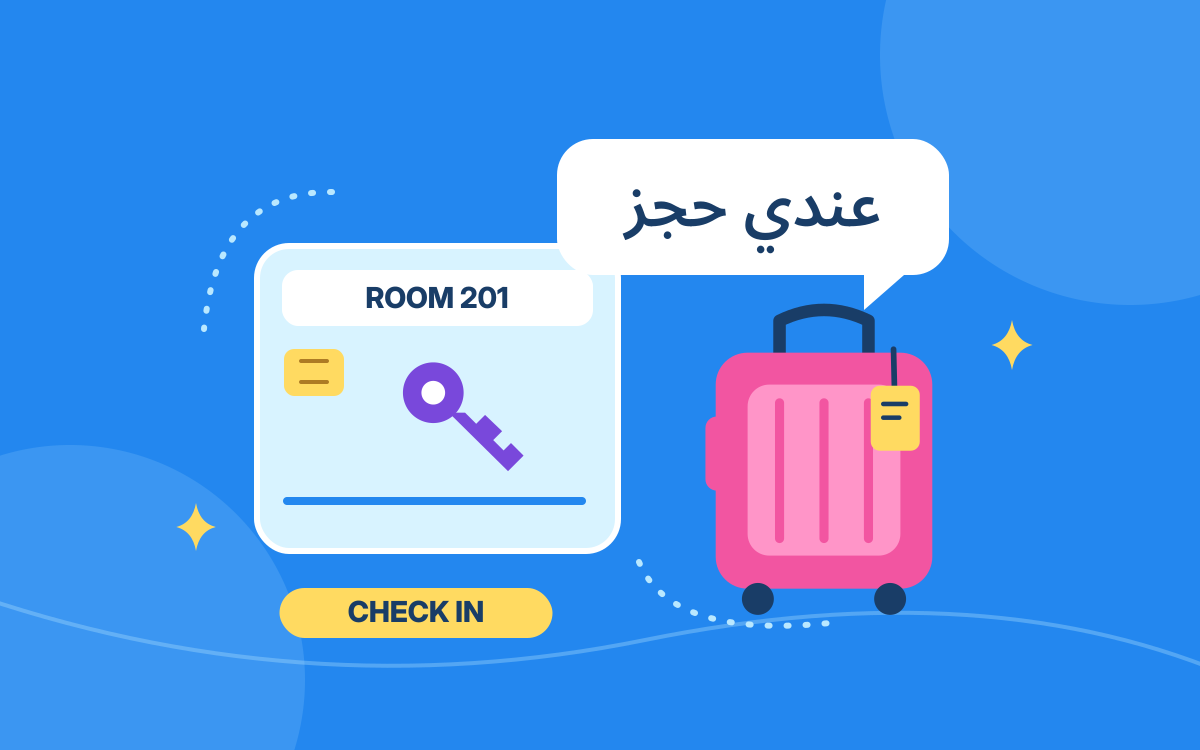
Indi hajz means I have a reservation. Start there, add the name on your booking, then ask for your room key or something you need. These short Modern Standard Arabic phrases give you a simple check in script. Local conversations may use different everyday wording.
01Start with your booking
عِنْدِي حَجْز
indi hajz
I have a reservation.
Hajz is a reservation; indi tells the listener that you have it. Use this when a booking already exists. It does not ask the hotel to make a new one. Keep the booking name ready for the next part of the exchange.
02Add the name on the booking
عِنْدِي حَجْز بِاسْمِ سَامِي
indi hajz bismi sami
I have a reservation under the name Sami.
Bismi introduces the name here. Sami is our example guest; replace that name with the one used for your booking. A short statement is enough to begin the conversation. Say the name clearly, and show the confirmation if the spelling needs checking.
For a simple introduction, you can also say اِسْمِي سَامِي ismi sami, my name is Sami. Ismi gives your own name; bismi connects the reservation to a name.
03Find the right object
miftah
Key
haqiba
Bag or suitcase
مِفْتَاح الْغُرْفَة، مِنْ فَضْلِكَ
miftah alghurfa min fadlika
The room key, please.
Ghurfa means room. Miftah alghurfa joins key and the room to mean the room key. Our picture uses a metal key; the hotel may use a key card. In this request, min fadlika addresses one man. Use مِنْ فَضْلِكِ min fadliki when addressing one woman.
04Ask where the lift is
أَيْنَ الْمِصْعَد؟
ayna almisad
Where is the lift?
Ayna asks where. Misad means lift or elevator. You are asking for a location, so listen for a direction or watch where the member of staff points. The question itself works regardless of who is speaking or listening.
Keep location questions separate from requests for objects. “Where is the lift?” asks for information; “The room key, please” asks for something to be given to you.
05Ask for water and close politely
أُرِيدُ مَاءً، مِنْ فَضْلِكَ
uridu ma min fadlika
I want water, please.
Uridu means I want. Here it introduces one small request. This example addresses one man; switch the ending of please when speaking to one woman.
You: شُكْرًا — shukran — Thank you.
Staff: عَفْوًا — afwan — You are welcome.
Rehearse your arrival as three short turns: state the reservation, add its name, then ask for the room key. Add the lift question only when you need it. Plain reading aids simplify sounds and some endings; the Arabic stays beside them for comparison.
What to remember
- Indi hajz states that you have a reservation; bismi introduces its booking name.
- Miftah alghurfa means the room key, and ayna almisad asks where the lift is.
- Use uridu for a request, add please and finish with shukran.
Your reference shelf
Open a guide whenever you need it.
Your hotel phrase cardOpen the booking, room and request phrases
| Meaning | Arabic | Plain reading aid |
|---|---|---|
| I have a reservation | عِنْدِي حَجْز | indi hajz |
| Under the name Sami | بِاسْمِ سَامِي | bismi sami |
| My name is Sami | اِسْمِي سَامِي | ismi sami |
| The room key, please | مِفْتَاح الْغُرْفَة، مِنْ فَضْلِكَ | miftah alghurfa min fadlika |
| Where is the lift? | أَيْنَ الْمِصْعَد؟ | ayna almisad |
| I want water, please | أُرِيدُ مَاءً، مِنْ فَضْلِكَ | uridu ma min fadlika |
| Thank you | شُكْرًا | shukran |
These please phrases address one man. Use min fadliki for one woman. In the water request, the plain reading aid omits the formal ending shown on ماءً.
Sources & further learning
References for the language explanations and learning guidance.