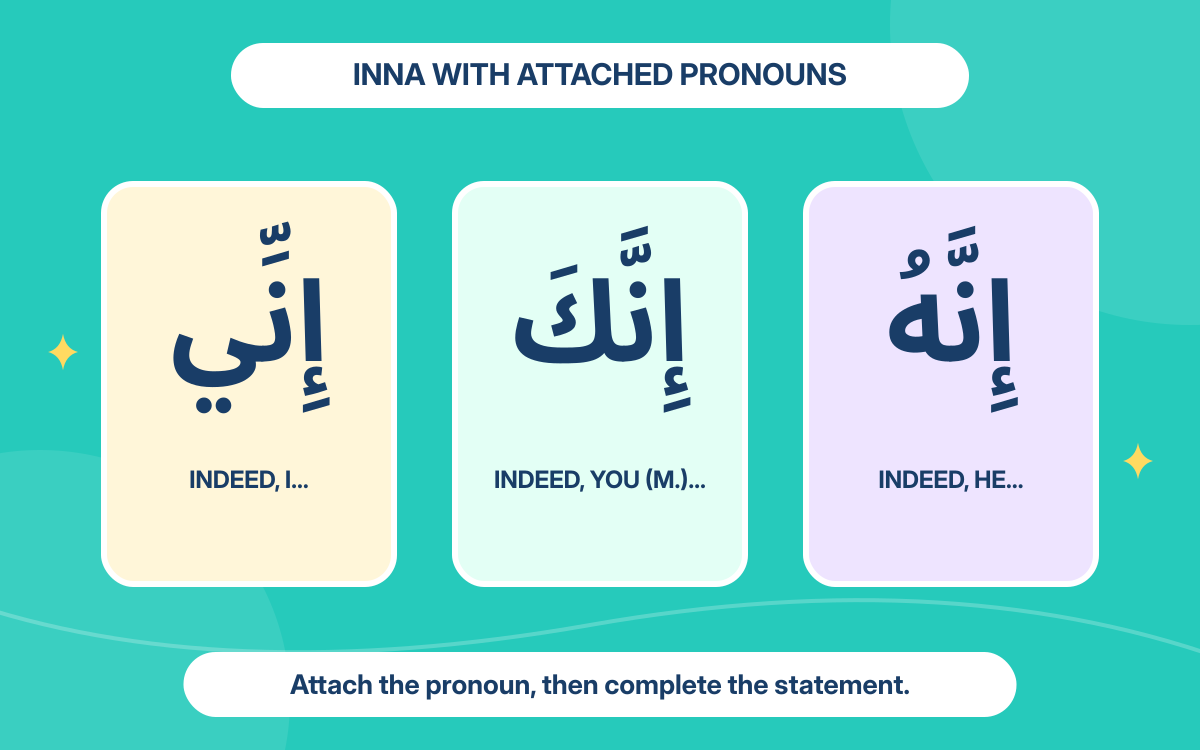
You can report a fact or a thought by placing a smaller statement inside a larger sentence. Anna introduces that statement in the patterns I know that and I think that. Its noun rules are familiar from inna; its role in reporting is new.
01Report a fact with I know that
أَعْلَمُ means I know. Add anna, أَنَّ, followed by the fact you know. Here anna corresponds to English “that”.
أَعْلَمُ أَنَّ الْبَابَ مَفْتُوحٌ
alamu anna lbaba maftuhun
I know that the door is open.
The door statement sits inside the larger I know sentence. Our plain reading aids simplify long vowels and emphatic sounds but keep the endings shown in the Arabic.
02Keep the noun and predicate endings
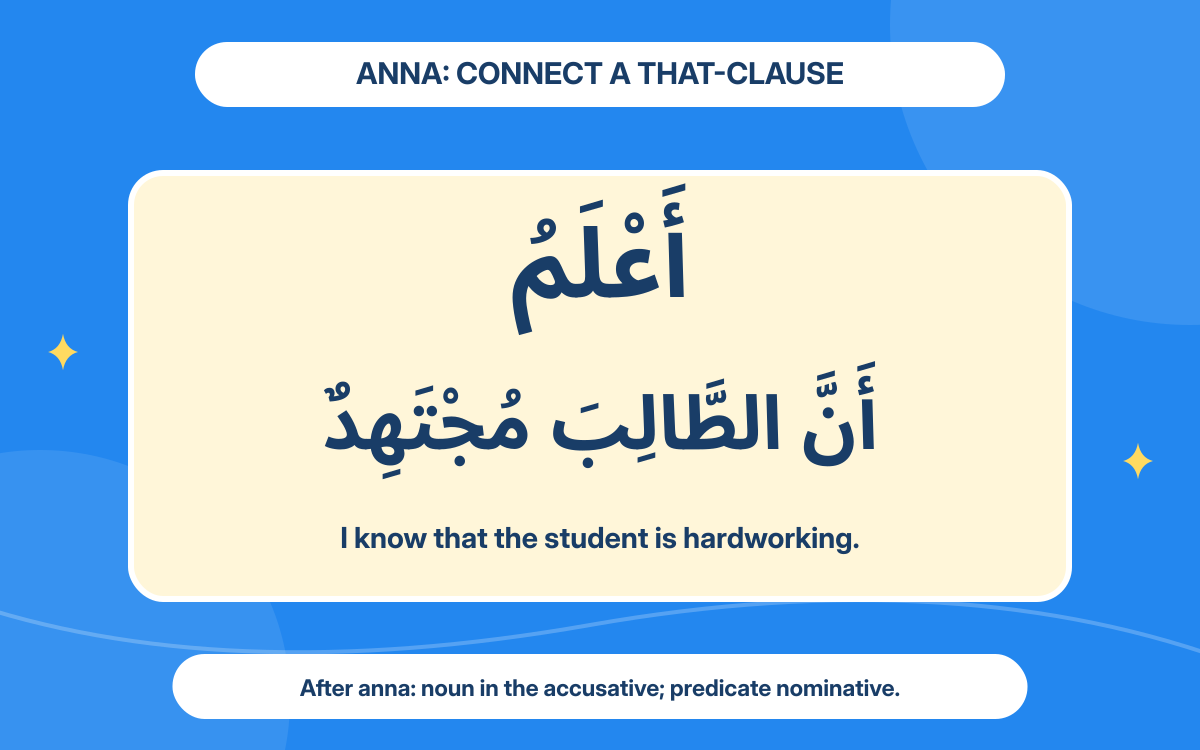
أَظُنُّ means I think. Anna is a sister of inna: its noun is accusative; a simple predicate stays nominative.
أَظُنُّ أَنَّ الطَّالِبَ مُجْتَهِدٌ
azunnu anna ttaliba mujtahidun
I think that the student is hardworking.
Attaliba ends in a as the noun of anna. Mujtahidun ends in un as its predicate. The reporting verb does not turn both words into accusative nouns.
03Attach the person you mean
Use annahu for that he and annana for that we. Write the pronoun attached to anna. It occupies anna’s noun position without acquiring a new case ending.
أَعْلَمُ أَنَّهُ حَاضِرٌ
alamu annahu hadirun
I know that he is present.
أَعْلَمُ أَنَّنَا حَاضِرُونَ
alamu annana hadiruna
I know that we are present. — male or mixed group
The predicate describes the embedded person: singular hadirun for he, plural hadiruna for this we.
04Report an event too
The information after anna can be a whole verb clause. Keep a noun or attached pronoun as anna’s noun before that information.
أَظُنُّ أَنَّهُ ذَهَبَ
azunnu annahu dhahaba
I think that he went.
Hu is anna’s noun. The clause he went supplies its predicate. Dhahaba remains a past verb; anna does not give this verb an accusative noun ending.
05Keep direct speech distinct
After qala, he said, a direct quotation can begin with inna, إِنَّ. It presents the speaker’s actual statement rather than our I know that construction.
قَالَ الْمُعَلِّمُ: إِنَّ الْبَابَ مَفْتُوحٌ
qala lmuallimu inna lbaba maftuhun
The teacher said: “Indeed, the door is open.”
Choose inna for this quoted statement and anna for the embedded statements above. Also distinguish anna, with doubled n, from أَنْ, an, a different particle used with verbs. An is not an alternative spelling for our noun-clause pattern.
What to remember
- Anna introduces a that clause after the reporting verbs I know and I think in these patterns.
- Its noun is accusative; its simple predicate is nominative. An attached pronoun fills its noun position.
- A direct quotation after qala can begin with inna. Anna and an are different particles.
Your reference shelf
Open a guide whenever you need it.
Review reporting and quotation patternsCompare anna, attached pronouns and direct speech
| Pattern | Arabic | Reading |
|---|---|---|
| I know that… | أَعْلَمُ أَنَّ الْبَابَ مَفْتُوحٌ | alamu anna lbaba maftuhun |
| I think that… | أَظُنُّ أَنَّهُ ذَهَبَ | azunnu annahu dhahaba |
| That he / she / we | أَنَّهُ / أَنَّهَا / أَنَّنَا | annahu / annaha / annana |
| Direct quotation | قَالَ الْمُعَلِّمُ: إِنَّ الْبَابَ مَفْتُوحٌ | qala lmuallimu inna lbaba maftuhun |
The introductory cases are governed by the construction, not by where a word happens to sit on a line. Anna is not required after every verb, and inna is not restricted to the start of a whole written sentence. Here we practise embedded statements after know or think and a quotation after said. A verbal predicate occupies the predicate’s nominative position as a whole; its verb keeps its own tense and form.
Sources & further learning
References for the language explanations and learning guidance.