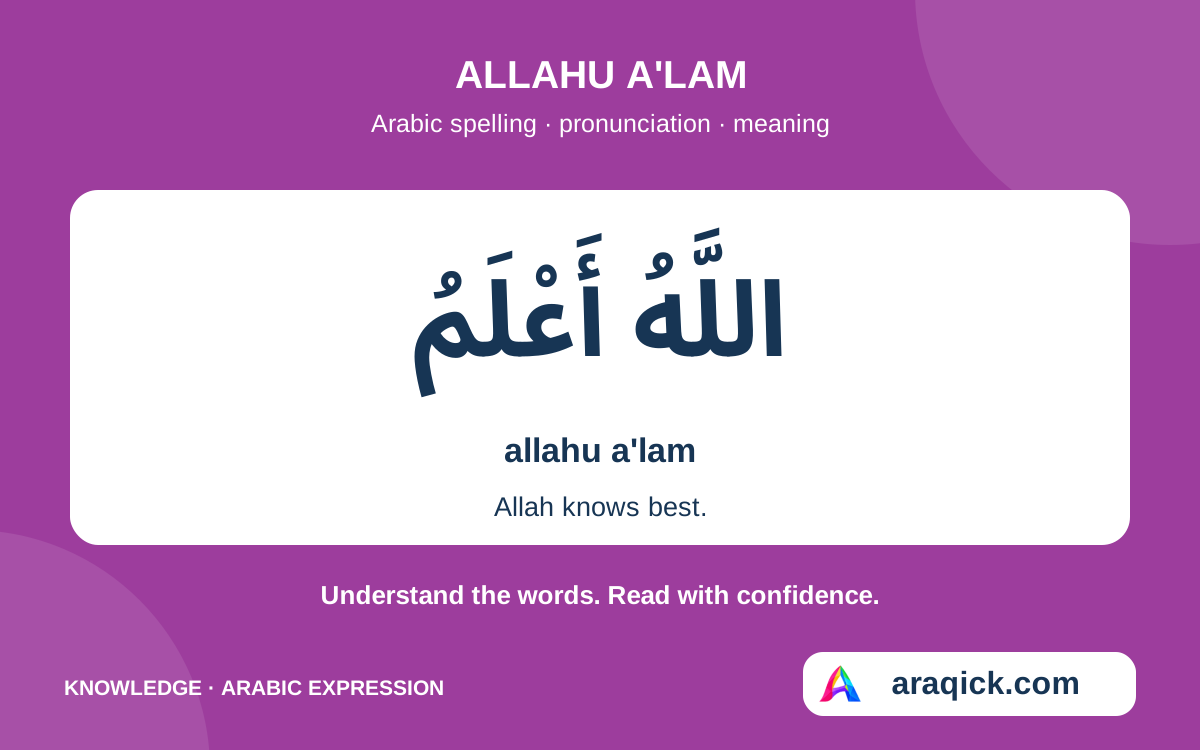
Allahu a’lam is اللَّهُ أَعْلَمُ, commonly translated “Allah knows best” or “God knows best.” It acknowledges God’s greater knowledge and can mark the limits of the speaker’s own knowledge. The form wa-Allahu a’lam, وَاللَّهُ أَعْلَمُ, adds “and.”
01What does Allahu a’lam mean?
This short expression places knowledge with God rather than claiming complete knowledge for the speaker. “Allah knows best” is the natural English rendering. Someone may add it after an explanation to acknowledge that their understanding is limited.
اللَّهُ أَعْلَمُ
Allahu alam
Allah knows best.
It is a statement, not a question. It does not itself mean “I agree,” “that is definitely true” or “I promise.” Read what comes before and after it to understand what the speaker is certain or uncertain about.
02What does a’lam contribute?
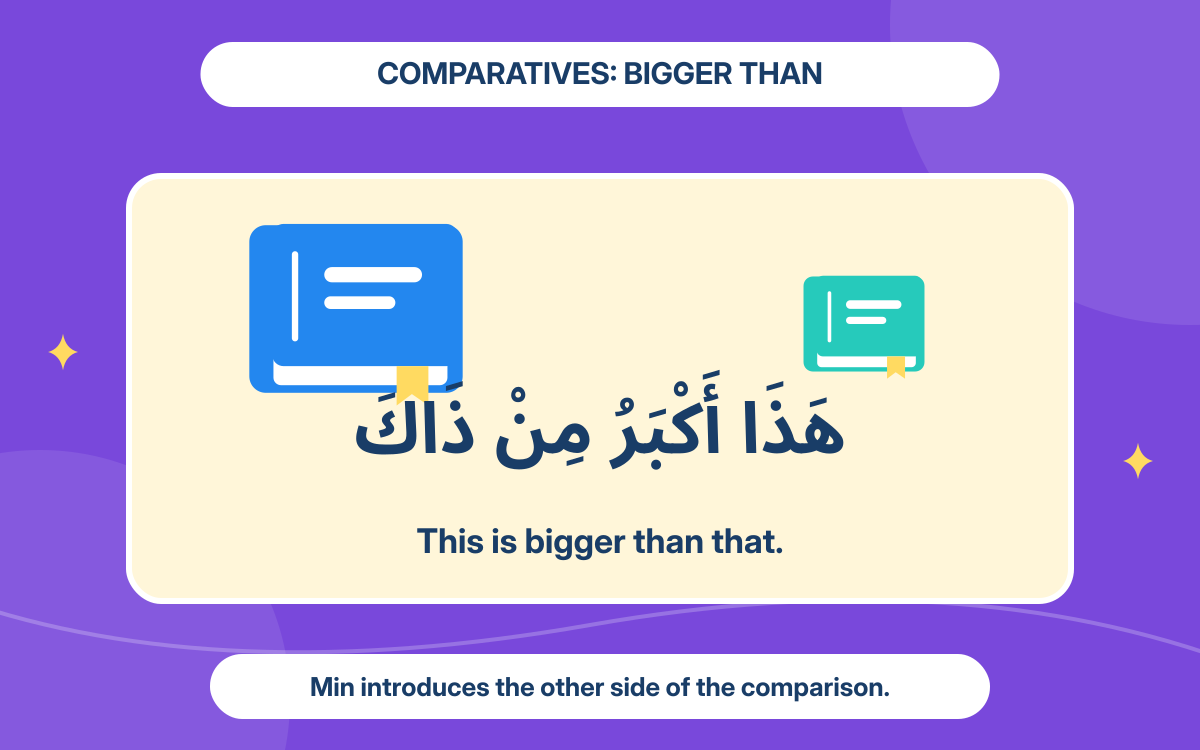
The word أَعْلَمُ belongs to the root ع ل م, associated with knowing. In this expression it is an elative form: a form used for comparisons such as “more knowing” and superlatives such as “most knowing.” The Quranic Arabic Corpus analyses it as a noun in Quran 6:124.
The phrase has a subject and a description without an explicit present-tense “is.” Arabic often builds a complete sentence this way. You do not need to insert a separate Arabic verb for the English word knows. Our guide to Arabic comparisons introduces the wider pattern.
03Arabic spelling and pronunciation
Read the first word as Allahu when continuing into the next word. The final u is part of the fully connected reading shown by the vowel marks. Read the next word as alam, with a short a followed by the throat letter ع.
English spellings include a’lam and alam. An apostrophe is often used to remind the learner of ayn. It is not an extra Arabic letter. At the end of the phrase, you normally pause on alam rather than sounding its final short u. The Arabic text keeps that grammatical vowel visible.
04Where can you recognise it?
The wording اللَّهُ أَعْلَمُ appears within Quran 6:124, in a passage concerning where God places His message. That source illustrates the knowledge comparison; the two words alone do not reproduce the full verse.
In a learning conversation, a speaker might explain what they understand and then add “Allahu a’lam.” Treat this as acknowledging a limit, not as evidence that the preceding claim is correct. If an answer matters, ask what source or explanation supports it. A phrase of humility and a checked answer do different jobs.
05Wa-Allahu a’lam is not wallahi
Add the conjunction وَ, “and,” and you get وَاللَّهُ أَعْلَمُ (wallahu alam), “and Allah knows best.” The name Allah still has the ending u in connected pronunciation.
Compare وَاللَّهِ (wallahi), “by Allah,” an oath expression. Here the wa is an oath particle and the name has the ending i. The beginning can look similar without vowel marks, but the construction and purpose differ. Pay attention to the whole phrase, especially whether a’lam follows, rather than deciding from the first letters alone.
06Does it require a fixed reply?
No single everyday reply is contained in the expression. Acknowledge the explanation, ask a follow-up question or continue the topic as appropriate. It is not an exchange like a greeting with its corresponding greeting.
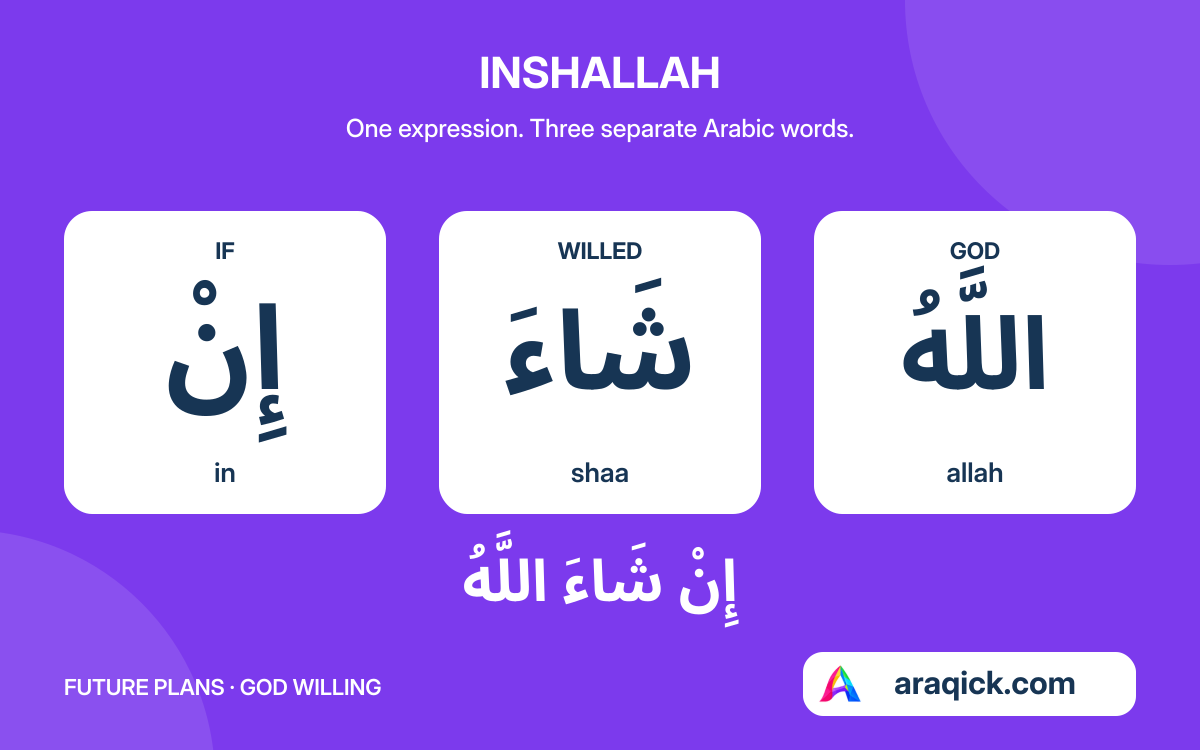
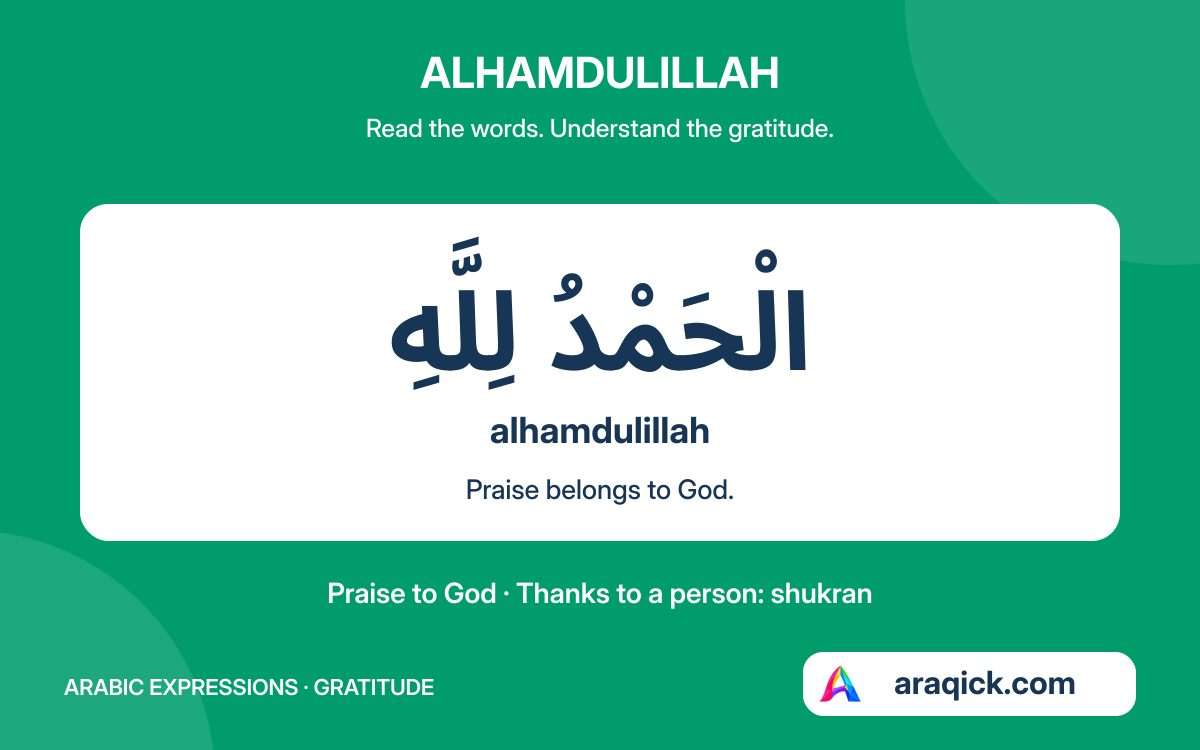
Keep neighbouring expressions separate: inshallah relates a future intention or hope to God’s will, while alhamdulillah expresses praise. If you simply need to say “I do not know,” لَا أَعْرِفُ (la arif) is a direct everyday option. Allahu a’lam explicitly makes a statement about God’s knowledge.
What to remember
- Allahu a’lam means Allah knows best.
- A’lam expresses a knowledge comparison; it is not a guarantee of the speaker’s accuracy.
- Wallahu a’lam means and Allah knows best; wallahi has the different purpose of an oath.
Your reference shelf
Open a guide whenever you need it.
Knowledge expression: the building blocksRecognise the subject, comparative form and conjunction.
| Arabic | Reading | Meaning or use |
|---|---|---|
| اللَّهُ | Allahu | Allah; subject in this phrase |
| أَعْلَمُ | alam | More or most knowing; knows best in the expression |
| وَ | wa | And; when joining this statement |
| وَاللَّهُ أَعْلَمُ | wallahu alam | And Allah knows best |
Similar beginnings, different meaningsUse the whole expression to choose an English meaning.
| Arabic | Reading | Meaning or use |
|---|---|---|
| اللَّهُ أَعْلَمُ | Allahu alam | Allah knows best |
| وَاللَّهِ | wallahi | By Allah; an oath |
| لَا أَعْرِفُ | la arif | I do not know |
| إِنْ شَاءَ اللَّهُ | inshallah | If Allah wills; God willing |
Sources & further learning
References for the language explanations and learning guidance.