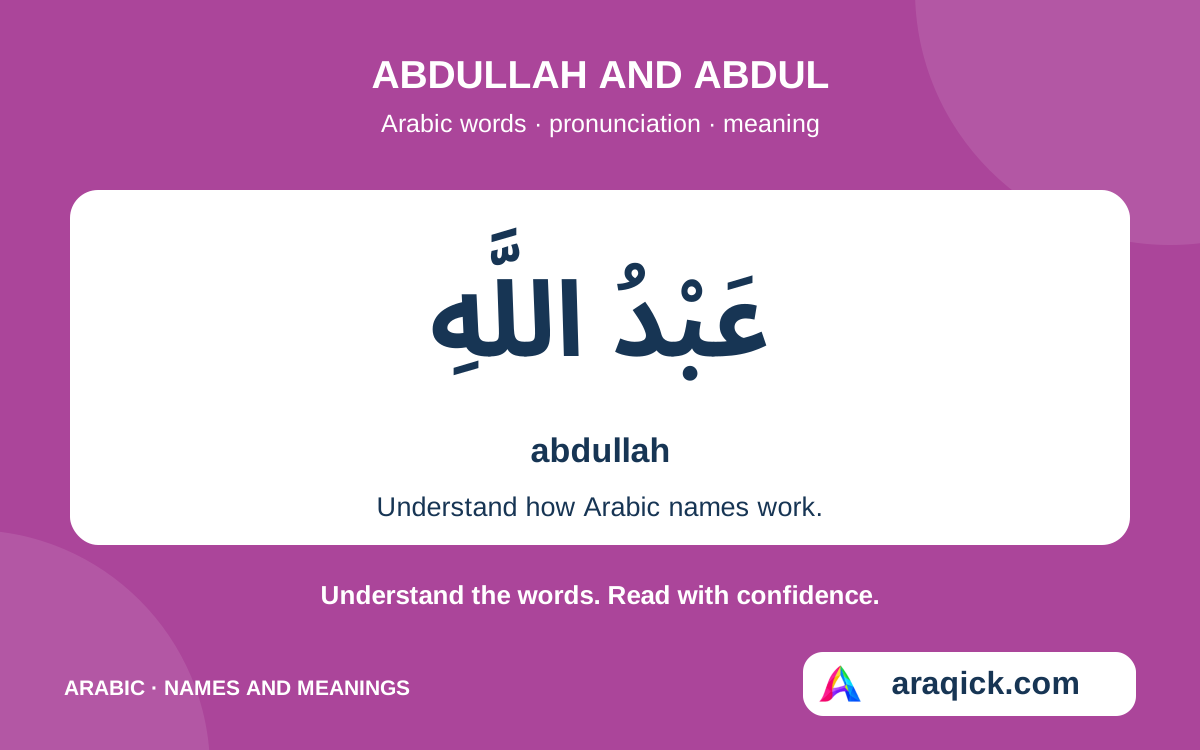
Abdullah, عَبْدُ اللَّهِ, means “servant of Allah” or “servant of God.” Abdul commonly represents the beginning of a longer Arabic name formed from abd plus al-, the definite article of the following word. The full expression, such as Abd al-Rahman, supplies the complete relationship and meaning.
01Abdullah combines abd and Allah
The first element is عَبْدٌ, abd, a word for a servant or someone in servitude. In this devotional name, عَبْدُ اللَّهِ expresses being a servant of Allah. The root is ayn–ba–dal; the first consonant is ayn, a throat consonant that plain English letters do not reproduce precisely.
Arabic writes two grammatical elements here, although English often presents the name as one word: Abdullah. In Quran 19:30, Jesus describes himself using the expression “servant of Allah.” That occurrence illustrates the phrase’s meaning; it is a description within a sentence rather than a statement that his personal name is Abdullah.
02The structure is an idafa
An idafa joins nouns in a relationship often expressed with “of” in English. In عَبْدُ اللَّهِ, abd is the first element and Allah is the second. The first element has no tanwin and does not take its own al-. The second is in the genitive case, shown here by the final i.
The first element’s case can change with its role in a sentence. A full nominative reading begins abdu-, an accusative reading abda-, and a genitive reading abdi-. The meaning of the name stays the same. English name spellings normally do not display these changes, so spelling alone cannot teach all the grammatical endings.
03Abdul represents a joined beginning
In names such as Abd al-Rahman, Abdul reflects abd followed by the definite article al- of the next element. In a nominative connected reading, the short u belongs to abd’s case ending. The article’s joining hamza is not pronounced after that vowel. The resulting sound can be written abdu-l- before a letter that preserves the l.
This explains why Abdul is not a separate divine name or a word meaning “God.” In this Arabic construction, the following element tells you whose servant is meant. People’s recorded personal names can have different local conventions; understanding the Arabic structure does not require judging those naming customs.
04Connected sounds explain the English variants
عَبْدُ اللَّهِ has the full reading abdullaahi in the nominative form shown. At a pause on the name, the final i is dropped: abdullaah. The u between abd and Allah remains; it is not the final vowel of the complete expression. Allah’s long aa also remains in this connection.
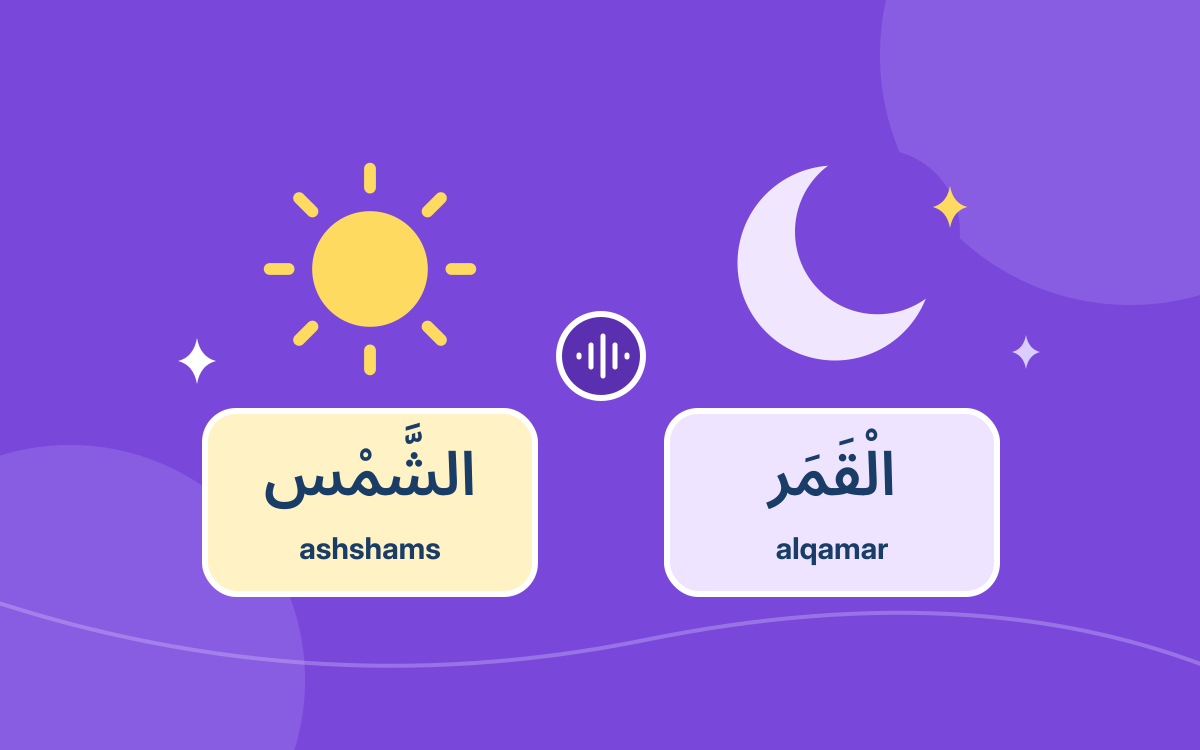
In عَبْدُ الرَّحْمَٰنِ, the article’s l assimilates to the following r, producing abdurrahmaan at a pause. Rahmaan has a long aa. Compare this with عَبْدُ الْكَرِيمِ, abdulkariim, where l is pronounced and kariim has a long ii. Our sun and moon letters guide explains that contrast.
05Read the second element for the meaning
عَبْدُ الرَّحْمَٰنِ means “servant of the Most Merciful,” while عَبْدُ الْكَرِيمِ means “servant of the Generous.” The first element stays recognisable, but the second changes the name’s particular meaning. Arabic grammar links them into a complete expression rather than two unrelated labels.
Sahih Muslim 2132 explicitly mentions Abdullah and Abd al-Rahman, providing an early textual example of both names. Spellings such as Abdurrahman and Abdul Rahman reflect different romanisation habits. A written space in English does not necessarily mark a pause in Arabic speech. See the Names of Allah reference for the meanings of those second elements.
06Keep name spelling and grammar together
When learning a name, record its Arabic spelling, a practical connected reading and the complete meaning. Break Abdullah into abd and Allah for understanding, then join the sounds again for speech. For a longer name, locate the second element before trying to translate Abdul in isolation. This avoids treating a partial English spelling as the entire Arabic expression.
The table uses nominative forms with pause readings on the final word. Other sentence roles change the first element’s vowel, as explained above. Our Arabic boy names guide offers further name vocabulary, and Allah and ilah explains why the divine name and the general noun need separate attention.
What to remember
- Abdullah joins abd and Allah, meaning servant of God.
- Abdul commonly represents abd joined to the following definite article.
- Case endings and sun-letter assimilation explain several connected readings and English spellings.
Your reference shelf
Open a guide whenever you need it.
Names and connected readingsArabic forms below are nominative; the plain-letter readings pause only on the complete name.
| Arabic | Connected pause reading | Meaning |
|---|---|---|
| عَبْدُ اللَّهِ | abdullaah | Servant of Allah |
| عَبْدُ الرَّحْمَٰنِ | abdurrahmaan | Servant of the Most Merciful |
| عَبْدُ الْكَرِيمِ | abdulkariim | Servant of the Generous |
| عَبْدُ الْعَزِيزِ | abdulaziiz | Servant of the Almighty; ayn also occurs in aziiz |
How case affects the first elementThese grammatical forms keep the same underlying name. Full readings include the final i of Allah.
| Arabic form | Full connected reading | First element’s case |
|---|---|---|
| عَبْدُ اللَّهِ | abdullaahi | Nominative: abdu |
| عَبْدَ اللَّهِ | abdallaahi | Accusative: abda |
| عَبْدِ اللَّهِ | abdillaahi | Genitive: abdi |
At a pause on the full expression, omit the final short i. Keep the internal u, a or i on abd appropriate to the sentence. Ordinary English personal-name spellings usually remain fixed rather than changing to show Arabic case.
Sources & further learning
References for the language explanations and learning guidance.