Mariam arrives for her first Arabic class and meets Lina beside the classroom. They exchange names, discover that both are new, and agree to sit together.
01Read the Arabic conversation
التَّعَارُفُ قَبْلَ الدَّرْسِ
مَرْيَمُ: مَرْحَبًا! هَلْ أَنْتِ فِي صَفِّ اللُّغَةِ الْعَرَبِيَّةِ؟
لِينَا: نَعَمْ، أَنَا فِي هٰذَا الصَّفِّ.
مَرْيَمُ: أَنَا مَرْيَمُ. مَا اسْمُكِ؟
لِينَا: اِسْمِي لِينَا. أَهْلًا بِكِ يَا مَرْيَمُ.
مَرْيَمُ: أَهْلًا بِكِ يَا لِينَا. أَنَا طَالِبَةٌ جَدِيدَةٌ.
لِينَا: أَنَا طَالِبَةٌ جَدِيدَةٌ أَيْضًا.
مَرْيَمُ: هَلْ هٰذِهِ غُرْفَةُ الصَّفِّ؟
لِينَا: نَعَمْ، هٰذِهِ غُرْفَةُ الصَّفِّ. تَفَضَّلِي.
مَرْيَمُ: شُكْرًا. أَيْنَ تَجْلِسِينَ؟
لِينَا: أَجْلِسُ هُنَا، قُرْبَ الْبَابِ.
مَرْيَمُ: هَلْ أَجْلِسُ بِجَانِبِكِ؟
لِينَا: نَعَمْ، تَفَضَّلِي. هٰذَا كُرْسِيٌّ لَكِ.
مَرْيَمُ: شُكْرًا يَا لِينَا. أَنَا سَعِيدَةٌ بِلِقَائِكِ.
لِينَا: وَأَنَا سَعِيدَةٌ بِلِقَائِكِ أَيْضًا.
Show English translationHide English translation
Mariam: Hello! Are you in the Arabic class?
Lina: Yes, I am in this class.
Mariam: I am Mariam. What is your name?
Lina: My name is Lina. Welcome, Mariam.
Mariam: Welcome, Lina. I am a new student.
Lina: I am a new student too.
Mariam: Is this the classroom?
Lina: Yes, this is the classroom. Please come in.
Mariam: Thank you. Where are you sitting?
Lina: I am sitting here, near the door.
Mariam: May I sit beside you?
Lina: Yes, please do. Here is a chair for you.
Mariam: Thank you, Lina. I am happy to meet you.
Lina: And I am happy to meet you too.
02Useful words and expressions
| Arabic | Meaning in this conversation |
|---|---|
| مَا اسْمُكِ؟ | What is your name? — addressed to a woman |
| اِسْمِي | my name is |
| أَهْلًا بِكِ | welcome — addressed to a woman |
| طَالِبَةٌ جَدِيدَةٌ | a new female student |
| أَيْضًا | too; also |
| تَفَضَّلِي | please come in; please do — addressed to a woman |
| بِجَانِبِكِ | beside you — addressed to a woman |
| سَعِيدَةٌ بِلِقَائِكِ | happy to meet you — a woman speaking to a woman |
03Check your understanding
Answer these seven questions using the conversation. You can reopen the English translation or return to the Arabic dialogue whenever you need help.
What to remember
- Ask a woman مَا اسْمُكِ؟ and answer with اِسْمِي followed by your name. The ending in اِسْمُكِ addresses one woman.
- Use أَنَا طَالِبَةٌ جَدِيدَةٌ أَيْضًا to say “I am a new female student too.” أَيْضًا adds shared information.
Explore the Arabic in this conversation
Related grammar and vocabularyOpen Araqick guides connected to this conversation.
Introduce Yourself in Arabic: Name, Country, and Language
اِسْمِي لِينَا.
Build a short introduction from your name and a personal detail.
Arabic Greetings: Hello, How Are You, and Goodbye
أَهْلًا بِكِ / سَعِيدَةٌ بِلِقَائِكِ
Pair a welcome with a friendly closing expression.
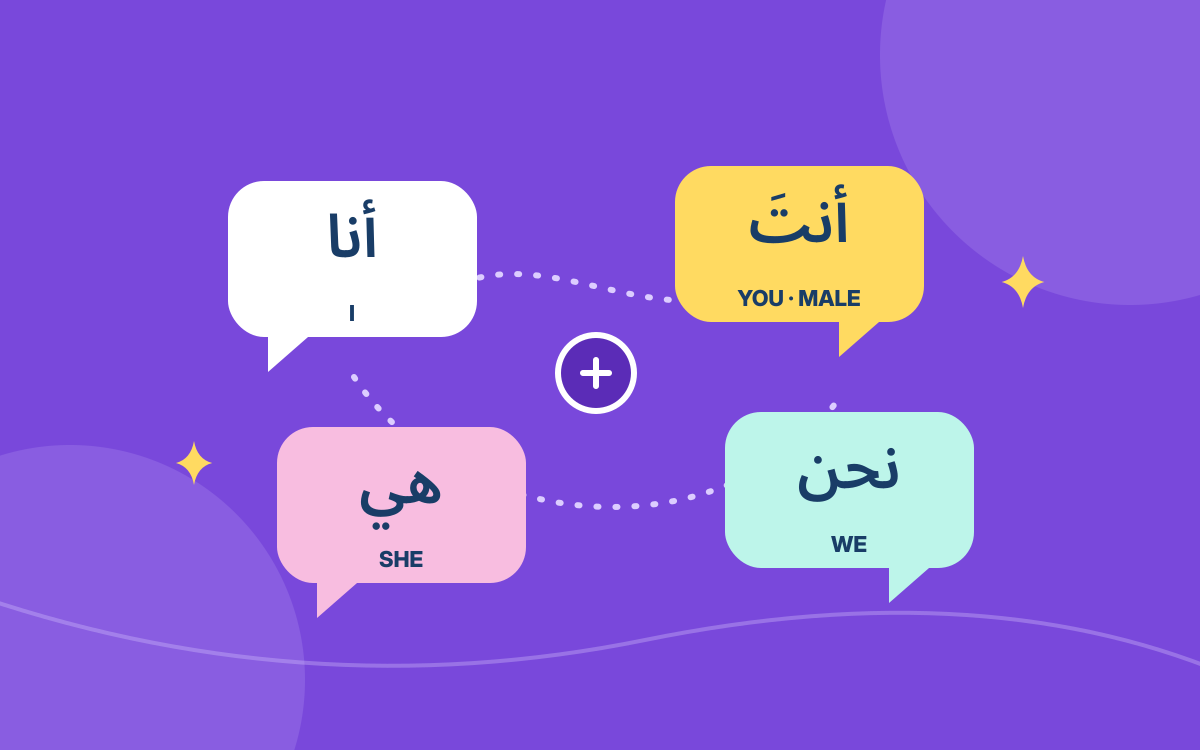
Arabic Pronouns: How to Say I, You, He, She and We
هَلْ أَنْتِ فِي صَفِّ اللُّغَةِ الْعَرَبِيَّةِ؟
Notice the feminine form when speaking to one woman.