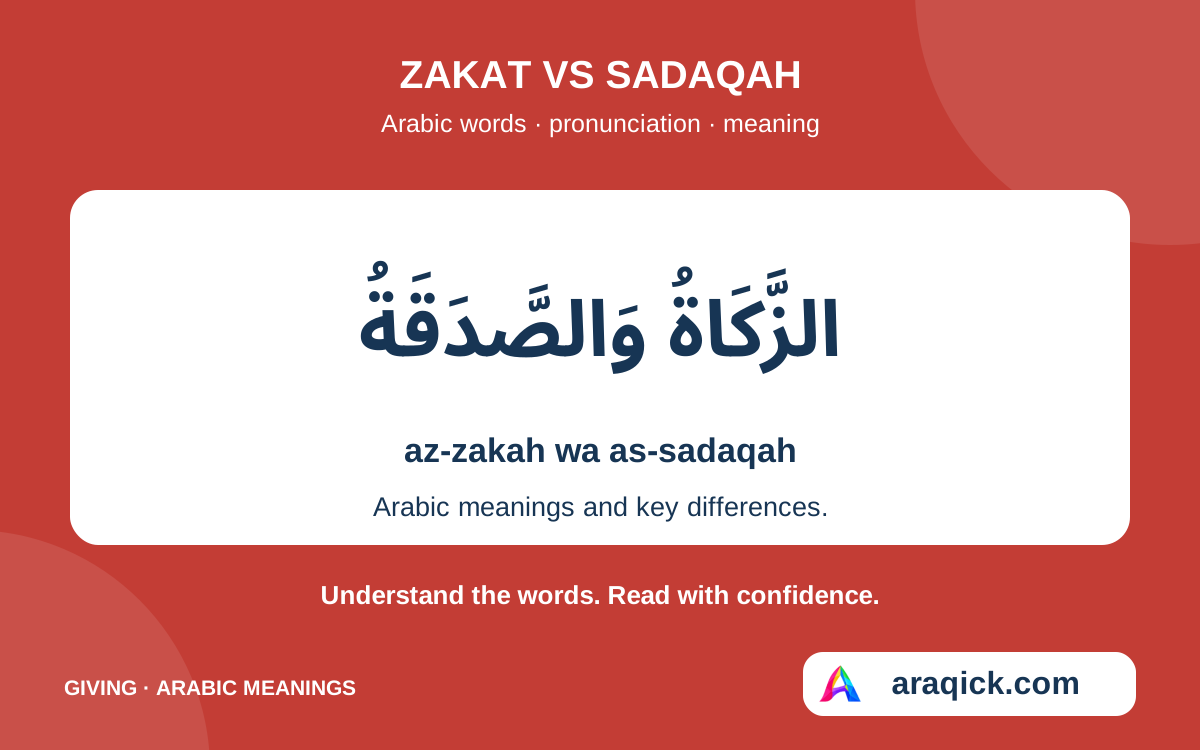
زَكَاةٌ (zakat) usually names prescribed obligatory alms. صَدَقَةٌ (sadaqah) often means voluntary charity in conversation, but its wider usage also includes prescribed alms and acts of goodness. Context matters more than a rigid obligatory-versus-voluntary translation.
01What is the everyday distinction?
In common Muslim conversation, zakat usually means the prescribed obligatory alms, while sadaqah often means a voluntary charitable gift. This is a useful starting point for understanding a donation notice or a conversation. It is not a rule that every occurrence of sadaqah must be voluntary.
English charity can cover both words and may hide this distinction. A heading labelled zakat identifies a particular religious category; a general sadaqah appeal may use the broader charity word. Always read the whole statement before assuming that two requests use identical terms or describe identical obligations.
02How is zakat written and pronounced?
The everyday Arabic spelling is زَكَاةٌ. A pause-form reading is zakaah, with a long aa. English commonly writes zakat or zakah. The final ta marbutah helps explain these different conventions: its pronunciation changes with connection and grammatical endings. They are not names for two separate kinds of giving.
The root ز ك و belongs to a family associated with purity and growth. Related forms include زَكَّى (zakkaa), to purify. A root gives a family connection; it does not replace the established religious meaning. Quran 2:43 pairs establishing prayer with giving zakat. Compare the prayer word in our salah and dua guide.
03What does sadaqah mean?
صَدَقَةٌ (sadaqah) means charity or alms. Its root is ص د ق: sad, dal and qaf, the same family as words concerning truth and truthfulness. The plural صَدَقَاتٌ (sadaqaat) is common in religious texts. Notice the long aa before final t in the plural.
Say the first consonant with emphatic sad and the third with qaf, a consonant made farther back than English k. Plain sadaqah is a recognition aid rather than a full phonetic guide. In an ordinary appeal, the noun often identifies voluntary charity, but the surrounding text can give it a broader scope.
04Why can Quranic usage overlap?
Quran 9:60 uses الصَّدَقَاتُ (assadaqaat) for the alms allocated to specified recipients and describes that allocation as an obligation from God. The verse therefore prevents a blanket translation of sadaqat as “voluntary gifts only.” A familiar conversational contrast does not erase the word's scriptural range.
Quran 9:103 also places sadaqah alongside purification language from the zakat root. These connections help explain why translations may use charity, alms or prescribed alms in different passages. Our translation and tafsir comparison explains why a short English label sometimes needs contextual explanation.
05Can sadaqah describe more than money?
Yes. Sahih Muslim 1005 describes acts of goodness as sadaqah, showing that the word can have a wider ethical use than a financial donation. That use belongs to its own context. It does not mean that every good action becomes a substitute for prescribed zakat.
A useful reading habit is to separate three questions: which Arabic word appears, what the passage describes and whether it specifies a religious category. The answers can overlap, but they are not identical. This keeps a general statement about kindness from being mistaken for a payment instruction or a rule about a particular person's circumstances.
06Read two short giving phrases
دَفْعُ الزَّكَاةِ
dafu-zzakaah
Payment of zakat.
صَدَقَةٌ لِلْفُقَرَاءِ
sadaqatun lilfuqaraa
Charity for the poor.
These original learning phrases show how a following word completes the idea. The first names payment of zakat; the second identifies recipients without, by itself, establishing whether the charity is voluntary or obligatory. Read more than the noun alone.
For review, sort examples into a specific category, a general gift or a wider good-deed context. Then check the source sentence if the distinction matters. Learning the vocabulary gives you a sound reading foundation without turning a word comparison into calculations, eligibility decisions or instructions for paying zakat.
What to remember
- Zakat commonly names prescribed alms; sadaqah often names voluntary charity in conversation.
- Quran 9:60 uses sadaqat for prescribed alms, so the distinction is not absolute.
- Sadaqah can also describe good deeds; that wider use does not replace prescribed zakat.
Your reference shelf
Open a guide whenever you need it.
Zakat and sadaqah comparison chartCompare common meanings while retaining the overlap in Quranic usage.
| Feature | Zakat | Sadaqah |
|---|---|---|
| Arabic | زَكَاةٌ | صَدَقَةٌ |
| Plain reading | zakaah; commonly written zakat | sadaqah |
| Common conversation | Prescribed obligatory alms | Often voluntary charitable giving |
| Root | ز ك و; purity and growth family | ص د ق; truth and truthfulness family |
| Context reminder | An established religious category, not merely a literal root gloss | Also used for prescribed alms in Quran 9:60 and for good deeds in Muslim 1005 |
The comparison explains words, not the calculations, recipients or personal conditions of an individual zakat payment.
Related forms and short giving phrasesRecognise useful family members without treating them as interchangeable.
| Arabic | Plain reading | Meaning |
|---|---|---|
| صَدَقَاتٌ | sadaqaat | Charitable gifts or alms; plural of sadaqah |
| تَصَدَّقَ | tasaddaqa | He gave charity |
| صِدْقٌ | sidq | Truthfulness; a related root-family noun |
| زَكَّى | zakkaa | He purified; a related verb |
| دَفْعُ الزَّكَاةِ | dafu-zzakaah | Payment of zakat |
| صَدَقَةٌ لِلْفُقَرَاءِ | sadaqatun lilfuqaraa | Charity for the poor |
Plain readings omit some case endings. The q in sadaqah and sidq represents qaf; their initial s represents emphatic sad.
Sources & further learning
References for the language explanations and learning guidance.
- Quran 2:43: giving zakat alongside establishing prayer
- Quran 9:60: sadaqat and the prescribed allocation of alms
- Quran 9:103: sadaqah and purification language
- Sahih Muslim 1005: goodness described as sadaqah
- Quranic Arabic Corpus: zakat root family
- Quranic Arabic Corpus: sadaqah root family
- Cairo Arabic Language Academy: zakat, growth and purification in the root family