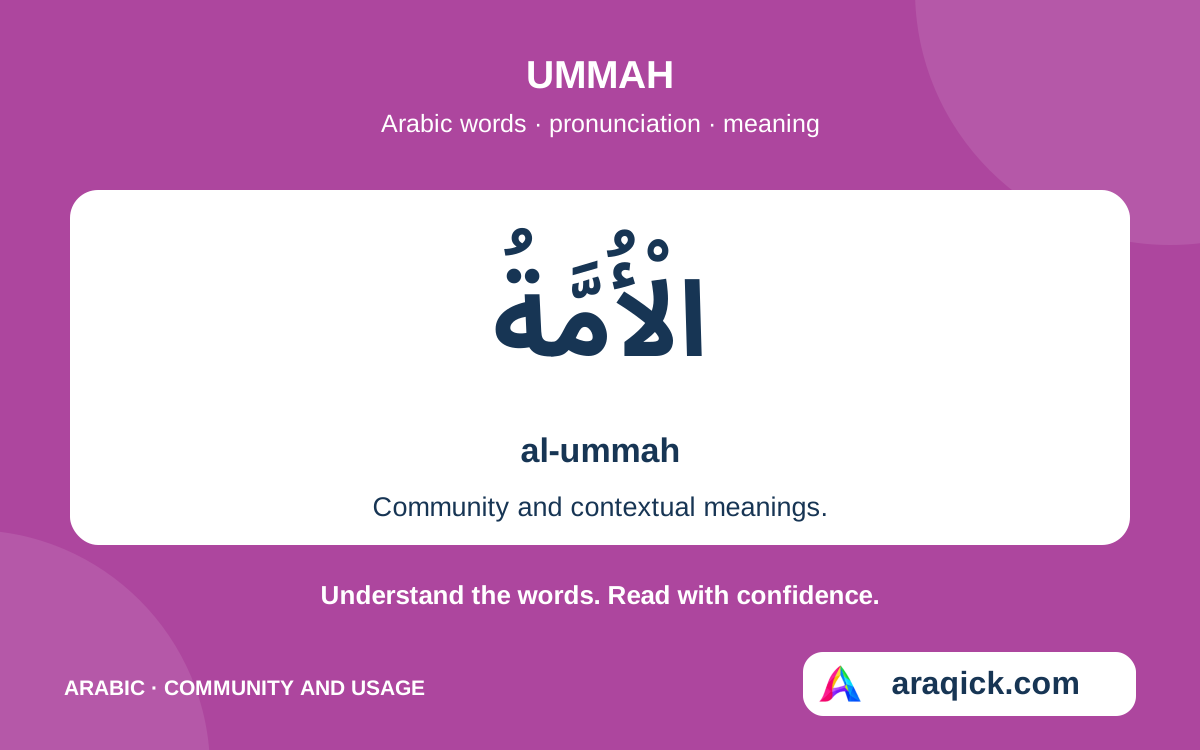
Ummah, أُمَّةٌ, commonly means a community, people or nation. In Muslim conversation, “the ummah” often refers to the worldwide Muslim community, but the Arabic word has a wider range. Its plural is أُمَمٌ, umam. Context tells you which community is meant and whether a different established meaning fits the passage.
01Read the hamza, doubled m and final letter
أُمَّةٌ begins with a pronounced hamza followed by a short u. The shaddah over m doubles that consonant: hold the m briefly rather than stretching the first vowel. A useful pause reading is ummah. The final letter, ة, is ta marbutah, not an ordinary h letter.
In fully connected formal speech, a standalone nominative form can be read ummatun. The t becomes audible before its grammatical ending or in a possessive construction. English spellings umma and ummah both represent the same Arabic word; neither spelling shows all these grammatical details.
02Understand the Muslim community sense
الْأُمَّةُ الْإِسْلَامِيَّةُ means “the Islamic community” or “the Muslim community.” In this use, shared religion connects people across languages, ethnic backgrounds and countries. Ummah does not mean only Arabic speakers. Arabic is a language; Islam is a religion; membership of a community is another question.
The definite article al can appear in الْأُمَّةُ, “the community.” Which community the speaker means still depends on the discussion. The expression does not by itself identify one government or passport. Compare the religious vocabulary in our Islam, iman and ihsan guide.
03Learn the plural umam
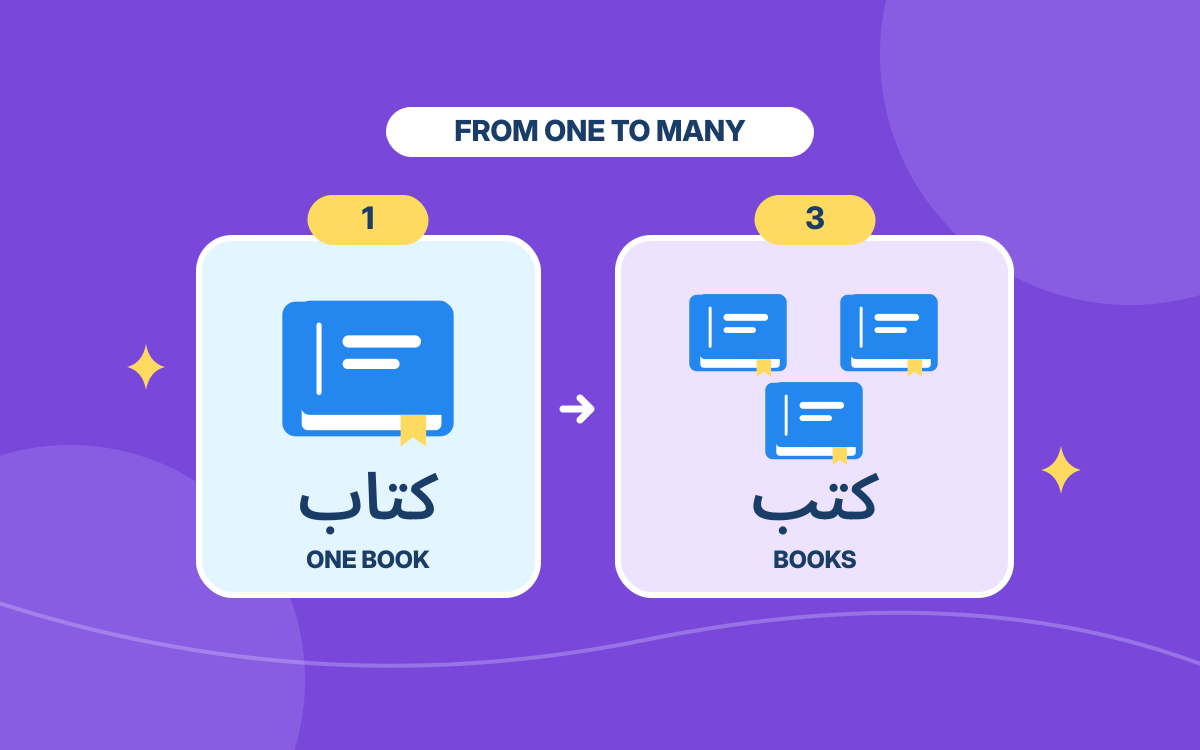
The Arabic plural is أُمَمٌ, umam at a pause, or umamun with its nominative ending. Notice the changed pattern: the singular has a doubled m, while the plural has two m sounds separated by a short a. This is a broken plural, formed by changing the word internally.
You can recognise it in الْأُمَمُ الْمُتَّحِدَةُ, the Arabic name for the United Nations. Here “nations” fits the institutional context. In English, people may add an English plural ending to a borrowed word; when reading Arabic, look for umam. Our Arabic plurals guide explains this pattern change.
04Read Quranic examples in their own context
Quran 6:38 uses the plural umam when speaking about creatures on earth and birds as communities. That occurrence cannot simply be replaced with “all Muslims.” It shows why the general meaning “communities” matters even for a word strongly associated with Muslim identity.
Quran 16:120 uses ummah when describing Ibrahim. In that setting, translators explain an exemplary person embodying goodness, rather than a numerical population. These are contextual senses recorded in the language, not permission to substitute any meaning anywhere. Read the whole passage and consult an attributed explanation when the ordinary community meaning seems insufficient.
05Keep similar words distinct
أُمٌّ, umm, means mother; أُمَّةٌ, ummah, is the community word introduced here. They share root letters in Arabic dictionaries, but a shared root does not make the two nouns interchangeable. Translating ummah mechanically as “mother” would miss its usual meaning.
Other words for groups include قَوْمٌ, qawm, often “people,” and جَمَاعَةٌ, jamaa'ah (with ayn after its long aa), “a group” or “a congregation,” depending on context. Their uses overlap without matching in every sentence. Learn a word with a complete example rather than treating several English glosses as exact synonyms. Our Arabic roots guide develops this distinction.
06Choose a translation before memorising a slogan
Try this learning sentence: هَذِهِ أُمَّةٌ كَبِيرَةٌ, “This is a large community.” It is an example composed for practice, not a Quran quotation. The feminine adjective agrees with ummah, which is grammatically feminine even when the people described include men and women.
When encountering the word elsewhere, ask three questions: who or what is being described, is the form singular or plural, and what do the surrounding words establish? “Community,” “people” and “nation” are useful starting points. A religious discussion may mean the Muslim community; a historical passage or dictionary example may require another reading.
What to remember
- Ummah commonly means a community, people or nation; context identifies the intended group.
- Umam is the Arabic plural; the singular’s doubled m and the plural’s pattern differ.
- Quranic usage includes animal communities and a contextual description of Ibrahim as an exemplar.
Your reference shelf
Open a guide whenever you need it.
Forms and neighbouring wordsCompare singular and plural forms with words that can look or sound related. Readings omit final case endings.
| Arabic | Plain-letter reading | Meaning or use |
|---|---|---|
| أُمَّةٌ | ummah | A community, people or nation |
| الْأُمَّةُ | al-ummah | The community; context identifies it |
| أُمَمٌ | umam | Communities or nations; plural of ummah |
| أُمٌّ | umm | Mother; a different noun |
| قَوْمٌ | qawm | People; interpretation depends on context |
| جَمَاعَةٌ | jamaa'ah | A group or congregation |
A context map for ummahThese are short descriptions of usage, not full translations or interchangeable definitions.
| Context | Useful sense | What to notice |
|---|---|---|
| Muslim community discussion | The Muslim community | A shared religion across languages and countries |
| Quran 6:38 | Communities | The passage describes creatures and birds; the form is plural |
| Quran 16:120 | An exemplar embodying goodness | The word describes Ibrahim in a particular context |
| الْأُمَمُ الْمُتَّحِدَةُ | The United Nations | Here the plural refers to nations in an institutional name |
Sources & further learning
References for the language explanations and learning guidance.