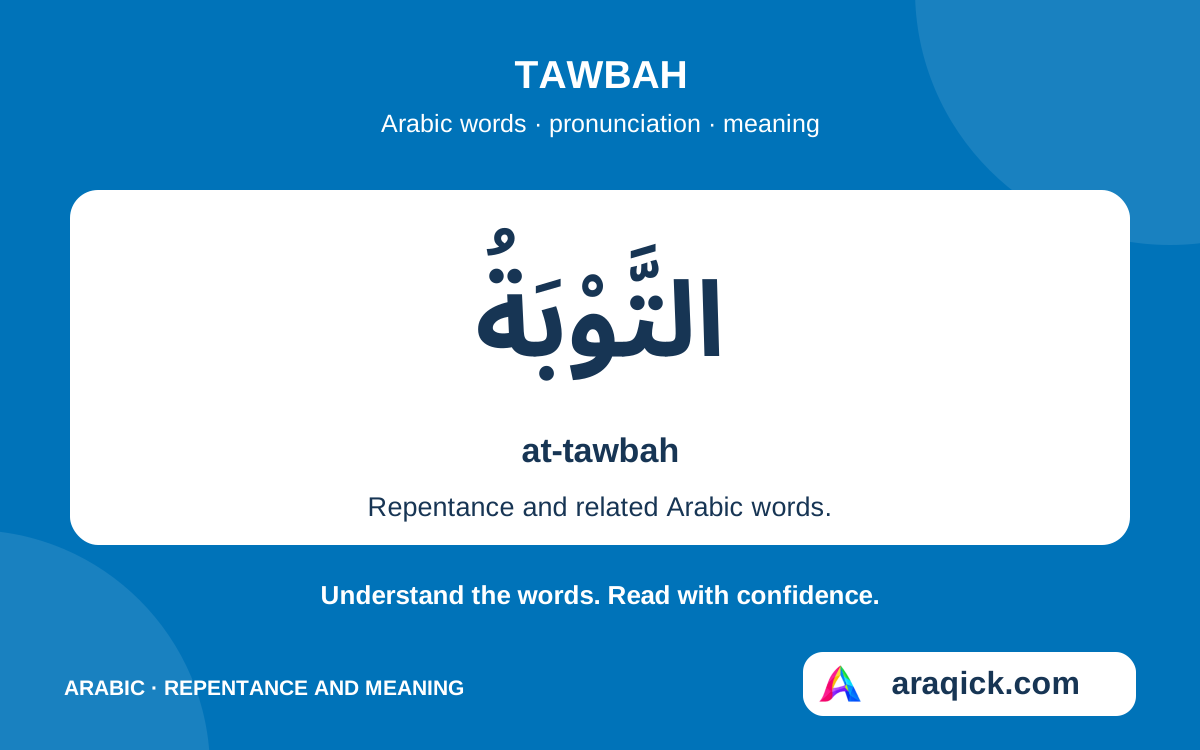
Tawbah, تَوْبَةٌ, means repentance: turning back to Allah from wrongdoing. Its root is ت و ب, t-w-b. The same word family also describes Allah turning toward people in mercy or accepting their repentance, so the subject and surrounding words matter when translating it.
01Tawbah names repentance and a return
The everyday English equivalent of tawbah in an Islamic discussion is repentance. The idea of returning helps explain the word, but it is not simply a synonym for every physical return. A person returning home would normally need another verb, such as رَجَعَ, raja'a, with three short a vowels and ayn before the final a. Vocabulary families acquire established meanings through actual use.
The spelling تَوْبَةٌ has an aw sound, as in the beginning of English “out,” rather than a long oo. Tawbah is the usual pause reading. Tawbatun is the fully pronounced indefinite nominative form; the final taa marbutah becomes audible as t when an ending follows.
02Taaba and yatubu belong to the same family
The dictionary form تَابَ, taaba, means “he repented” when a person is the subject. The present form يَتُوبُ, yatuubu, means “he repents” or “he turns in repentance.” Notice the long aa in the past and long uu in the present. The root’s middle letter is waw even though the past spelling contains alif.
This is a useful example of a weak root: its letters can change their visible shape across patterns. Keep the noun tawbah beside the verb pair rather than guessing the verb from the noun. Our Arabic roots guide develops this method.
03The subject changes how the verb is translated
With a human subject, taaba commonly means repenting or turning back to Allah. With Allah as subject and عَلَى, alaa, introducing the person, the construction describes His turning toward someone in mercy or accepting repentance. It does not mean that Allah repented of wrongdoing. A single English gloss cannot cover both constructions.
Quran 4:17 places people repenting and Allah accepting their repentance in the same passage. Quran 9:104 explicitly connects Allah with accepting tawbah. When reading, identify who performs the verb before selecting its English meaning; then check the preposition and the person receiving the action.
04Tawbah and istighfar overlap without being identical
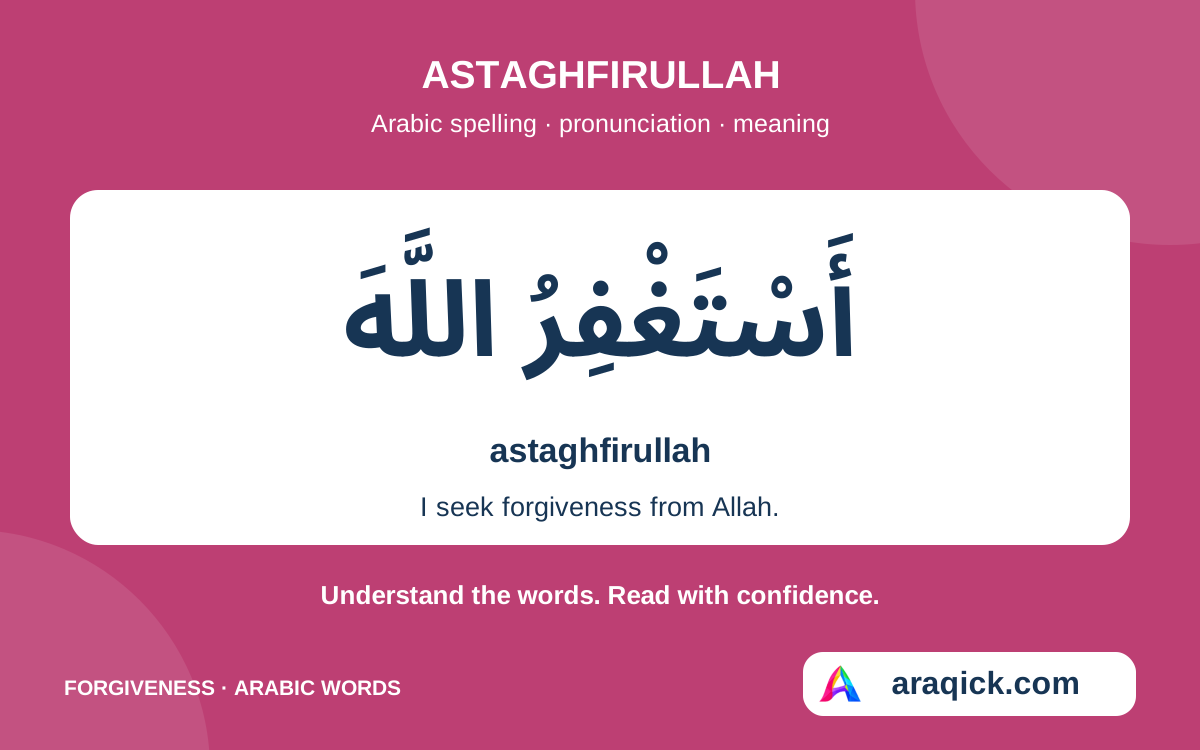
Tawbah names repentance or turning back. اِسْتِغْفَارٌ, istighfaar, names seeking forgiveness. They often occur together because a person turning from wrongdoing may also ask to be forgiven. Nevertheless, one word emphasises repentance and the other the request for forgiveness. Replacing both with “saying sorry” loses that distinction.
Quran 11:3 mentions seeking forgiveness and turning back as related actions. Compare Astaghfirullah and its meaning for the spoken expression. That expression is a request to Allah; tawbah is the noun for repentance, rather than the name of one uniquely required sentence.
05Taib and tawwab describe people differently
A person who repents may be described as تَائِبٌ, taaib. The alif lengthens aa, while the hamza marks a small break before i. The feminine is تَائِبَةٌ, taaibah at a pause. These forms describe the person, whereas tawbah names repentance itself.
The intensified form تَوَّابٌ, tawwaab, requires context. For people, it can describe someone who repeatedly turns in repentance, as the plural in Quran 2:222 illustrates. As Allah’s name التَّوَّابُ, At-Tawwaab, it means the Accepter of Repentance. The doubled waw matters; the two uses do not assign identical actions to different subjects.
06Read short phrases before translating a whole passage
Try the learning sentence تَابَ الرَّجُلُ إِلَى اللَّهِ, “The man turned to Allah in repentance.” First identify the man as subject, then the direction introduced by ilaa. Compare the noun phrase بَابُ التَّوْبَةِ, “the door of repentance.” Here tawbah follows another noun and ends in ti during connected reading.
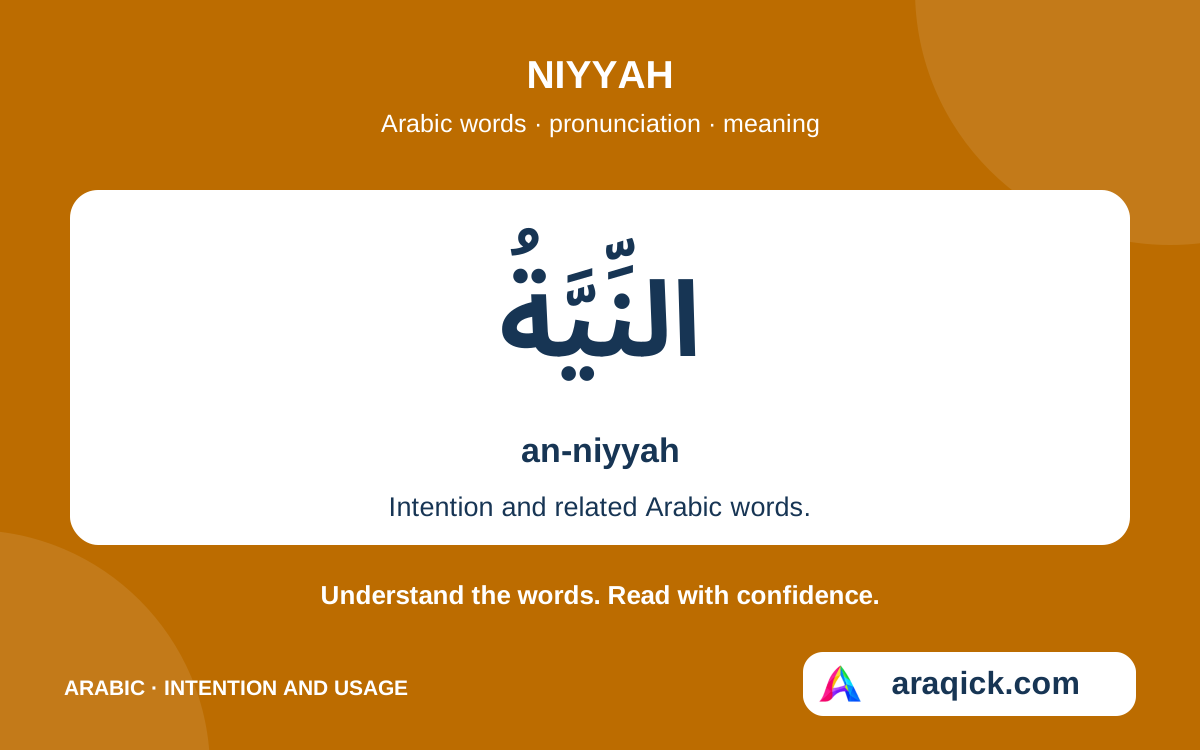
Build a small set of examples marked “action,” “person” and “repentance.” This prevents confusing taaib with tawbah or assuming every related form means the same thing. Connect the meaning with niyyah, intention, while keeping the vocabulary of intention and the vocabulary of repentance distinct.
What to remember
- Tawbah means repentance and belongs to the t-w-b root.
- Taaba is translated according to its subject and construction.
- Taaib describes a repentant person; istighfar means seeking forgiveness.
Your reference shelf
Open a guide whenever you need it.
The tawbah word familyNoun readings pause at the end; verb readings retain the dictionary-form vowel.
| Arabic | Plain-letter reading | Function or meaning |
|---|---|---|
| تَوْبَةٌ | tawbah; connected nominative tawbatun | Repentance |
| تَابَ | taaba | He repented; subject and context matter |
| يَتُوبُ | yatuubu | He repents; he turns |
| تُبْتُ | tubtu | I repented |
| تَائِبٌ | taaib | A person who repents |
| تَائِبَةٌ | taaibah | A woman who repents |
| التَّوَّابُ | At-Tawwaab | Allah’s name: the Accepter of Repentance |
Keep the subject and construction visibleOriginal learning examples illustrate the grammar; the listed verses provide primary contexts.
| Arabic construction | Meaning | What to notice |
|---|---|---|
| تَابَ إِلَى اللَّهِ | He turned to Allah in repentance | A human subject; ilaa marks direction |
| تَابَ اللَّهُ عَلَيْهِ | Allah turned toward him in mercy / accepted his repentance | Allah is subject; alaa introduces the recipient |
| بَابُ التَّوْبَةِ | The door of repentance | A noun phrase; tawbah is genitive |
| اِسْتِغْفَارٌ | Seeking forgiveness | A related concept from a different root |
Sources & further learning
References for the language explanations and learning guidance.