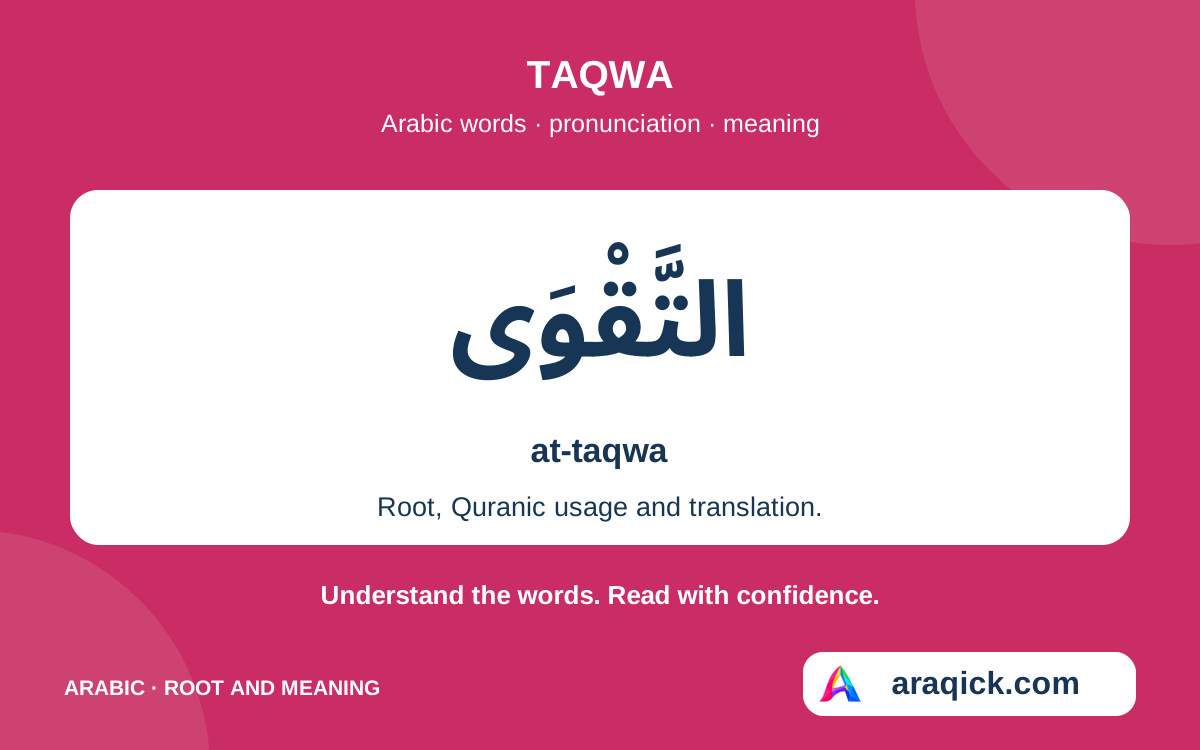
Taqwa, تَقْوَى, is often translated as God-consciousness, piety or mindful reverence toward Allah. It involves awareness that shapes conduct, rather than a feeling described by one English word alone. Its Arabic root is connected with guarding and protection, while its precise meaning depends on the passage.
01What does taqwa mean?
“God-consciousness” highlights awareness of Allah; “piety” highlights a religious and moral quality; “mindful reverence” brings awareness and respect together. Each can help explain taqwa, although none transfers every Arabic association into English. The surrounding words show which aspect the passage brings forward.
You may also encounter translations using “fear of God.” That can express reverence and concern about accountability, rather than panic alone. Reading taqwa as nothing except an emotion makes it harder to understand passages that connect it with behaviour, responsibility and the choices people make.
02Read the final alif maqsura
The letters of تَقْوَى are ta, qaf, waw and a final alif maqsura. That last letter, ى, looks like an undotted ya but represents a long aa here. A useful plain-letter reading is taqwaa: short a in taq, then a longer aa after w.
Qaf is a deeper sound than the English k. The familiar English spelling taqwa does not show vowel length, so keep taqwaa in mind while learning the Arabic. With the definite article, التَّقْوَى is read attaqwaa, because the article’s l assimilates to the following t.
03Connect taqwa to the root w-q-y
The root is و ق ي, w-q-y. Its basic family includes وَقَى, waqaa, meaning “he protected.” The related Form VIII verb اِتَّقَى, ittaqaa, is used for guarding oneself or being mindful and reverent in religious contexts. The derived pattern changes how the original root letters appear.
This is why searching only for the visible letters t-q-w can mislead a learner. Roots are an organising tool, not a complete translation. Our guide to Arabic roots and dictionary forms shows how to combine root knowledge with the actual word and sentence.
04Taqwa in Quran 2:197
Quran 2:197 discusses pilgrimage, conduct during it, and taking provisions. Within that setting, it describes taqwa as the best provision. The image connects preparing for a journey with the moral and religious quality a person brings to it; the verse’s surrounding instructions help explain that association.
Translating taqwa here as piety, righteousness or mindful awareness draws attention to more than travel supplies. Notice how context guides the English choice. For the vocabulary of the pilgrimage itself, see Hajj and Umrah meanings, while reading this verse as a complete passage.
05Recognise atqakum and almuttaqin
Quran 49:13 addresses humanity and mentions peoples and tribes knowing one another. The related form أَتْقَاكُمْ, atqaakum, identifies those most characterised by taqwa among the people addressed. In this context, moral and religious worth is not established by a person’s tribal background.
Another common form is الْمُتَّقِينَ, almuttaqiin when paused, referring to people characterised by this mindfulness or piety. It describes people; taqwa names the quality. The ending may vary with grammar, so learn the relationship without assuming every member of the word family must look identical.
06Compare translations without flattening the word
When studying a passage, first locate the actual Arabic form. Is it the noun taqwa, a command, or a description of people? Then compare the English wording with the sentence around it. “Be mindful,” “be reverent” and “be righteous” can reflect different translation choices and grammatical forms.
Keep a small vocabulary note with the Arabic, one useful English explanation and the verse reference. This gives you something more reliable than a slogan detached from context. Our translation, transliteration and tafsir guide explains which tool helps with sound, meaning or fuller interpretation.
What to remember
- Taqwa can be explained through God-consciousness, piety and mindful reverence, with context guiding the translation.
- Its root is w-q-y, and its final alif maqsura gives a long aa sound.
- Taqwa names a quality; related forms may name people, give commands or make a comparison.
Your reference shelf
Open a guide whenever you need it.
Taqwa and its related Arabic formsIdentify the quality, a verb and descriptions of people; the plain readings use doubled vowels for length.
| Arabic | Plain-letter reading | Meaning or use |
|---|---|---|
| تَقْوَى | taqwaa | Mindfulness, piety or reverence — noun |
| التَّقْوَى | attaqwaa | The same quality with the definite article |
| وَقَى | waqaa | He protected |
| اِتَّقَى | ittaqaa | He guarded himself; was mindful or reverent, according to context |
| يَتَّقِي | yattaqii | He guards himself; is mindful or reverent, according to context |
| الْمُتَّقُونَ | almuttaquun | People characterised by taqwa — paused nominative plural |
| الْمُتَّقِينَ | almuttaqiin | People characterised by taqwa — paused accusative or genitive plural |
| أَتْقَاكُمْ | atqaakum | Those most characterised by taqwa among you — Quran 49:13 |
A paused reading drops the final short vowel in the two plural forms. In connected reading, their full forms end in almuttaquuna or almuttaqiina.
A context checklist for translationUse the passage and the form to decide what an English explanation needs to communicate.
| Passage | Arabic form | What to notice |
|---|---|---|
| Quran 2:197 | التَّقْوَى | The noun occurs in the image of the best provision, within a discussion of pilgrimage and conduct. |
| Quran 49:13 | أَتْقَاكُمْ | The related comparative form occurs in a passage addressing humanity, peoples and tribes. |
First identify the form, then read the whole verse, then compare the English explanation. The notes above are reading aids, not substitutes for a full translation or an attributed tafsir.
Sources & further learning
References for the language explanations and learning guidance.