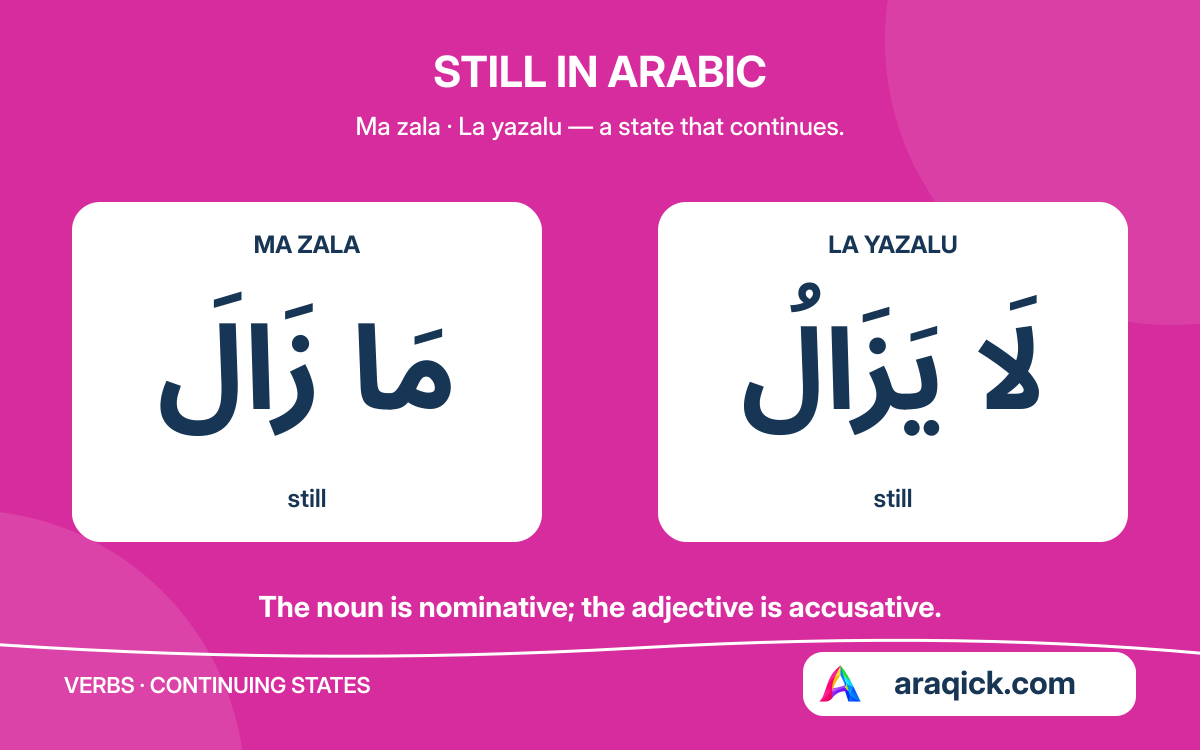
Ma zala and la yazalu describe a state that continues: still open, still ready or still learning. They belong to the kana family, so a simple noun stays nominative and an adjective used as the predicate becomes accusative. The negative particle is part of the continuation expression.
01Describe a continuing state
مَا زَالَ الْمَتْجَرُ مَفْتُوحًا
ma zala almatjaru maftuhan
The shop is still open.
Almatjaru is the nominative noun of zala; maftuhan is its accusative predicate. Together ma zala expresses continuation. Do not translate the two words mechanically as did not disappear in this construction.
Although zala has past form, ma zala can report a state continuing now. In a past narrative it can mean was still. The surrounding time reference determines the natural English tense. Compare kana’s noun and predicate.
02Match a feminine noun and predicate
مَا زَالَتِ الْغُرْفَةُ نَظِيفَةً
ma zalati alghurfatu nazifatan
The room is still clean.
The feminine noun ghurfah takes zalat. Its predicate nazifatan is feminine, indefinite and accusative. Alghurfatu remains nominative.
The kasrah after the feminine t is a linking vowel before the definite noun in connected reading. It is not a new case ending on the verb. The underlying standalone past feminine form is زَالَتْ.
03Say I am still doing something
مَا زِلْتُ أَبْحَثُ عَنِ الْمِفْتَاحِ
ma ziltu abhathu ani almiftahi
I am still looking for the key.
Ma ziltu works for a male or female speaker. The long stem of zala shortens before tu, and zay has kasrah. We are still is مَا زِلْنَا.
Abhathu ani almiftahi is a verb clause serving as the predicate. Abhathu remains indicative here: the clause occupies the predicate position, but that does not turn every word inside it into an accusative form. Compare predicate types.
04Recognize la yazalu in present statements
لَا يَزَالُ الطَّرِيقُ مُغْلَقًا
la yazalu attariqu mughlaqan
The road is still closed.
La yazalu is another common continuation frame. It keeps the noun nominative and the adjective predicate accusative. With a feminine noun, use لَا تَزَالُ.
The la is ordinary negative la, not the prohibitive la of a command. The verb remains indicative: yazalu ends in u. Together the expression means still; it does not assert that the road has opened.
05Distinguish continuation from going away
زَالَ الْقَلَقُ
zala alqalaqu
The worry went away.
This complete verb has the present يَزُولُ, yazulu, and describes disappearance or passing away. It is different from the kana-family يَزَالُ, yazalu, used with negation for continuation.
The past spellings look alike, so use the construction and the learned present form. Keep ma zala plus a state together when you mean still. Plain reading aids simplify sounds and vowel length; the chart keeps yazalu and yazulu visibly separate.
What to remember
- Ma zala and la yazalu commonly mean still.
- Keep the noun nominative and a single adjective predicate accusative.
- Distinguish yazalu for continuation from yazulu for going away.
Your reference shelf
Open a guide whenever you need it.
Useful forms of stillKeep the negative particle with the continuation verb
| Person or noun | Past-form frame | Present-form frame |
|---|---|---|
| He / masculine singular noun | مَا زَالَ | لَا يَزَالُ |
| She / feminine singular noun | مَا زَالَتْ | لَا تَزَالُ |
| I | مَا زِلْتُ | لَا أَزَالُ |
| We | مَا زِلْنَا | لَا نَزَالُ |
| They — male or mixed group | مَا زَالُوا | لَا يَزَالُونَ |
A past-form continuation frame can refer to a state continuing now or to a state that was continuing in a past context.
Read the construction, not one spellingEach example supplies its own predicate or complete event
| Arabic | Meaning | Analysis |
|---|---|---|
| مَا زَالَ الْمَتْجَرُ مَفْتُوحًا | The shop is still open | Nominative noun + accusative adjective |
| مَا زِلْتُ أَبْحَثُ | I am still searching | Attached subject + verb-clause predicate |
| لَا يَزَالُ الطَّرِيقُ مُغْلَقًا | The road is still closed | Indicative yazalu + noun + predicate |
| زَالَ الْقَلَقُ | The worry went away | Complete verb; no state predicate required |
| يَزُولُ الْقَلَقُ | The worry goes away | Present of the complete verb |
Sources & further learning
References for the language explanations and learning guidance.