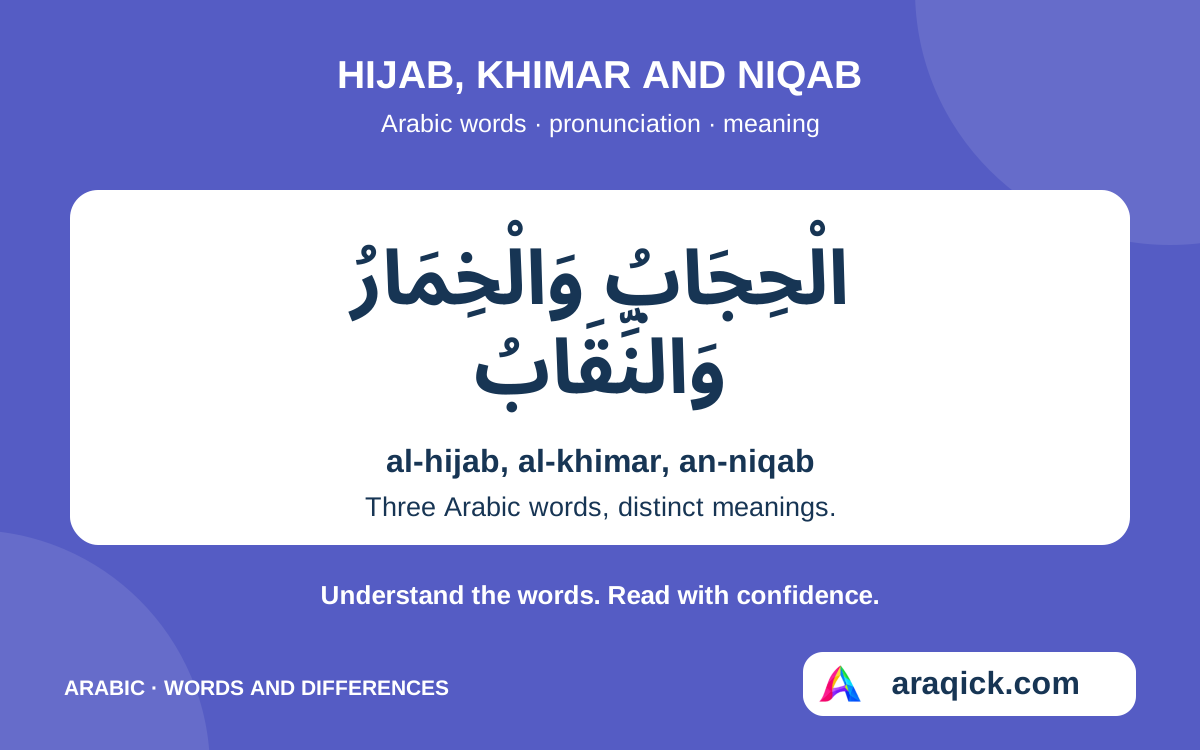
Hijab, حِجَابٌ, commonly means a Muslim head covering today, while also carrying broader meanings of covering and modest dress. Khimar, خِمَارٌ, names a head covering; niqab, نِقَابٌ, names a face veil. They overlap in discussions of clothing but are not interchangeable. In Quranic contexts, hijab can mean a screen or barrier rather than a garment.
01Hijab has more than one established use
In contemporary conversation, hijab often refers to a scarf covering the hair and neck while leaving the face visible. The same word can also describe a broader approach to modest dress. A speaker discussing “hijab” may therefore mean an item of clothing or a larger concept. The sentence and situation help you decide.
The Arabic root letters are ح ج ب. Their word family concerns screening or concealment. This explains the connection between a covering and a barrier, but it does not make every occurrence a reference to a headscarf. Start with the context rather than one fixed English translation.
02In Quran 33:53, hijab names a barrier
Quran 33:53 discusses visitors to the Prophet’s household and asking his wives for something from behind a screen. In that setting, hijab describes a separating barrier. Translating the word as “headscarf” would change the scene: the passage concerns how the request is made across a separation.
The Quranic Arabic Corpus also records screen or partition meanings in other passages. This is a useful example of contextual translation: a familiar modern meaning should not automatically replace the meaning in an older text. Our translation, transliteration and tafsir guide explains those different reading tools.
03Khimar is singular; khumur is plural
خِمَارٌ is khimaar in a pause reading. Its broken plural is خُمُرٌ, khumur. Notice that the vowels change inside the word; the plural is not formed simply by adding an English s. In Quran 24:31, the attached form بِخُمُرِهِنَّ combines a preposition, the plural noun and a possessive suffix referring to the women addressed.
That verse mentions drawing the coverings over the chest area. For vocabulary study, distinguish the covering noun from the separate word for the area being covered. Modern garment descriptions often use khimar for a head covering extending over the shoulders; exact shapes vary.
04Niqab specifically identifies a face veil
نِقَابٌ, niqaab, commonly refers to a face veil that leaves the eye area visible. It is a different garment term from a headscarf, even when the two are worn together. A description of a niqab tells you that the face covering is being discussed.
The Arabic term also appears in Sahih al-Bukhari 1838, in a report concerning pilgrimage clothing. That textual occurrence helps identify the vocabulary; the report’s particular setting should stay attached to it. A head covering and a face veil can appear in the same outfit without becoming synonyms. See clothes in Arabic for everyday garment nouns.
05Keep the initial consonants and long aa clear
Useful plain-letter readings are hijaab, khimaar and niqaab. Each has a short first vowel and a long aa later in the word. The h in hijab represents ح, a throat consonant. The kh in khimar represents the single Arabic sound خ. The q in niqab represents ق; it is not the Arabic letter kaf.
The fully marked nouns shown here end in un in a standalone nominative reading. At a pause, that ending is normally dropped: hijaabun becomes hijaab. English spellings such as hijab or niqab usually leave vowel length unmarked, so use the Arabic spelling when checking pronunciation.
06Choose the word that matches the description
For a vocabulary note, label a headscarf with the common contemporary use of hijab, a head covering with khimar, and a face veil with niqab. In a Quranic passage, check how the term functions in the actual sentence. This prevents a clothing label from being inserted into a passage about a screen.
Clothing terminology varies across regions and communities, and a name alone does not specify every cut, fabric or length. Build flashcards with a short definition and a context, then practise khimar and khumur together. The Arabic plurals guide helps explain why their vowel patterns differ.
What to remember
- Hijab commonly names a head covering today, but Quranic contexts can use it for a screen or barrier.
- Khimar means a head covering; khumur is its broken plural.
- Niqab commonly names a face veil, and garment labels can vary with context.
Your reference shelf
Open a guide whenever you need it.
The three terms at a glanceUse the pause readings to practise the nouns, while keeping each meaning attached to its context.
| Arabic form | Pause reading | Meaning in the stated context |
|---|---|---|
| حِجَابٌ | hijaab | Screen or barrier in the Quranic context discussed; commonly a head covering today |
| خِمَارٌ | khimaar | A head covering |
| خُمُرٌ | khumur | Head coverings; plural of khimar |
| نِقَابٌ | niqaab | A face veil, commonly leaving the eye area visible |
The final un in the displayed standalone noun forms is omitted in these pause readings.
Recognise the forms in a textA word in a sentence can carry a preposition, a grammatical ending or an attached possessive suffix.
| Form or context | What to notice |
|---|---|
| حِجَابٍ in Quran 33:53 | The noun appears with a genitive ending in the phrase about asking from behind a screen. |
| بِخُمُرِهِنَّ in Quran 24:31 | bi is the attached preposition; khumur is the plural noun; hinna refers to the women addressed. |
| A contemporary clothing description | Hijab commonly refers to a head covering; niqab more specifically identifies a face veil. |
The lexical meanings help with reading. A garment label alone does not settle questions about clothing practice or the wearer’s beliefs.
Sources & further learning
References for the language explanations and learning guidance.
- Quran 33:53: hijab as a separating screen in its household context
- Quran 24:31: khumur with an attached possessive suffix
- Quranic Arabic Corpus: h-j-b and screen or partition meanings
- Quranic Arabic Corpus: kh-m-r and the plural khumur
- Oxford Advanced Learner’s Dictionary: contemporary hijab usage
- Collins English Dictionary: niqab as a face veil
- Sahih al-Bukhari 1838: niqab vocabulary in a pilgrimage report