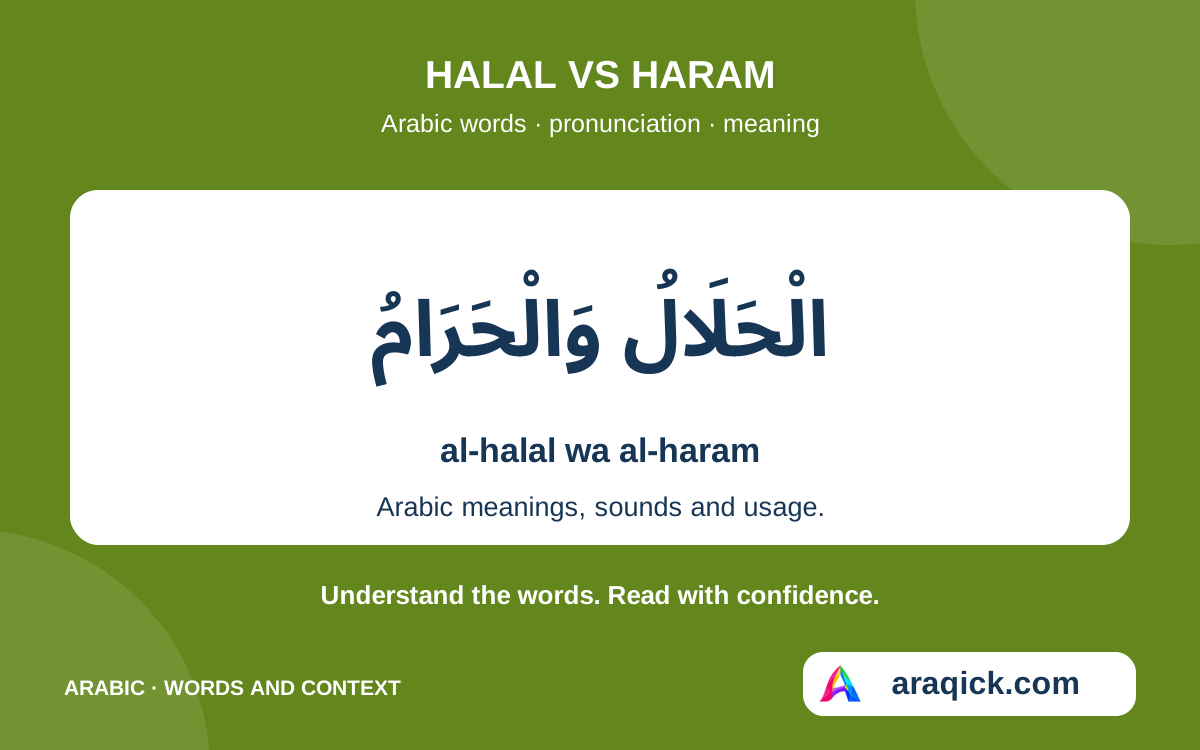
Halal, حَلَالٌ, means lawful or permitted. Haram, حَرَامٌ, means prohibited in discussions of religious permission. Both words reach beyond food. Context also matters: the same long-vowel word haraam can mean sacred or inviolable in established expressions, while حَرَمٌ, haram with two short vowels, is a related noun for a sanctuary.
01Halal and haram express permission and prohibition
حَلَالٌ describes what is lawful or permitted; حَرَامٌ describes what is prohibited in the religious sense. These are meaningful terms, rather than ordinary synonyms for “pleasant” and “unpleasant.” Personal liking does not determine which Arabic word applies.
The contrast concerns permission, so translating halal simply as “clean” or haram simply as “unhealthy” loses the central meaning. A vocabulary explanation tells you what a sentence claims. It does not, by itself, establish whether that claim is justified in a particular case. Keep the word’s definition separate from deciding how it applies.
02Hear the long aa in both words
The familiar English spellings halal and haram often hide vowel length. Read the Arabic as ha-laal and ha-raam: the first a is short and the second aa is long. The alif, ا, after the second consonant marks that length. Neither word ends in a doubled consonant.
Both begin with ح, a breathy throat sound distinct from ordinary English h. The fully marked forms above end in un when grammar calls for it; at a pause, say halaal and haraam. The long internal vowel remains. Our Arabic roots guide explains why vowels and patterns matter alongside consonants.
03The vocabulary is broader than food labels
Food is a familiar setting for these words, but their meanings are not limited to eating. Arabic texts also use permission and prohibition language when discussing conduct and other activities. The surrounding sentence identifies what is being described; the word halal alone does not supply that missing subject.
Quran 16:116 places the two words side by side while warning against unsupported declarations about permission and prohibition. For language study, notice the contrast and the responsibility carried by the terms. Read a complete passage before drawing conclusions from an isolated label. This guide focuses on recognising vocabulary and sentence meaning.
04Related verbs describe making something permitted or forbidden
The verb أَحَلَّ, ahalla, means “he permitted” or “he made lawful.” حَرَّمَ, harrama, means “he prohibited” or “he made unlawful.” Their different patterns matter: the doubled l in ahalla and doubled r in harrama belong to the verbs, although halaal and haraam have no such doubling.
تَحْرِيمٌ, tahriim, names prohibition; مُحَرَّمٌ, muharram, can mean prohibited. Recognising these forms helps you follow a sentence even when it does not contain the familiar English spellings. Shared letters indicate a word family, but the complete form tells you whether you are reading an action or a description.
05Haram and haraam need careful reading
حَرَمٌ, haram, has two short a vowels and can name a sacred sanctuary. It is a different form from حَرَامٌ, haraam, with its long second vowel. Unmarked English “haram” may represent either, so consult the Arabic letters when the meaning is uncertain.
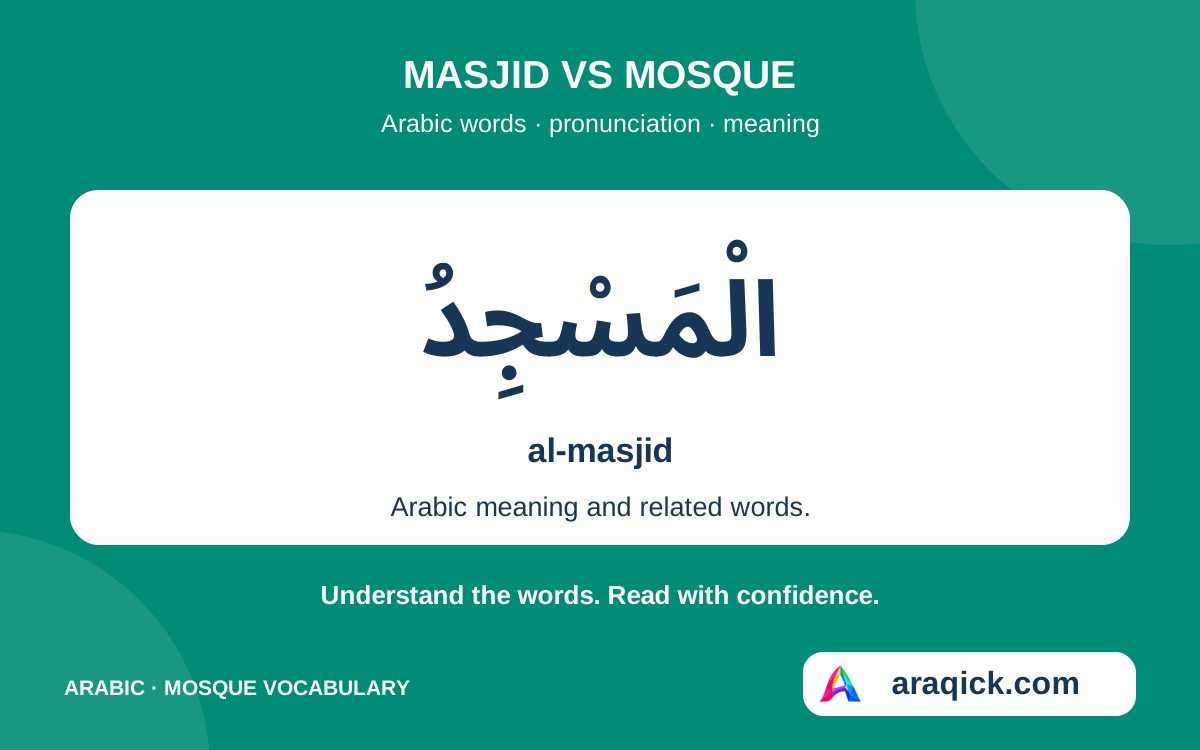
There is another important detail: long-aa haraam also means sacred or inviolable in expressions such as الْمَسْجِدُ الْحَرَامُ, al-masjidul-haraam, the Sacred Mosque. Quran 2:144 uses that expression in a sentence with different grammatical endings. It does not mean “the forbidden mosque.” Our masjid vocabulary article develops the place terminology.
06Read the form, then check the context
Start by identifying the Arabic spelling. Is there an alif between r and m, or is the word حَرَمٌ? Next, identify the phrase: a statement about permission differs from the established name of a sacred place. Finally, check the surrounding discussion rather than guessing from one English spelling.
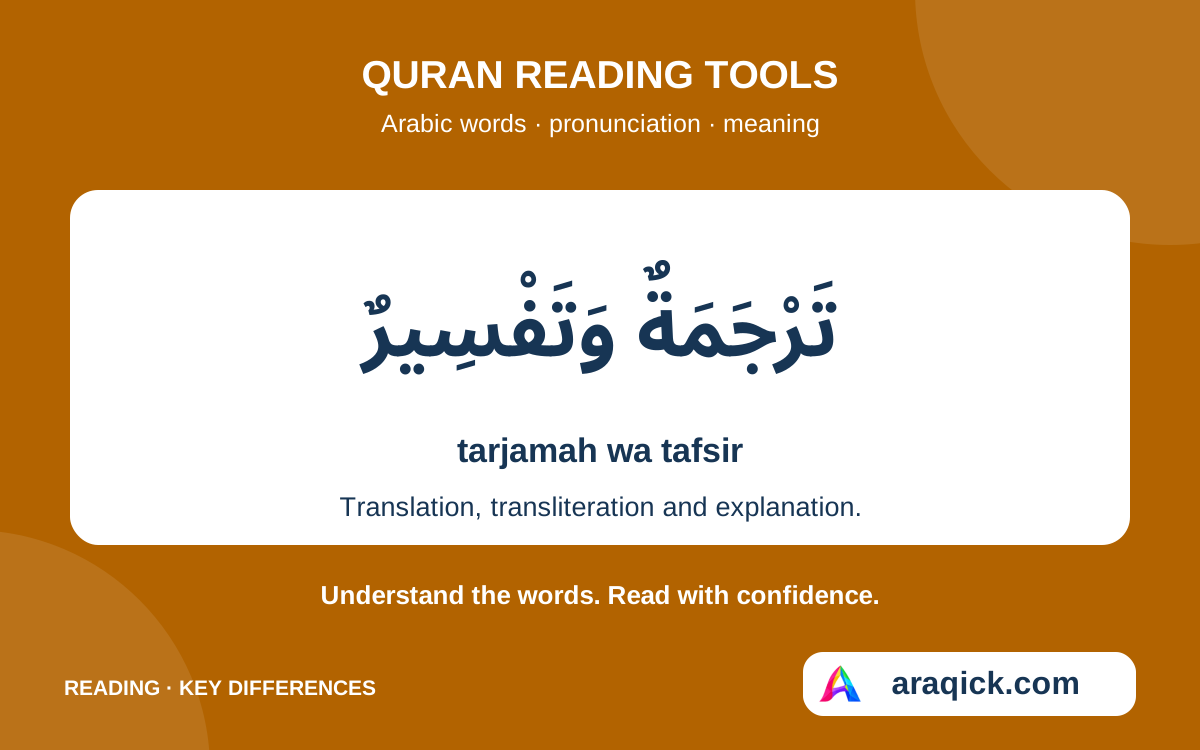
Practise with separate cards for halaal, haraam and haram. Add one meaning and one context cue to each, keeping both senses of haraam visible. When reading translated religious vocabulary, the distinctions in our translation, transliteration and tafsir guide help explain why a sound-based spelling cannot replace interpretation.
What to remember
- Halal and haram contrast permission with prohibition in religious discussions, and are not limited to food.
- Halaal and haraam each have a long second vowel; haram meaning sanctuary has two short vowels.
- Long-aa haraam can also mean sacred or inviolable in established expressions such as al-Masjid al-Haram.
Your reference shelf
Open a guide whenever you need it.
Core words and related formsStandalone noun readings pause without final un; verbs keep their dictionary-form endings.
| Arabic | Plain-letter reading | Meaning |
|---|---|---|
| حَلَالٌ | halaal | Lawful; permitted |
| حَرَامٌ | haraam | Prohibited; also sacred or inviolable in particular expressions |
| أَحَلَّ | ahalla | He permitted; he made lawful |
| حَرَّمَ | harrama | He prohibited; he made unlawful |
| تَحْرِيمٌ | tahriim | Prohibition |
| مُحَرَّمٌ | muharram | Prohibited; a related descriptive form |
Similar spellings, different readingsVowel length distinguishes two forms, while context distinguishes senses of haraam.
| Arabic form or phrase | Reading at a pause | Context cue |
|---|---|---|
| حَرَمٌ | haram | A sanctuary; no alif between r and m |
| حَرَامٌ | haraam | Long aa; prohibited in discussions of permission |
| الْمَسْجِدُ الْحَرَامُ | al-masjidul-haraam | The Sacred Mosque; long-aa haraam has the sacred or inviolable sense |
| حَرَامٌ / حَلَالٌ | haraam / halaal | Read what is being described before selecting a translation |
Sources & further learning
References for the language explanations and learning guidance.
- Quran 16:116: contrasting permission and prohibition language
- Quran 2:144: al-Masjid al-Haram in context
- Quranic Arabic Corpus: the h-l-l word family
- Quranic Arabic Corpus: the h-r-m word family
- Cairo Arabic Language Academy: al-Haram, sanctuary noun
- Cairo Arabic Language Academy: al-Haram with long aa and sacred-place expressions