Start with five useful Arabic words: book, pen, bag, water, and thank you. Use them in a sentence or a request straight away, then try seven quick questions. The complete 50-word reference is below whenever you want more.
01Begin with a book and water

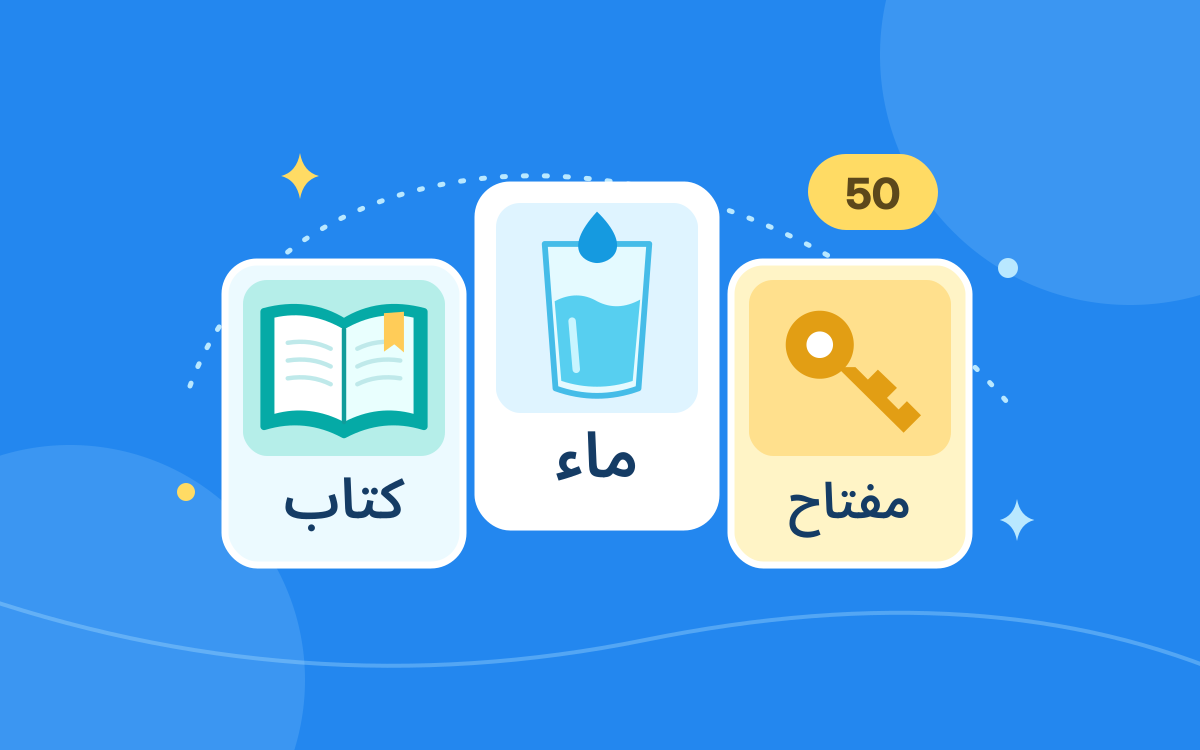
كِتَاب
kitab
book

مَاء
ma
water
- Look at the object, say its Arabic name, then cover the word and recall it.
- These are standard Arabic words. Everyday pronunciation may differ by region.
- The plain reading aids help you start; listening is still needed for Arabic sounds and vowel length.
02Give the word a sentence
هَذَا كِتَاب
hadha kitab
This is a book.
- هَذَا hadha means “this” with a masculine singular noun.
- Arabic needs no separate present-tense “is” in this simple sentence.
- Swap book for قَلَم qalam, pen: هَذَا قَلَم hadha qalam.
That small swap matters: you can now use the pattern with a new object. Point to a pen and try saying the whole sentence before checking the example.
Use the sentence when you are identifying an object. It says “a book,” not “the book.” Start with this small meaning before learning more complex noun phrases.
03A bag uses a different “this”
هَذِهِ حَقِيبَة
hadhihi haqiba
This is a bag.
- حَقِيبَة haqiba, bag, is grammatically feminine.
- Use هَذِهِ hadhihi with this feminine singular noun.
- The ending ة is often a useful clue to a feminine noun, but it is not a rule for every word.
Grammatical gender describes the word, not the object itself. Learn the noun and its “this” phrase together. Our beginner readings leave most final grammatical endings out so you can focus on the pattern.
The final sound in the simple reading haqiba is a. The letter ة can sound like t in connected grammatical phrases, which you can learn later.
04Ask for water politely
مَاء، مِنْ فَضْلِكَ
ma min fadlika
Water, please. Addressing one man.
When addressing one woman, use مِنْ فَضْلِكِ min fadliki. The ending follows the person you are speaking to.
You: شُكْرًا shukran — Thank you.
Reply: عَفْوًا afwan — You are welcome.
Practise the request and the reply together. In another situation, afwan can mean “excuse me”; the context helps you choose its meaning.
05Make your five words stick
- Cover the Arabic and name the book, pen, bag, and water.
- Point to the book, then the bag. Say the matching “this is” sentence.
- Imagine receiving water and give a short thank-you.
- Check any forgotten word, then try recalling it again later.
Ready for more? Open one group in the 50-word reference below. Choose words that belong to your day rather than trying to learn every entry at once. Keep a word, its meaning, and one useful example together.
Some reference entries name a group or a substance, rather than one object. Read their meaning notes: dates as a collective and one date are different forms.
What to remember
- Connect each word to an object, a situation, or a useful reply.
- Use hadha with a masculine singular noun and hadhihi with a feminine singular noun.
- Recall five words before adding another group from the full reference.
Your reference shelf
Open a guide whenever you need it.
Words 1–10: polite wordsOpen this group of 10 words
| # | Arabic | Say it | Meaning |
|---|---|---|---|
| 1 | نَعَم | naam | yes |
| 2 | لَا | la | no |
| 3 | شُكْرًا | shukran | thank you |
| 4 | عَفْوًا | afwan | you’re welcome; excuse me |
| 5 | مَرْحَبًا | marhaban | hello; welcome |
| 6 | آسِف | asif | sorry — male speaker |
| 7 | أَهْلًا | ahlan | welcome |
| 8 | جَيِّد | jayyid | good — masculine form |
| 9 | صَبَاح | sabah | morning |
| 10 | مَسَاء | masa | evening |
آسِف describes a male speaker; a female speaker says آسِفَة asifa. صَبَاح means morning; the complete greeting is صَبَاح الْخَيْر sabah alkhayr.
Words 11–20: things around youOpen this group of 10 words
| # | Arabic | Say it | Meaning |
|---|---|---|---|
| 11 | كِتَاب | kitab | book |
| 12 | قَلَم | qalam | pen; pencil |
| 13 | دَفْتَر | daftar | notebook |
| 14 | هَاتِف | hatif | phone |
| 15 | مِفْتَاح | miftah | key |
| 16 | بَاب | bab | door |
| 17 | نَافِذَة | nafidha | window |
| 18 | طَاوِلَة | tawila | table |
| 19 | كُرْسِيّ | kursiyy | chair |
| 20 | حَقِيبَة | haqiba | bag |
Words 21–30: food and drinkOpen this group of 10 words
| # | Arabic | Say it | Meaning |
|---|---|---|---|
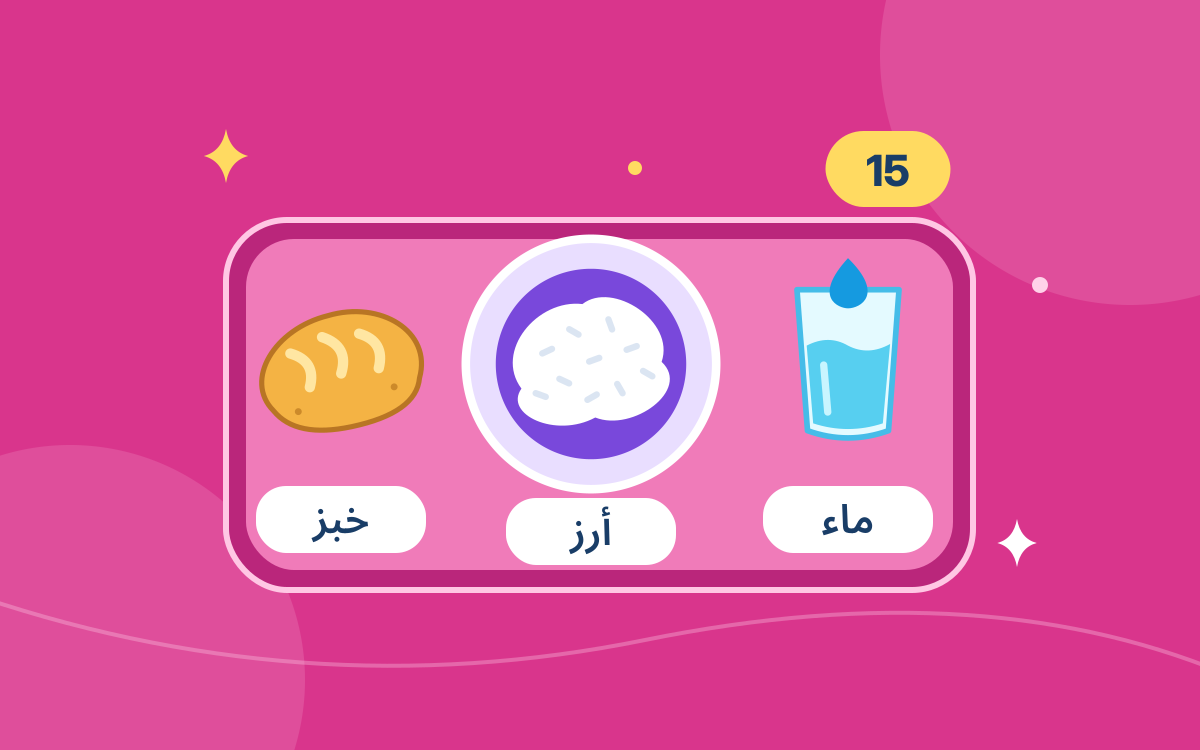
| 21 | مَاء | ma | water |
| 22 | خُبْز | khubz | bread |
| 23 | أُرْز | urz | rice |
| 24 | حَلِيب | halib | milk |
| 25 | شَاي | shay | tea |
| 26 | سُكَّر | sukkar | sugar |
| 27 | مِلْح | milh | salt |
| 28 | تَمْر | tamr | dates — fruit, collective |
| 29 | جُبْن | jubn | cheese |
| 30 | تُفَّاح | tuffah | apples — collective |
تَمْر and تُفَّاح are collective words. One date is تَمْرَة tamra; one apple is تُفَّاحَة tuffaha.
Words 31–40: placesOpen this group of 10 words
| # | Arabic | Say it | Meaning |
|---|---|---|---|
| 31 | بَيْت | bayt | house; home |
| 32 | مَدِينَة | madina | city |
| 33 | شَارِع | shari | street |
| 34 | سُوق | suq | market |
| 35 | مَتْجَر | matjar | shop; store |
| 36 | مَطْعَم | matam | restaurant |
| 37 | مَدْرَسَة | madrasa | school |
| 38 | مُسْتَشْفَى | mustashfa | hospital |
| 39 | مَسْجِد | masjid | mosque |
| 40 | مَطَار | matar | airport |
Words 41–50: time and peopleOpen this group of 10 words
| # | Arabic | Say it | Meaning |
|---|---|---|---|
| 41 | يَوْم | yawm | day |
| 42 | لَيْلَة | layla | night |
| 43 | الْيَوْم | alyawm | today |
| 44 | غَدًا | ghadan | tomorrow |
| 45 | أَمْس | ams | yesterday |
| 46 | الْآن | alan | now |
| 47 | صَدِيق | sadiq | friend — male |
| 48 | عَائِلَة | aila | family |
| 49 | اِسْم | ism | name |
| 50 | لُغَة | lugha | language |
A female friend is صَدِيقَة sadiqa. Keep يَوْم yawm, a day, separate from الْيَوْم alyawm, today.
Sources & further learning
References for the language explanations and learning guidance.