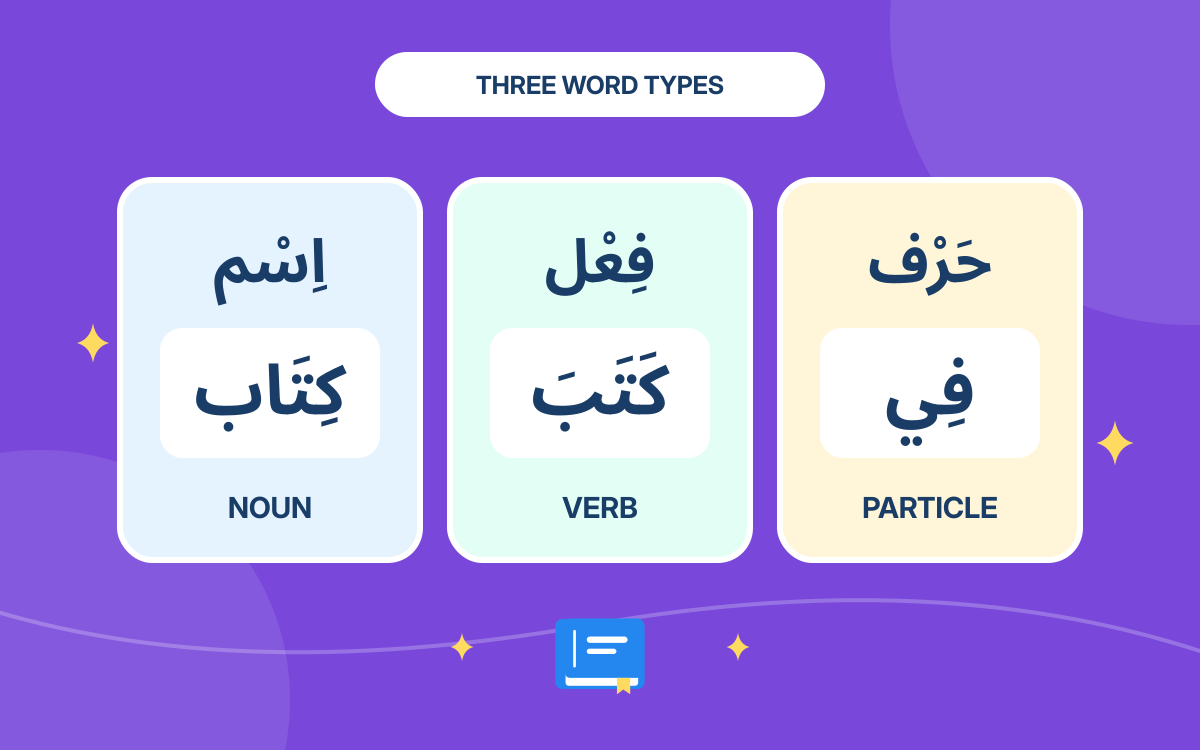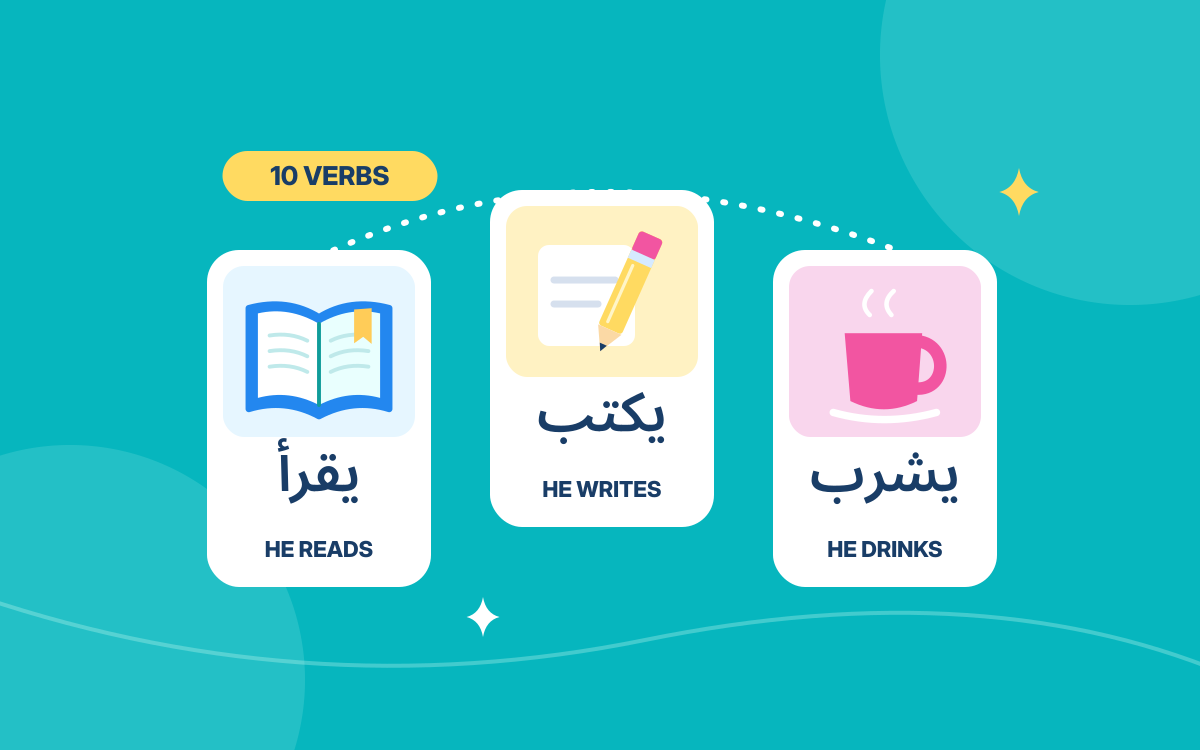
A noun names something; a verb tells you what happens. These ten Modern Standard Arabic verbs cover learning, meals and everyday movement. The vocabulary cards all use the present form for he. Later, you will change one verb to talk about yourself or the person you are addressing.
01Start with a book and a pen
yaqrau
He reads
yaktubu
He writes
Imagine two notes on a desk: “Read the message” and “Write the reply.” The actions differ even though both involve words. Pair each verb with its meaning before adding a longer sentence.
- هُوَ huwa means he.
- هُوَ يَكْتُبُ huwa yaktubu means “He writes” or “He is writing,” depending on context.
02Study, understand and hear
yadrusu
He studies
yafhamu
He understands
yasmau
He hears
These actions are connected, but they are not interchangeable. Hearing a lesson does not always mean understanding it. Use “studies” for the learning activity, “understands” for grasping the meaning, and “hears” for receiving a sound.
Try recalling an action from its English meaning before looking at the Arabic card again.
03Add five everyday actions
yakulu
He eats
yashrabu
He drinks
yadhhabu
He goes
yarjiu
He returns
yaftahu
He opens
- Keep eat and drink together as a useful pair.
- Go describes movement away or towards a destination; return brings someone back.
- Open works with familiar objects such as a book or a door.
You now have ten actions. Practise two or three at a time instead of rushing through the whole set.
04Change the person, change the verb
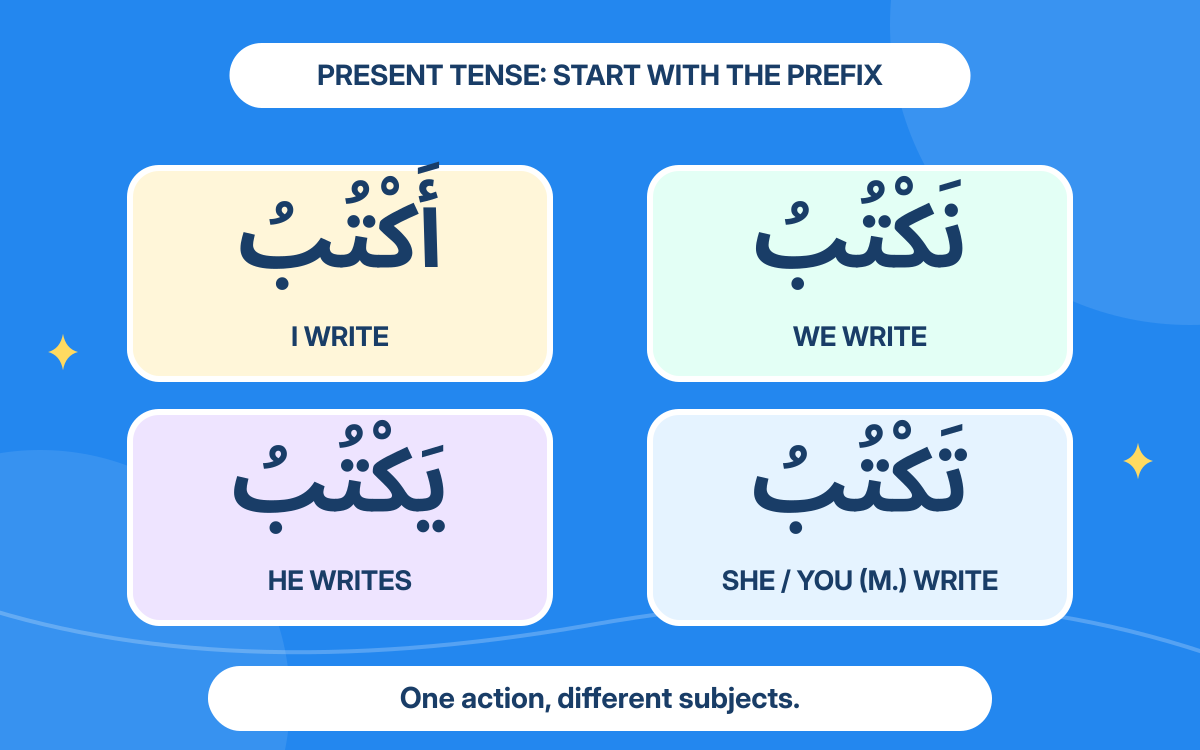
The he form does not work unchanged after every pronoun. Watch what happens with “write”:
ana aktubu
I write
anta taktubu
You write, to one man
anti taktubina
You write, to one woman
- ana works for a man or woman speaking about themself.
- The two forms of you depend on the person being addressed.
- For anti, notice both the beginning and the ending of taktubina.
Learn these as complete pairs. Changing only the pronoun would give you the wrong verb form.
05Use a complete thought
أَنَا أَكْتُبُ
ana aktubu
I write. / I am writing.
You can say this while making a note. The verb already contains information about the speaker, so Arabic can also use aktubu on its own when the meaning is clear. Keeping ana helps you see the pattern while learning.
- Choose the person first.
- Choose the matching verb form.
- Say the short sentence, then repeat it later without the cards.
Other verbs can have different internal vowels and spelling changes. Do not treat this one example as a complete conjugation rule. Plain transliteration is a reading aid, not an exact record of every Arabic sound.
What to remember
- The ten vocabulary cards show present forms for he, not one form for every person.
- Ana aktubu, anta taktubu and anti taktubina distinguish I and the two singular forms of you.
- Learn a verb with a person and a meaning, then reuse it in a short sentence.
Sources & further learning
References for the language explanations and learning guidance.