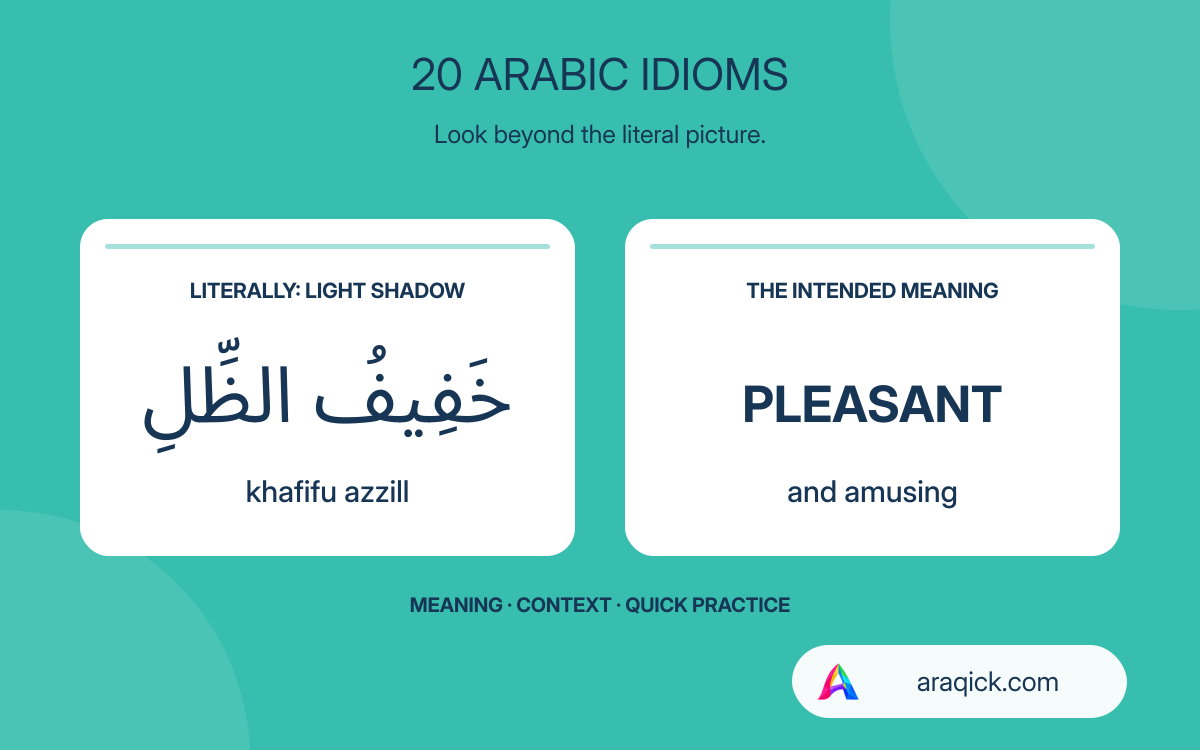
An Arabic idiom is an established expression whose intended meaning goes beyond a word-by-word translation. خَفِيفُ الظِّلِ literally describes a “light shadow,” but can praise someone as pleasant or amusing. This guide presents 20 expressions in standard written forms. Spoken versions and preferred contexts vary, so learn the meaning together with the situation rather than assuming every expression belongs in every dialect.
01Follow the message beyond the image
Modern Standard Arabic
صَدِيقِي خَفِيفُ الظِّلِ.
sadiqi khafifu azzill
My friend is pleasant and amusing.
The sentence describes the friend’s company, not the brightness of a physical shadow. Its opposite, thaqilu azzill, can criticise someone as tedious or irritating. Such evaluations carry a tone, so recognising an expression does not mean you need to use it about someone.
The complete 20-expression collection is grouped on the reference shelf.
02Recognise familiar images of action
Madda yada alawn, “extended the hand of help,” means offered assistance. Daraba usfurayni bihajarin wahid describes achieving two aims through one action; it need not refer to harming birds.
Modern Standard Arabic
أَلْقَى التَّقْرِيرُ الضَّوْءَ عَلَى الْمُشْكِلَةِ.
alqa attaqriru addawa ala almushkila
The report shed light on the problem.
The report clarifies something. A lamp would make the same image literal, so the subject and setting help you decide.
03Separate activity from empty promises
Ala qadamin wa saq describes work in full swing. Hibrun ala waraq suggests that a written agreement or promise has not become action. These expressions evaluate different things: visible activity and a gap between words and implementation.
Modern Standard Arabic
الْوَعْدُ حِبْرٌ عَلَى وَرَقٍ.
alwadu hibrun ala waraq
The promise is only ink on paper.
Read the surrounding information before adopting that judgement. A signed document that is being implemented is not automatically “ink on paper” in the idiomatic sense.
04Talk about permission and the next move
Giving someone the green light means authorising action. Saying “the ball is in your court” makes the next move their responsibility. A red line marks a boundary; it does not itself grant permission.
For the ball expression, مَلْعَبِكَ (malabika) addresses one man. مَلْعَبِكِ (malabiki) addresses one woman. Fixed expressions can still contain grammar that changes with the listener.
05Describe uncertainty and pressure carefully
Fi mahabbi arrih and ala kaffi ifrit describe insecure or precarious situations. Bayna almitraqati wa assindan describes pressure from opposing sides. Their images differ even when they all convey difficulty.
A delayed parcel is not necessarily a dramatic crisis. Match the strength of the expression to what you intend. Balagha assaylu azzuba conveys that a situation has reached an unacceptable limit; it is stronger than simply saying something is inconvenient.
06Keep idioms distinct from proverbs and origins
An idiom can form part of a sentence, while a proverb often states a general lesson. Compare this collection with our 15 Arabic proverbs, which covers a different set of sayings.
Some images also occur in English and other languages. A shared image does not establish who invented it. This guide explains present meanings without assigning an unverified historical story or author. Literary and formal-news expressions should not automatically be presented as everyday slang.
07Move from recognition to a clear example
Choose one expression and write its plain meaning first. Then invent a situation where that meaning is needed. Decide whether the expression or a direct sentence best conveys your point. Try another situation in which the image would be literal.
For agreement and endings, consult adjectives and pronouns. Keep the variety, tone and full phrase in your notes; a root translation alone cannot recover an idiom’s message.
What to remember
- Use the surrounding situation to distinguish an idiom from its literal image.
- Some fixed expressions still change their endings for grammar or listener gender.
- Learn a small number with accurate context and register instead of inserting dramatic expressions everywhere.
Your reference shelf
Open a guide whenever you need it.
Idioms 1–10: people, help and activityStandard written forms; dictionary-style case forms may change inside a sentence.
| Expression and reading aid | Literal image | Intended meaning | Original situation |
|---|---|---|---|
| 1. خَفِيفُ الظِّلِ khafifu azzill | Light of shadow | Amusing and pleasant company | A presenter makes a difficult workshop enjoyable. |
| 2. ثَقِيلُ الظِّلِ thaqilu azzill | Heavy of shadow | Tedious or irritating company | Repeated interruptions make a conversation tiring. |
| 3. طَوِيلُ اللِّسَانِ tawilu allisan | Long of tongue | Impudent or verbally disrespectful | Someone answers a courteous question with insults. |
| 4. شَدَّ الْحِزَامَ shadda alhizam | He tightened the belt | Reduced spending or consumption | A household cuts optional purchases for a month. |
| 5. مَدَّ يَدَ الْعَوْنِ madda yada alawn | He extended the hand of help | Offered assistance | A colleague helps finish an urgent task. |
| 6. عَلَى قَدَمٍ وَسَاقٍ ala qadamin wa saq | On a foot and a leg | In full swing; with intense activity | Preparations continue throughout the building. |
| 7. حِبْرٌ عَلَى وَرَقٍ hibrun ala waraq | Ink on paper | A written promise without practical effect | A promised service has still not begun. |
| 8. ضَرَبَ عُصْفُورَيْنِ بِحَجَرٍ وَاحِدٍ daraba usfurayni bihajarin wahid | He struck two birds with one stone | Achieved two aims through one action | A walk gives exercise and time to practise vocabulary. |
| 9. أَلْقَى الضَّوْءَ عَلَى alqa addawa ala | He cast light on | Clarified or drew attention to | A report explains an overlooked cause of delay. |
| 10. ذَرَّ الرَّمَادَ فِي الْعُيُونِ dharra arramada fi aluyun | He scattered ash in the eyes | Misled people or concealed the truth | An impressive display distracts from missing results. |
Idioms 11–20: decisions, limits and uncertaintyThese are contextual interpretations, not claims of one universal regional pronunciation.
| Expression and reading aid | Literal image | Intended meaning | Original situation |
|---|---|---|---|
| 11. فِي مَهَبِّ الرِّيحِ fi mahabbi arrih | In the place where the wind blows | Exposed to danger or uncertainty | A project’s future becomes uncertain after funding ends. |
| 12. الْكُرَةُ فِي مَلْعَبِكَ alkuratu fi malabika | The ball is in your playing field | The next decision or action is yours | One person has supplied options and awaits a choice. |
| 13. أَعْطَى الضَّوْءَ الْأَخْضَرَ ata addawa alakhdar | He gave the green light | Granted permission to proceed | A manager approves a planned exhibition. |
| 14. خَطٌّ أَحْمَرُ khattun ahmar | A red line | A limit that must not be crossed | A team identifies a non-negotiable boundary. |
| 15. رَفَعَ الرَّايَةَ الْبَيْضَاءَ rafaa arrayata albayda | He raised the white flag | Gave up resistance or conceded | A debater finally accepts that an argument has failed. |
| 16. عَلَى كَفِّ عِفْرِيتٍ ala kaffi ifrit | On the palm of a powerful demon | In a precarious, unstable situation | Last-minute changes make the outcome unpredictable. |
| 17. بَلَغَ السَّيْلُ الزُّبَى balagha assaylu azzuba | The flood reached the high places | An intolerable situation has reached its limit | Another serious failure exhausts the group’s patience. |
| 18. وَضَعَ النِّقَاطَ عَلَى الْحُرُوفِ wadaa anniqata ala alhuruf | He put the dots on the letters | Made the details or terms explicit | A coordinator states exactly who must do each task. |
| 19. رَأْسًا عَلَى عَقِبٍ rasan ala aqib | Head over heel | Upside down; completely overturned | A sudden closure disrupts the whole schedule. |
| 20. بَيْنَ الْمِطْرَقَةِ وَالسِّنْدَانِ bayna almitraqati wa assindan | Between the hammer and the anvil | Caught between two pressures or difficult choices | A person faces conflicting demands from two groups. |
Sources & further learning
References for the language explanations and learning guidance.
- AlifBee: Arabic idiom meanings and usage examples
- AlifBee: figurative colour expressions in Arabic
- Al Jazeera Learning Arabic: teaching vocabulary and fixed expressions
- Al Jazeera Learning Arabic: attested use of ala qadamin wa saq
- Arabic idiom dictionary for learners: balagha assaylu azzuba
- Arabdict, contemporary Arabic dictionary: ala kaffi ifrit