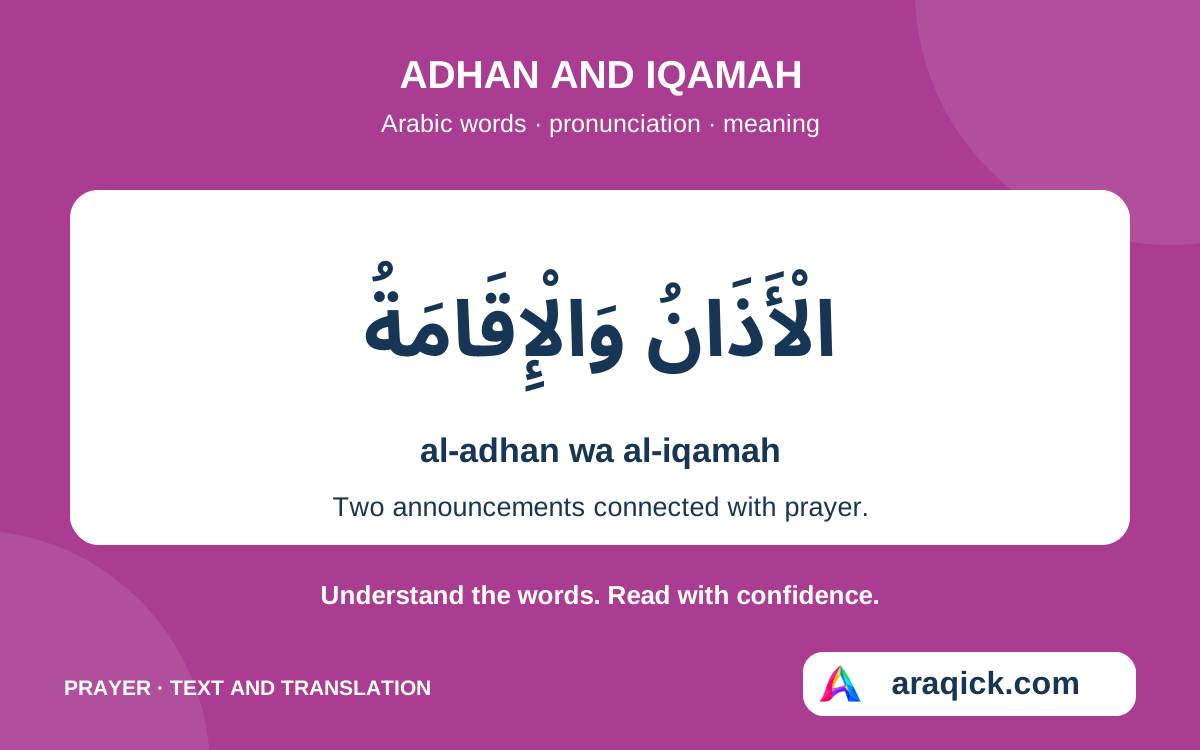
Adhan, أَذَانٌ, is the call announcing prayer; iqamah, إِقَامَةٌ, announces that the congregational prayer is about to begin. They share much of their Arabic wording but differ in purpose and repetition. The two reference tables give complete, clearly identified versions with readings and English meanings.
01What is the difference between adhan and iqamah?
The adhan calls people to prayer. The iqamah marks the imminent start of the congregation. Translating both simply as “the call” hides that difference. Their names describe announcements, while salah names the prayer itself.
The words overlap because both declarations include God’s greatness, the testimonies of faith and an invitation to prayer. The iqamah also contains a statement that prayer is being established. Learning the shared vocabulary first makes the shorter call easier to recognise when you hear it in a mosque.
02A complete adhan: the Abdullah ibn Zayd report
Open the first reference table for the complete fifteen-phrase adhan transmitted in Sunan Abi Dawud 499, from Abdullah ibn Zayd. Every repetition is written separately, in sequence. This identification matters: a learner should know which documented wording a chart represents.
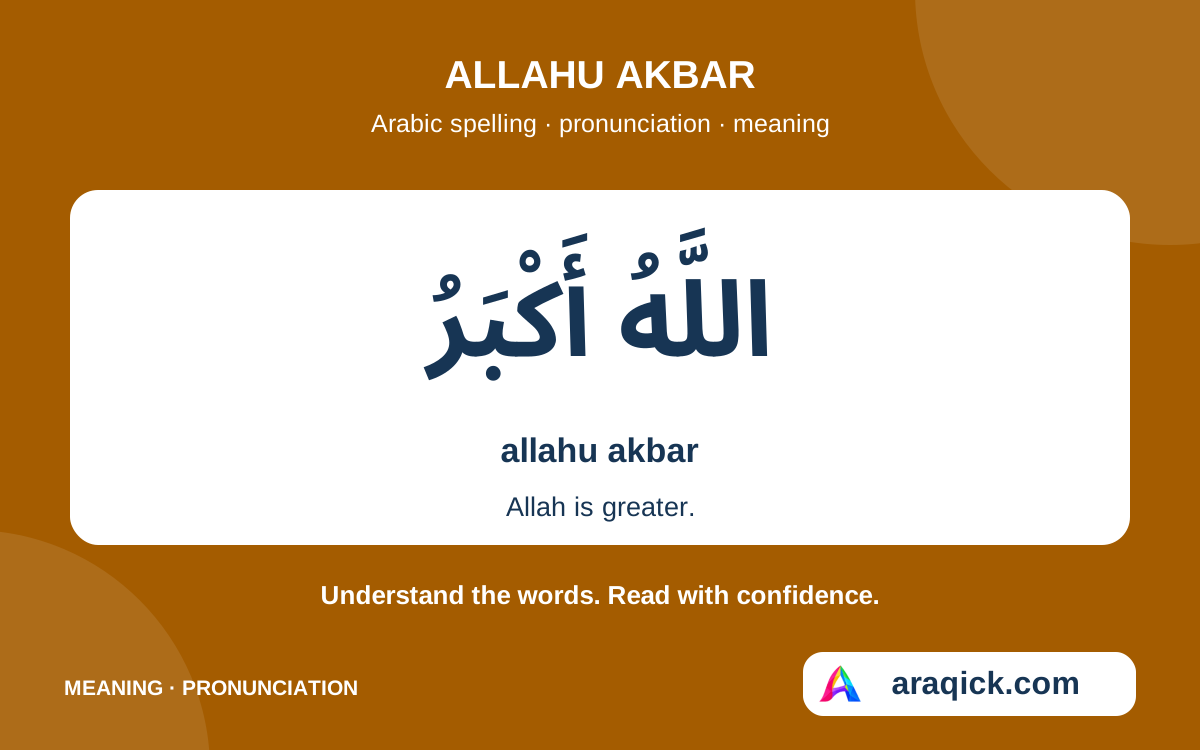
The opening اللَّهُ أَكْبَرُ occurs four times in this version. The two testimonies each occur twice, followed by the two invitations, each twice. Two further declarations of greatness precede the final statement of God’s oneness. Our Allahu akbar guide explores the opening expression.
03A complete iqamah from the same report
The second reference table gives the eleven-phrase iqamah in the same report. The opening declaration of greatness appears twice; each testimony and invitation appears once. قَدْ قَامَتِ الصَّلَاةُ appears twice, then two declarations of greatness and the final statement of God’s oneness complete the text.
A useful translation of that additional phrase is “The prayer is being established.” In this announcement it signals that prayer is commencing. It is not another invitation beginning with hayya. Sahih al-Bukhari 605 also records the distinction between paired adhan wording and the shorter iqamah pattern.
04Understanding hayya, salah and falah
حَيَّ عَلَى الصَّلَاةِ means “Come to prayer”; حَيَّ عَلَى الْفَلَاحِ means “Come to success.” Hayya is an expression of invitation or urging. Falah carries the sense of success or flourishing; it does not mean the prayer time or the name of a prayer.
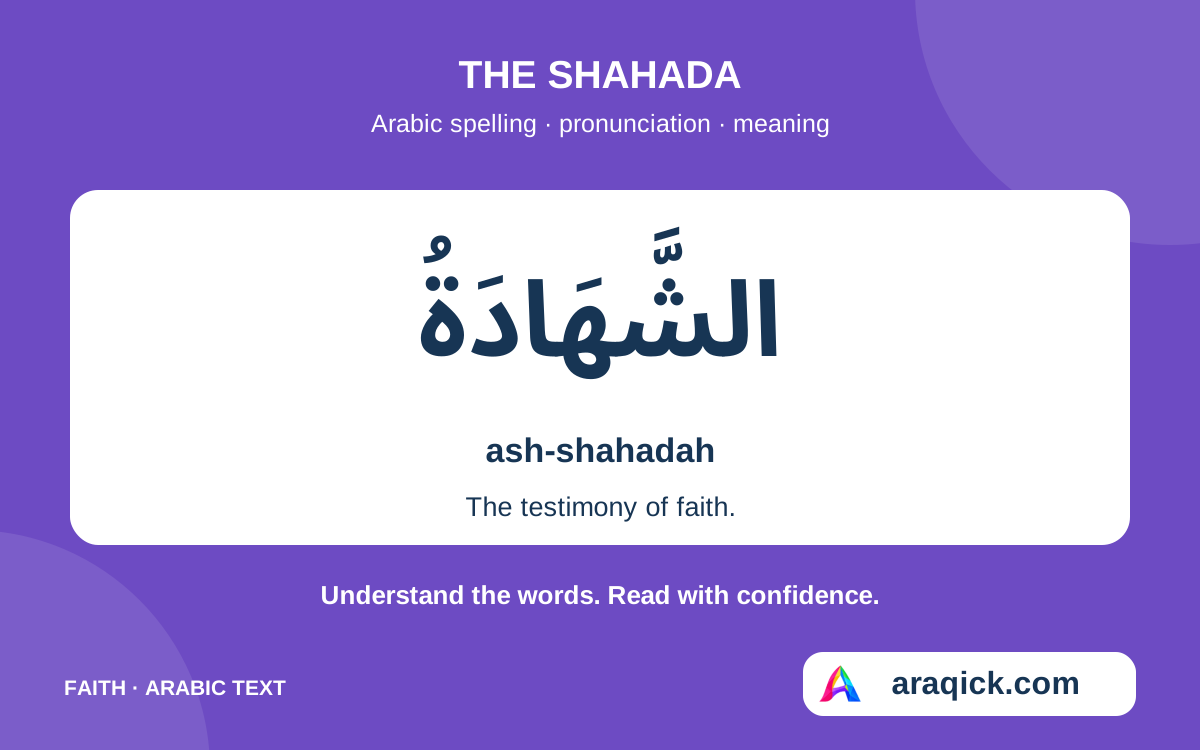
The testimonies begin with ash-hadu, “I bear witness.” The second uses anna before a clause about Muhammad. Our shahada explanation studies their meaning more closely. Notice that Arabic writes separate words where a familiar English spelling may join them. The tables use simple readings with common connected forms, not a substitute for listening.
05The Fajr addition: prayer is better than sleep
The morning adhan includes الصَّلَاةُ خَيْرٌ مِنَ النَّوْمِ, read as as-salatu khayrun minan-nawm: “Prayer is better than sleep.” The phrase is said twice after the invitations to success and before the closing declarations of greatness.
Sunan Abi Dawud 500 documents it in the morning-prayer setting. It is therefore shown here as a labelled Fajr addition, rather than inserted into the general adhan table for every prayer. Recognising the context prevents a learner from treating every line heard at dawn as wording found in every adhan. It is not included in the iqamah table.
06Why might you hear a different version?
The tables present one transmitted pair of texts. Other established narrations differ in repetition. Sahih Muslim 379, for example, records Abu Mahdhurah’s adhan with the testimonies repeated again, a feature known as tarji. Sunan Abi Dawud 501 also reports an iqamah with more repeated phrases.
A different repetition count does not by itself prove a mistake. Keep the source and local practice in view instead of combining several versions into one invented text. When reading the tables, preserve their sequence. To understand how related words develop different meanings, explore our Arabic roots guide.
What to remember
- Adhan announces prayer; iqamah announces that the congregation is about to begin.
- The tables give complete Abdullah ibn Zayd versions from Sunan Abi Dawud 499, with every repetition written out.
- The Fajr addition and other narrated repetition patterns need their own context.
Your reference shelf
Open a guide whenever you need it.
Complete adhan: fifteen phrasesThe Abdullah ibn Zayd version in Sunan Abi Dawud 499. Read each row once in order; Fajr has the additional phrase explained above.
| Line | Arabic | Plain-letter reading | English meaning |
|---|---|---|---|
| 1 | اللَّهُ أَكْبَرُ | Allahu akbar | Allah is greatest. |
| 2 | اللَّهُ أَكْبَرُ | Allahu akbar | Allah is greatest. |
| 3 | اللَّهُ أَكْبَرُ | Allahu akbar | Allah is greatest. |
| 4 | اللَّهُ أَكْبَرُ | Allahu akbar | Allah is greatest. |
| 5 | أَشْهَدُ أَنْ لَا إِلَٰهَ إِلَّا اللَّهُ | ash-hadu an la ilaha illallah | I bear witness that there is no deity but Allah. |
| 6 | أَشْهَدُ أَنْ لَا إِلَٰهَ إِلَّا اللَّهُ | ash-hadu an la ilaha illallah | I bear witness that there is no deity but Allah. |
| 7 | أَشْهَدُ أَنَّ مُحَمَّدًا رَسُولُ اللَّهِ | ash-hadu anna Muhammadan rasulullah | I bear witness that Muhammad is the Messenger of Allah. |
| 8 | أَشْهَدُ أَنَّ مُحَمَّدًا رَسُولُ اللَّهِ | ash-hadu anna Muhammadan rasulullah | I bear witness that Muhammad is the Messenger of Allah. |
| 9 | حَيَّ عَلَى الصَّلَاةِ | hayya alas-salah | Come to prayer. |
| 10 | حَيَّ عَلَى الصَّلَاةِ | hayya alas-salah | Come to prayer. |
| 11 | حَيَّ عَلَى الْفَلَاحِ | hayya alal-falah | Come to success. |
| 12 | حَيَّ عَلَى الْفَلَاحِ | hayya alal-falah | Come to success. |
| 13 | اللَّهُ أَكْبَرُ | Allahu akbar | Allah is greatest. |
| 14 | اللَّهُ أَكْبَرُ | Allahu akbar | Allah is greatest. |
| 15 | لَا إِلَٰهَ إِلَّا اللَّهُ | la ilaha illallah | There is no deity but Allah. |
Complete iqamah: eleven phrasesThe iqamah from the same Abdullah ibn Zayd report. Each repetition has its own row; other narrated patterns also exist.
| Line | Arabic | Plain-letter reading | English meaning |
|---|---|---|---|
| 1 | اللَّهُ أَكْبَرُ | Allahu akbar | Allah is greatest. |
| 2 | اللَّهُ أَكْبَرُ | Allahu akbar | Allah is greatest. |
| 3 | أَشْهَدُ أَنْ لَا إِلَٰهَ إِلَّا اللَّهُ | ash-hadu an la ilaha illallah | I bear witness that there is no deity but Allah. |
| 4 | أَشْهَدُ أَنَّ مُحَمَّدًا رَسُولُ اللَّهِ | ash-hadu anna Muhammadan rasulullah | I bear witness that Muhammad is the Messenger of Allah. |
| 5 | حَيَّ عَلَى الصَّلَاةِ | hayya alas-salah | Come to prayer. |
| 6 | حَيَّ عَلَى الْفَلَاحِ | hayya alal-falah | Come to success. |
| 7 | قَدْ قَامَتِ الصَّلَاةُ | qad qamatis-salah | The prayer is being established. |
| 8 | قَدْ قَامَتِ الصَّلَاةُ | qad qamatis-salah | The prayer is being established. |
| 9 | اللَّهُ أَكْبَرُ | Allahu akbar | Allah is greatest. |
| 10 | اللَّهُ أَكْبَرُ | Allahu akbar | Allah is greatest. |
| 11 | لَا إِلَٰهَ إِلَّا اللَّهُ | la ilaha illallah | There is no deity but Allah. |
Sources & further learning
References for the language explanations and learning guidance.