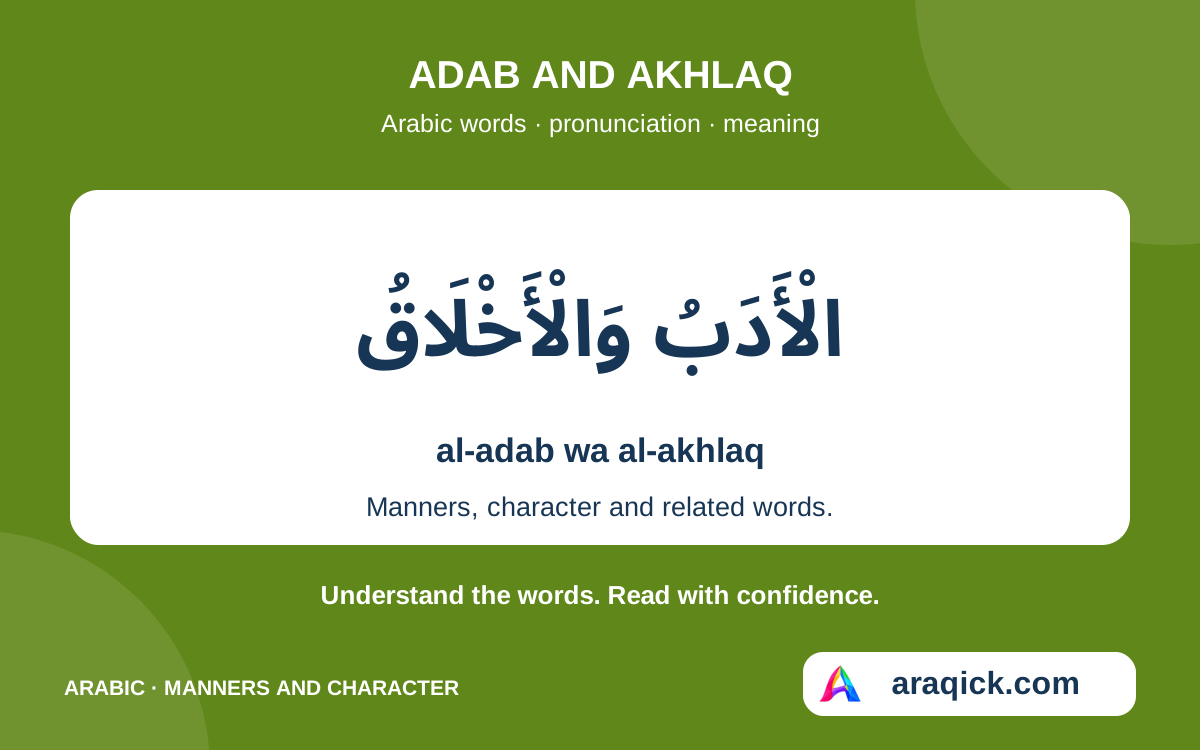
Adab, أَدَبٌ, commonly means manners, cultivated conduct or etiquette. Akhlaq, أَخْلَاقٌ, is the plural of khuluq and concerns character, dispositions or morals. Their meanings overlap: considerate behaviour can express both. Adab also means literature in a different context, so the surrounding words matter.
01Adab describes cultivated conduct
In discussions of behaviour, أَدَبٌ names manners, propriety or cultivated conduct. Listening without interrupting, speaking considerately and treating another person respectfully are useful examples of what a speaker may describe as adab. The word can concern an interaction, an approach to learning, or conduct within a particular setting.
The related description مُؤَدَّبٌ, muaddab, can mean well-mannered or polite. Its doubled d matters in pronunciation. An original classroom example is هُوَ طَالِبٌ مُؤَدَّبٌ: “He is a well-mannered student.” Here the adjective describes the student; it is not the name of a separate school subject.
02Akhlaq is the plural of khuluq
خُلُقٌ, khuluq, means character or disposition; أَخْلَاقٌ, akhlaaq, is its plural. English often uses the singular “character” where Arabic uses this plural. Consequently, translating every occurrence as several separate “characters” would be misleading. Depending on context, “morals” or “ethics” may fit better.
Quran 68:4 praises the Prophet’s character using a form of khuluq. Sahih al-Bukhari 3559 uses a form of akhlaq when describing excellence in character. These examples connect the vocabulary with moral conduct, rather than reducing it to a list of social gestures or a person’s public image.
03The words overlap in real situations
A convenient starting point is to associate adab with appropriate conduct and akhlaq with moral character. That is a learning aid, not an absolute division between outward actions and inward qualities. Writers and teachers can use the terms with different emphases, and both can involve how people treat one another.
Imagine someone returning a borrowed book carefully and on time. A speaker might discuss the courtesy of the interaction using adab, or the reliability it expresses using akhlaq. The same event supports both descriptions. Read the surrounding explanation before deciding which English word best conveys the author’s meaning.
04Khuluq and khalq have different vowels
Compare خُلُقٌ, khuluq, with خَلْقٌ, khalq. The first concerns character or disposition; the second can mean creation or created form. Their root letters are the same, but their vowel patterns differ. A shared root supplies a relationship between words, not permission to exchange their meanings in every sentence.
In khuluq, pronounce two short u vowels. In khalq, the first vowel is a short a and the l has no following vowel before q. Both begin with kh, the friction sound represented by Arabic kha. Our Arabic roots guide explains why the whole pattern matters.
05Adab can also mean literature
الْأَدَبُ الْعَرَبِيُّ, al-adabu-l-arabiyyu in full grammatical reading, means Arabic literature. A course with this title may cover poetry, prose and literary history. Translating it as “Arabic etiquette” simply because adab sometimes means manners would miss its academic meaning. The Cairo Arabic Academy likewise uses adab in the titles of its literary dictionaries.
The plural آدَابٌ, aadaab, also appears in expressions about etiquette, such as آدَابُ الْحِوَارِ, aadaabu-lhiwaar at a pause on the complete phrase: “etiquette of dialogue.” Learn a word together with a typical phrase. That habit reveals meanings that a single English gloss cannot cover.
06Read the phrase before choosing a translation
Start with the topic. A discussion of poems suggests the literary sense of adab; instructions about respectful conversation suggest etiquette. A description of honesty, generosity or reliability may use akhlaq. Then inspect the exact word form and its vowel marks rather than relying on a familiar English spelling.
For pronunciation, adab has short a vowels, while akhlaaq has a long aa in its second syllable. Aadaab begins with a long aa as well. The tables show noun forms with grammatical endings; final un is usually absent at a pause. Compare the character vocabulary with sabr and explore the form changes in Arabic plurals.
What to remember
- Adab can mean manners or literature, depending on context.
- Akhlaq is the plural of khuluq and concerns character or morals.
- Khuluq and khalq share root letters but have different vowels and meanings.
Your reference shelf
Open a guide whenever you need it.
Words and word formsUse the vowels to distinguish character, creation, manners and a person’s description.
| Arabic | Pause reading | Meaning |
|---|---|---|
| أَدَبٌ | adab | Manners; cultivated conduct; literature in context |
| آدَابٌ | aadaab | Manners or rules of etiquette; plural form |
| خُلُقٌ | khuluq | Character; disposition |
| أَخْلَاقٌ | akhlaaq | Character; morals; plural of khuluq |
| خَلْقٌ | khalq | Creation; created form |
| مُؤَدَّبٌ | muaddab | Well-mannered; polite |
Context changes the translationThese are vocabulary examples, not quotations from scripture.
| Arabic | Meaning | Context |
|---|---|---|
| آدَابُ الْحِوَارِ | Etiquette of dialogue | How people speak and listen |
| الْأَدَبُ الْعَرَبِيُّ | Arabic literature | Poetry, prose and literary study |
| حُسْنُ الْخُلُقِ | Good character | A moral description |
| عِلْمُ الْأَخْلَاقِ | Ethics | Study of moral conduct |
Sources & further learning
References for the language explanations and learning guidance.