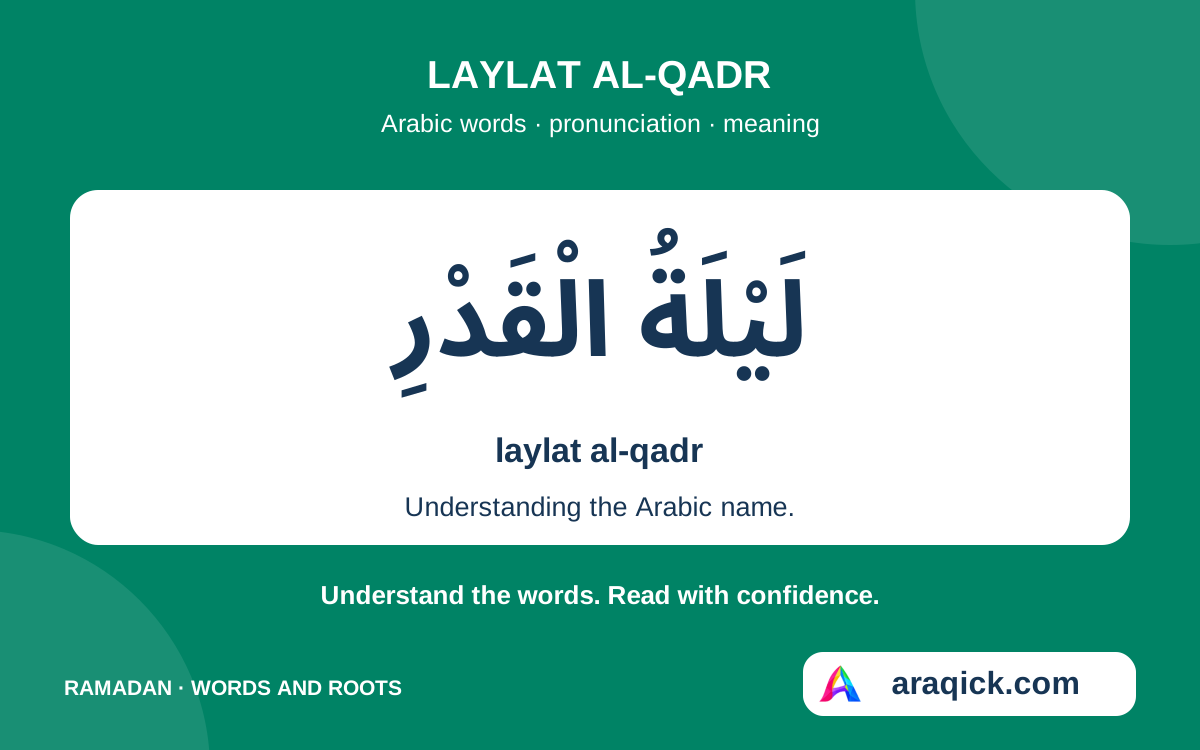
Laylat al-Qadr, لَيْلَةُ الْقَدْرِ, is the Arabic name commonly translated as the Night of Decree or Night of Power. Laylah means “night”; qadr carries meanings connected with measure, decree and worth. Quran 97 names this night and describes its special significance. The English translations highlight different aspects of the Arabic name.
01Start with laylah, the word for a night
لَيْلَة, laylah, names a night. The related لَيْل, layl, means night or nighttime more generally. In the name Laylat al-Qadr, laylah is joined to a following noun. Its final ta marbutah, ة, is then pronounced as t, which explains the familiar spelling laylat.
The ay in laylah is a vowel combination, as in a careful reading of layl, rather than a long ee. The final h in the plain-letter standalone spelling is a pause-reading aid. It does not mean the word contains the same final consonant in every grammatical setting.
02Qadr has a range of related meanings
The root letters ق د ر connect words associated with measuring, determining, ability and worth. A root is a family connection, rather than one definition that can replace every word in the family. Here the noun is قَدْر, qadr, with a short a and no vowel between d and r.
Night of Decree and Night of Power are established English renderings; Quran.com’s Clear Quran translation uses Night of Glory. Ibn Kathir’s tafsir uses the Decree rendering and discusses the night’s high standing. Read these as translation choices, rather than several different Arabic nights.
03The two nouns form an idafa
لَيْلَةُ الْقَدْرِ is an idafa: a construction joining two nouns, often translated with “of.” The article الـ belongs to qadr, the second noun. The first noun does not take its own article in this construction. Together, the words identify the particular night.
In a fully inflected standalone citation, the reading is laylatu-lqadr at a pause. Common English writing shortens this to Laylat al-Qadr or Laylatul Qadr. A preposition can change the first noun’s ending: فِي لَيْلَةِ الْقَدْرِ is fii laylati-lqadr, “on the Night of Qadr.” See our idafa explanation.
04Find the name in Surah al-Qadr
Surah al-Qadr is chapter 97 and has five verses. Its opening associates the night with the Quran’s sending down. Verse 3 describes its value by comparing it favourably with a thousand months; later verses mention the descent of angels by their Lord’s permission and peace continuing until dawn.
These are descriptions of the night’s significance, not dictionary definitions of every syllable in its name. To distinguish the chapter title Al-Qadr from the longer expression Laylat al-Qadr, consult the surah names reference. Keep the chapter number and the Arabic name together when taking notes.
05Connect the night with its Ramadan context
Quran 2:185 connects Ramadan with the Quran’s revelation, while 44:3 refers to a blessed night. Ibn Kathir’s commentary on chapter 97 connects these passages when explaining Laylat al-Qadr. This provides context beyond the two-word name alone.
Sahih al-Bukhari 2020 reports seeking the night during Ramadan’s last ten nights. The Arabic name itself does not specify a numbered calendar date. Reading “Night of Decree” therefore tells you the name’s meaning, rather than which Gregorian evening it falls on in a particular year. Our Hijri months guide places Ramadan in the calendar.
06Practise the sounds and keep meaning with context
Read the name in stages: laylah, qadr, then laylat al-qadr. Keep qaf distinct from an ordinary English k: it is articulated farther back. The l in al-qadr remains audible because qaf is a moon letter. Avoid adding a long aa inside qadr; it is not qaadar.
When comparing English versions, record the Arabic phrase once and place the translation beside it. Use translation, transliteration and tafsir for their different purposes: meaning in another language, a reading aid and explanation. Together they help you understand the expression without asking one short English title to convey every nuance.
What to remember
- Laylah means a night, and its ta marbutah is pronounced t in Laylat al-Qadr.
- Qadr has related senses that English translations express as Decree, Power or Glory.
- Chapter 97 supplies the night’s Quranic context; the name alone does not give a fixed calendar date.
Your reference shelf
Open a guide whenever you need it.
The name and its grammarConnected readings show the noun endings; the last word is read at a pause.
| Arabic | Plain-letter reading | Meaning or use |
|---|---|---|
| لَيْلَة | laylah | A night; standalone pause form |
| لَيْل | layl | Night; nighttime |
| قَدْر | qadr | Measure, worth or decree, according to context |
| لَيْلَةُ الْقَدْرِ | laylatu-lqadr | The Night of Qadr; a standalone citation |
| فِي لَيْلَةِ الْقَدْرِ | fii laylati-lqadr | On the Night of Qadr |
| سُورَةُ الْقَدْرِ | suuratu-lqadr | Surah al-Qadr; chapter 97 |
Vocabulary for reading the contextThese are word labels found in, or useful for discussing, the cited Quranic context.
| Arabic | Plain-letter reading | Meaning or use |
|---|---|---|
| قُرْآن | quraan | Quran; the revealed scripture |
| رَمَضَان | ramadaan | Ramadan |
| لَيْلَةٍ مُبَارَكَةٍ | laylatin mubaarakah | A blessed night; inflected after fii in Quran 44:3 |
| مَلَائِكَة | malaaikah | Angels |
| سَلَام | salaam | Peace |
| فَجْر | fajr | Dawn |
| شَهْر | shahr | A month |
Sources & further learning
References for the language explanations and learning guidance.