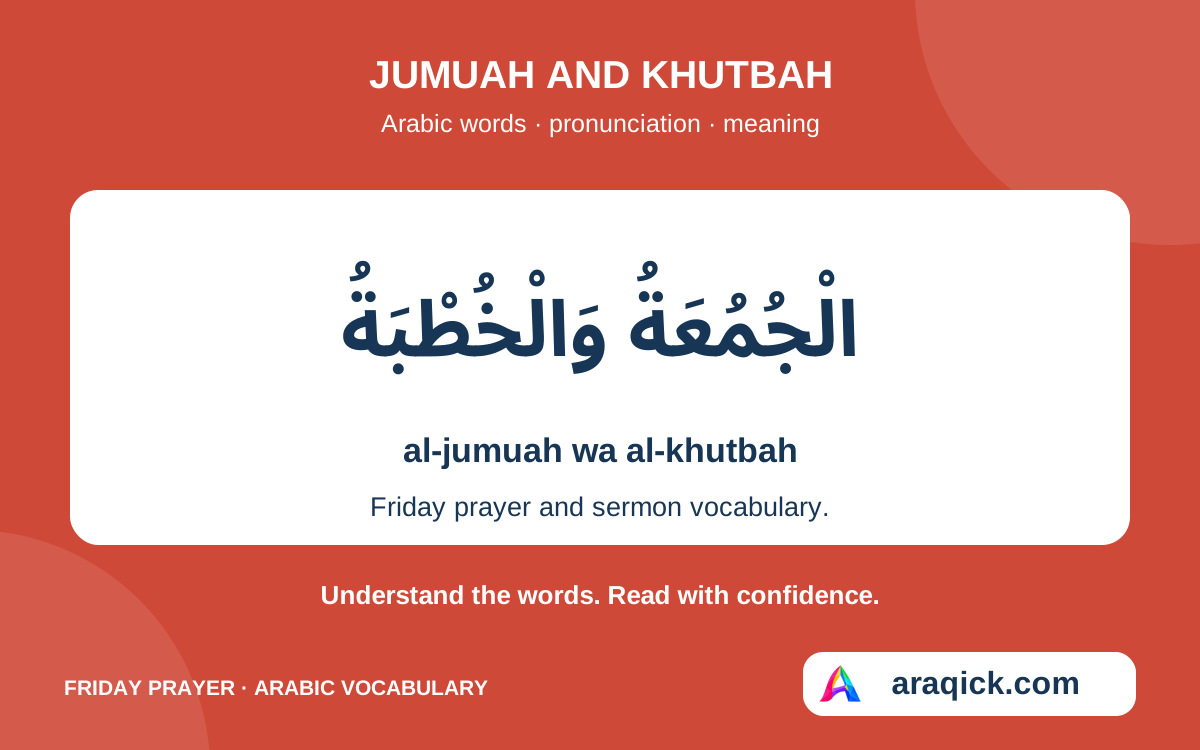
Jumuah, جُمُعَةٌ, names Friday and, in an appropriate context, the Friday congregational prayer. Khutbah, خُطْبَةٌ, means a sermon or public address. The Friday khutbah is associated with Jumuah, but the two words are not interchangeable: one can identify the day or prayer, while the other identifies the address.
01Jumuah names Friday and can identify its prayer
The expression يَوْمُ الْجُمُعَةِ means “Friday,” literally the day of Jumuah. Quran 62:9 uses the day expression in its discussion of the call to prayer. In that setting, the surrounding words make the Friday connection explicit.
Jumuah can also be used in context for the Friday prayer itself. Sahih al-Bukhari 941 describes praying Jumuah and then resting. A calendar label therefore refers to a day, while a sentence about offering Jumuah refers to prayer. This is contextual shorthand, rather than evidence that the words day and prayer have become identical in Arabic.
02The root connects Jumuah with gathering
Jumuah belongs to the root ج م ع, associated with gathering and bringing together. A related word is جَمَاعَةٌ, jamaa'ah, meaning a group or congregation. The shared root offers a useful memory link for the weekly gathering.
A root is a connection between words, not a complete translation of each one. Jumuah still names Friday in a date, and jamaa'ah can describe a group outside a Friday setting. See Arabic roots and dictionary forms for how a word’s pattern and sentence help narrow its meaning. Do not translate every member of this family with one English label.
03Khutbah means the address, not the whole prayer
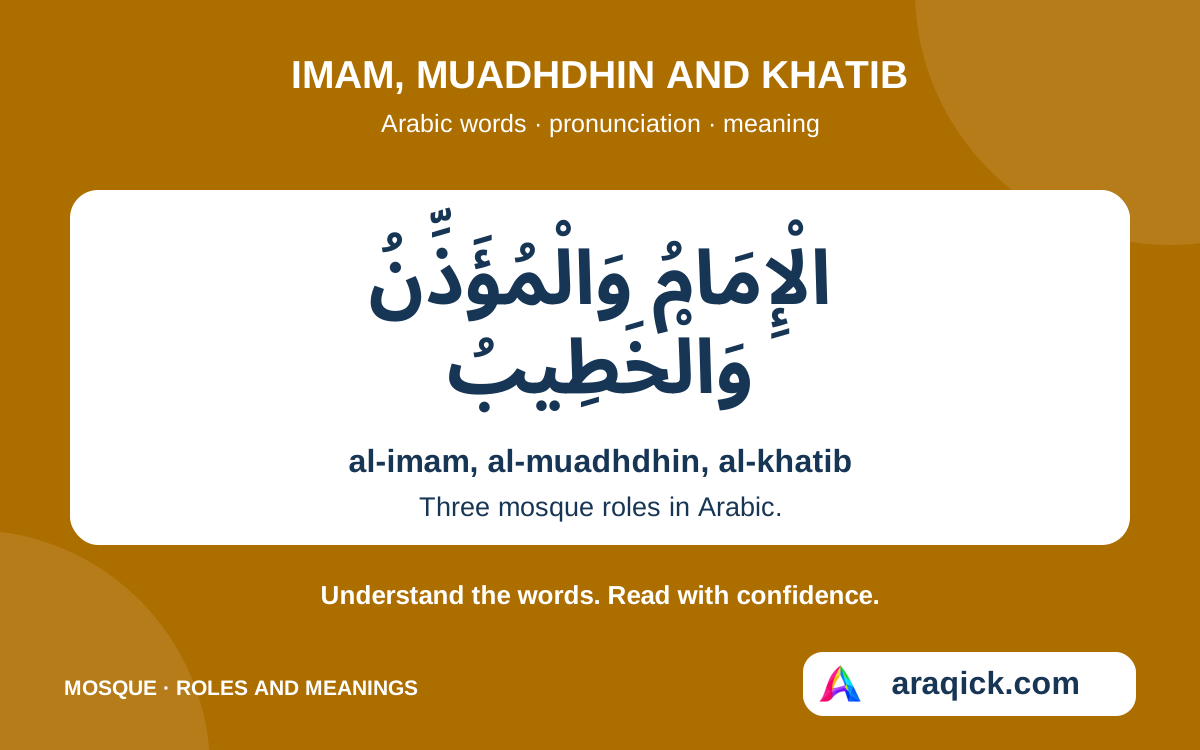
A khutbah, خُطْبَةٌ, is a sermon or public address. In Friday vocabulary, it identifies the sermon connected with the congregational prayer. The related person word is خَطِيبٌ, khatiib, the speaker. Our guide to mosque roles explains that distinction.
Sahih al-Bukhari 920 describes the Prophet delivering the address while standing, sitting and standing again. This provides a textual example of the sermon vocabulary. The language point is the difference between the spoken address and the prayer; learning the noun does not supply a complete set of instructions for conducting either one.
04Pay attention to short vowels and throat sounds
Read jumuah approximately ju-mu-ah, with short vowels and an ayn between u and the final a. The English spelling Jumu’ah sometimes marks that consonant with an apostrophe. It is not simply a long oo sound. The final h in this pause spelling represents the ending ة.
Khutbah begins with short u: khut-bah. Compare خِطْبَةٌ, khitbah, which has short i and refers to a marriage proposal. The consonant spelling is the same without vowel marks, so context matters. The Cairo Arabic Academy dictionary distinguishes these meanings. The opening kh and the emphatic Arabic t also need listening practice.
05Learn useful Friday phrases as whole units
صَلَاةُ الْجُمُعَةِ means “the Friday prayer,” and خُطْبَةُ الْجُمُعَةِ means “the Friday sermon.” In these linked noun phrases, the final taa marbutah of the first word is pronounced t. That is why the connected reading begins salaatu or khutbatu, rather than simply salaah or khutbah.
The plural of khutbah is خُطَبٌ, khutab at a pause. It is different from khatib’s plural, خُطَبَاءُ, khutabaa' with a final hamza. One counts addresses; the other counts speakers. The reference tables put these similar-looking forms beside their meanings for comparison.
06Let the sentence identify the intended meaning
A newly written example is هَذِهِ خُطْبَةٌ قَصِيرَةٌ, “This is a short sermon.” A timetable heading saying Jumuah may instead refer to the prayer arrangement. Neither usage changes khutbah into a name for the day.
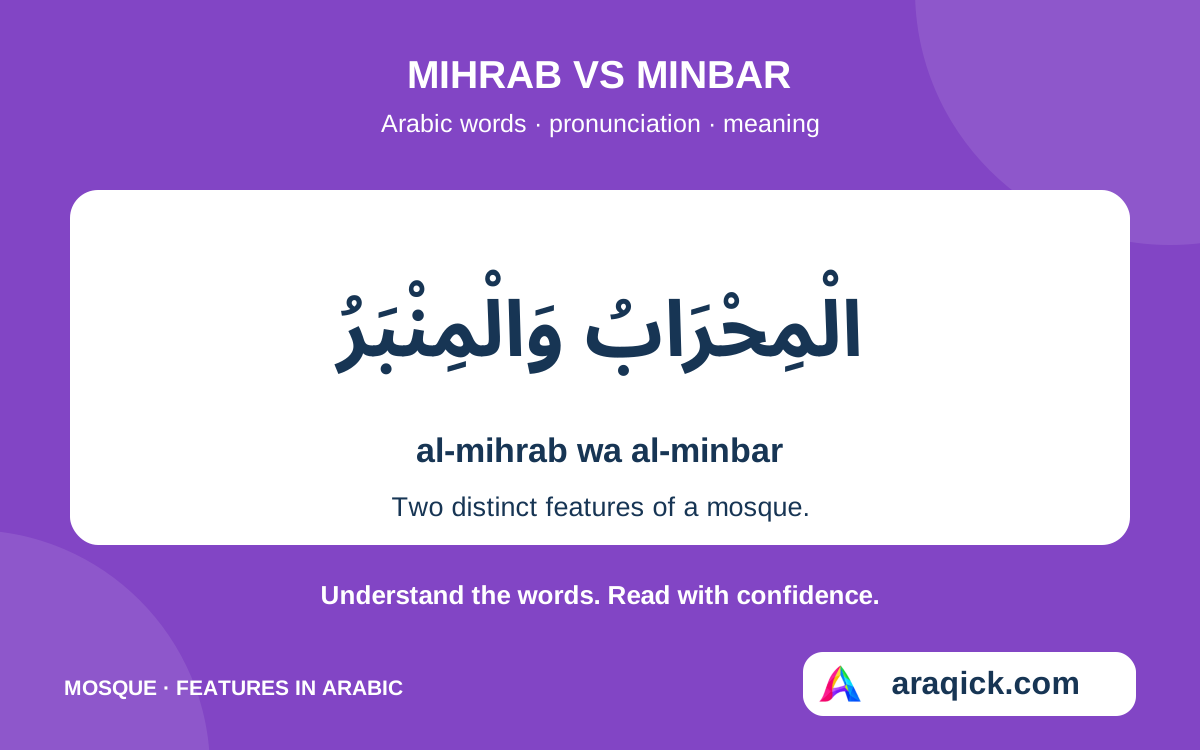
When reading a notice, identify whether it gives a date, names a prayer or describes a speech. Keep related terms such as adhan, imam and minbar in their own categories. Our mihrab and minbar guide supplies the place vocabulary. Using the complete phrase is often clearer than guessing what a single romanised word means on its own.
What to remember
- Jumuah can name Friday or its prayer, depending on the surrounding words.
- Khutbah names a sermon; khatib names the person delivering it.
- Vowel marks distinguish khutbah from khitbah, and linked noun phrases reveal the final t.
Your reference shelf
Open a guide whenever you need it.
Friday phrases with connected readingsThese formal readings retain the first noun’s linking vowel and pause on the final word.
| Arabic | Plain-letter reading | Meaning |
|---|---|---|
| جُمُعَةٌ | jumuah | Friday; its prayer in context |
| يَوْمُ الْجُمُعَةِ | yawmuljumuah | Friday; the day of Jumuah |
| صَلَاةُ الْجُمُعَةِ | salaatuljumuah | The Friday prayer |
| خُطْبَةُ الْجُمُعَةِ | khutbatuljumuah | The Friday sermon |
| هَذِهِ خُطْبَةٌ قَصِيرَةٌ. | haadhihi khutbatun qasiirah | This is a short sermon. |
Similar spellings with different jobsRead the vowels and decide whether the word names a speech, a speaker or a group.
| Arabic | Pause reading | Meaning |
|---|---|---|
| خُطْبَةٌ | khutbah | Sermon or public address |
| خِطْبَةٌ | khitbah | Marriage proposal |
| خُطَبٌ | khutab | Sermons or addresses |
| خَطِيبٌ | khatiib | Sermon speaker; public speaker in context |
| خُطَبَاءُ | khutabaa' | Plural of khatib; retain the final hamza |
| جَمَاعَةٌ | jamaa'ah | Group or congregation; contains ayn |
Sources & further learning
References for the language explanations and learning guidance.