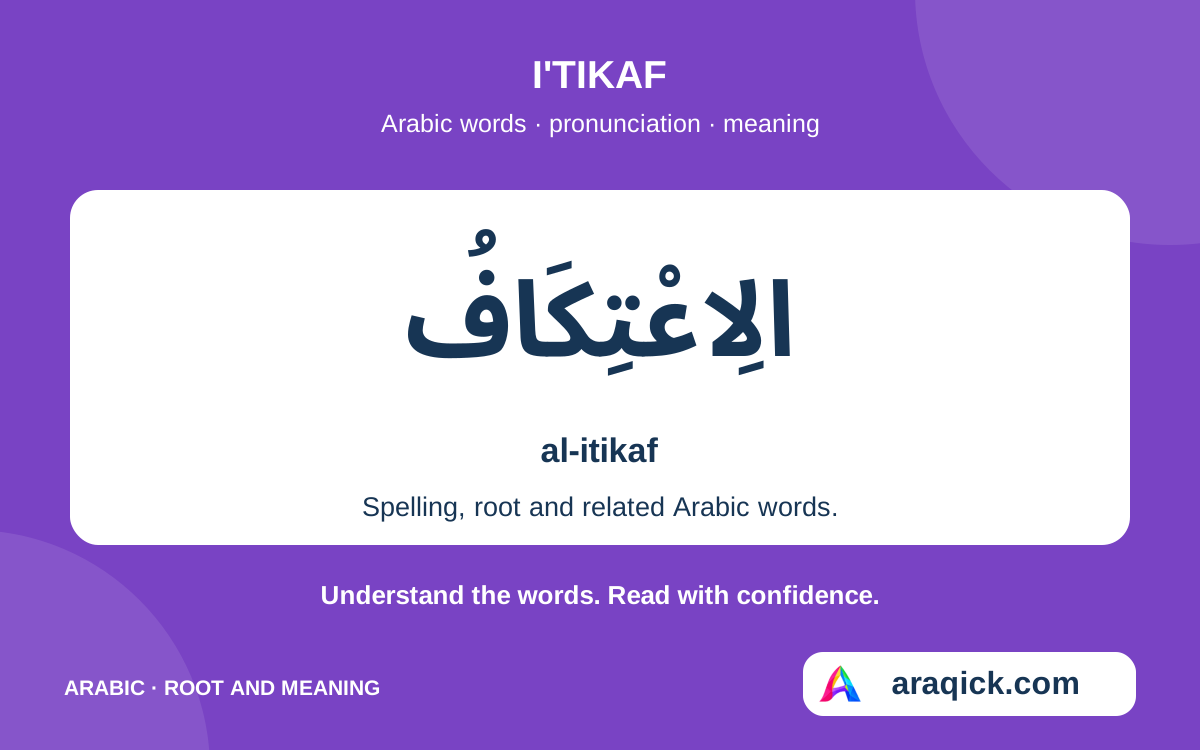
اِعْتِكَافٌ (i'tikaf) commonly means a devotional retreat in a mosque. Its root is ع ك ف (ayn, kaf, fa), associated with remaining or being devoted. Learn the noun, its pronunciation and related forms without confusing the name with a fixed duration.
01What does i'tikaf mean?
In Islamic usage, اِعْتِكَافٌ names a devotional retreat associated with remaining in a mosque for worship. English translations include retreat, seclusion and staying for devotion. No single English label captures every detail, so learning the Arabic noun helps you recognise the practice without depending on one translation.
The name describes a practice, not a special phrase spoken as a greeting. In a mosque notice, it may appear beside a date or an application heading. The familiar English spellings itikaf, i'tikaf and i‘tikaf all point to this Arabic word. They are spelling conventions rather than separate activities.
02How do you read the Arabic spelling?
Read اِعْتِكَاف with a short initial i, a short i after t and a long aa before f: a simplified aid is i-ti-kaaf. That aid hides ayn, the throat consonant immediately after the opening i. The apostrophe in i'tikaf often signals this ayn; it does not mean that a letter is missing from Arabic.
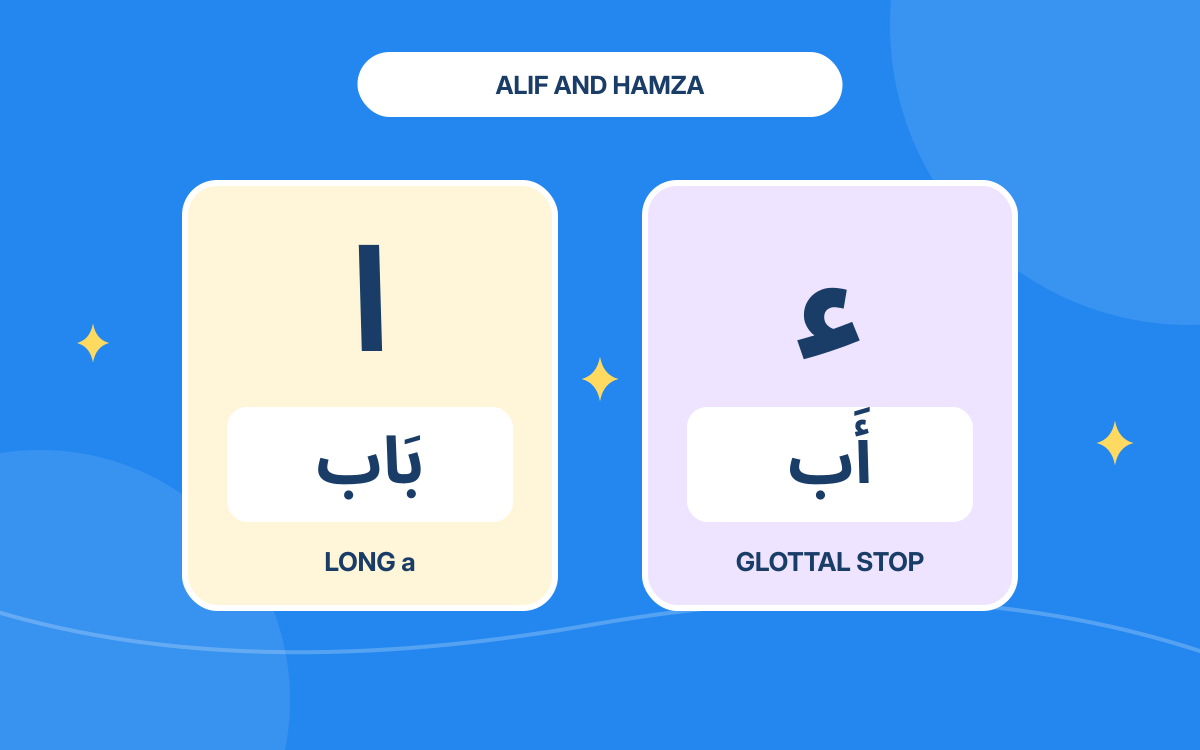
The initial alif carries hamzat al-wasl. Its opening vowel is heard when starting the word, while connected speech can join it to the preceding word. The written form stays recognisable. Our alif and hamza guide explains why an initial vowel does not always behave identically in speech.
03Which letters form the root?
The three root letters are ع ك ف: ayn, kaf and fa. The Quranic Arabic Corpus groups related forms around remaining, adhering or being devoted, with the specific sense determined by context. The t in i'tikaf belongs to a derived pattern; it is not a fourth root letter.
The verb اِعْتَكَفَ (itakafa) belongs to Form VIII, and اِعْتِكَاف is its verbal noun. Compare the pattern اِفْتِعَال with the actual word: the root letters occupy the pattern's three slots. Our Arabic roots guide develops this useful dictionary skill.
04Where does the word family appear?
Quran 2:187 uses عَاكِفُونَ (aakifuun) when describing people staying in mosques for devotion. This is a related participle, not the noun i'tikaf itself. Recognising the root helps connect the forms while keeping their grammar distinct.
Aisha's report in Sahih al-Bukhari 2026 describes the Prophet's i'tikaf during Ramadan's final ten days and mentions his wives continuing the practice after him. This explains the word's strong Ramadan association. It does not make “ten days” part of the noun's literal meaning. Keep the vocabulary definition separate from questions about a particular retreat's duration.
06Use the noun in a simple sentence
قَرَأْتُ عَنِ الِاعْتِكَافِ.
qaratu ani litikaaf
I read about i'tikaf.
This original learning example describes reading about the practice. The preposition before the noun supplies a grammatical link; it does not turn the noun into an instruction. In connected reading, the article and initial hamzat al-wasl join the surrounding sounds.
For a first review, identify the root, the extra t and the long aa. Then distinguish the activity from its participant. These small checks make a mosque announcement or Ramadan discussion easier to follow, even before you study longer religious texts.
What to remember
- I'tikaf commonly names a devotional retreat in a mosque.
- Its root is ayn-kaf-fa; the t belongs to the Form VIII pattern.
- Mutakif identifies someone observing i'tikaf, while itikaf names the activity.
Your reference shelf
Open a guide whenever you need it.
I'tikaf word-family chartSeparate the practice, verb and participant forms.
| Arabic | Plain reading | Meaning in this setting |
|---|---|---|
| اِعْتِكَافٌ | itikaaf | Devotional retreat; the activity |
| اِعْتَكَفَ | itakafa | He observed i'tikaf |
| مُعْتَكِفٌ | mutakif | Male person observing i'tikaf |
| مُعْتَكِفَةٌ | mutakifah | Female person observing i'tikaf |
| عَاكِفُونَ | aakifuun | Those remaining for devotion in Quran 2:187 |
These plain readings omit detailed case endings and do not fully represent ayn.
Spelling and context checklistUse these checks when reading a retreat notice or an Arabic passage.
| Check | What to notice |
|---|---|
| Root | ع ك ف; the t is added by the pattern. |
| Long vowel | The aa before final f in itikaaf. |
| Person or activity | Mutakif names a participant; itikaaf names the practice. |
| Context | A Ramadan association does not make the month or a duration part of the literal noun. |
Sources & further learning
References for the language explanations and learning guidance.