At an airport, a few clear questions can help you find the gate, ask about departure and locate your bag. Start with two document phrases, then practise six questions in Modern Standard Arabic. Ayna means where, ma means what and mata means when in these models.
01Show the right document
هَذَا جَوَازُ سَفَرِي
hadha jawaz safari
This is my passport.
هَذِهِ بِطَاقَةُ الصُّعُود
hadhihi bitaqat assuud
This is the boarding pass.
The passport identifies the traveller; the boarding pass relates to boarding a flight. Hadha matches the masculine noun jawaz, while hadhihi matches the feminine noun bitaqa. The choice follows the document word, not the traveller’s gender.
02Ask where, or ask which number
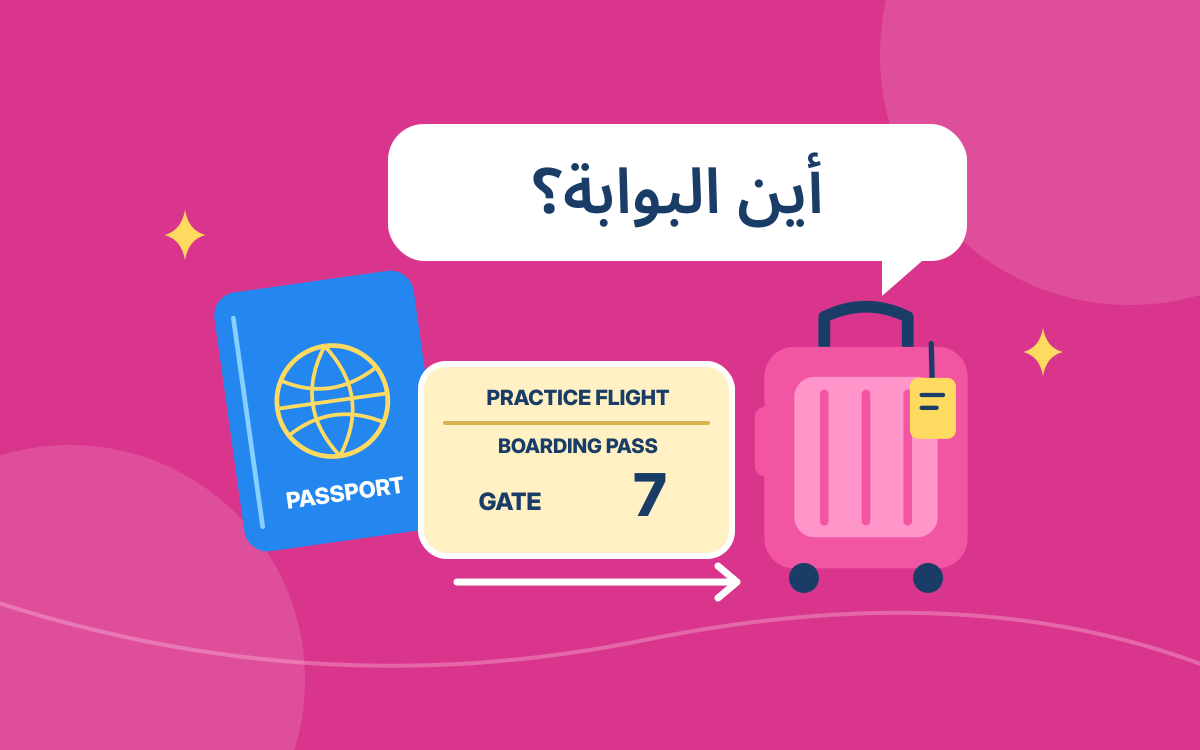
أَيْنَ الْبَوَّابَة؟
ayna albawwaba
Where is the gate?
مَا رَقْمُ الْبَوَّابَة؟
ma raqm albawwaba
What is the gate number?
Albawwaba means the gate; raqm means number. The first question asks for a location. The second asks for the identifying number.
Our fictional practice board shows gate 7. Keep that number separate from the time beside it. Knowing the gate number and knowing how to reach the gate are different pieces of information.
03Ask when the plane departs
مَتَى تُغَادِرُ الطَّائِرَة؟
mata tughadiru attaira
When does the plane depart?
Mata asks about time. Tughadiru means departs, and attaira means the plane. Learn the whole question as a useful travel phrase.
The fictional board shows a scheduled departure of 14:30. This is the answer for our practice flight. Compare the information you need before choosing ma for a number, ayna for a place, or mata for time.
04Find your bag or the collection area
أَيْنَ حَقِيبَتِي؟
ayna haqibati
Where is my bag?
أَيْنَ مِنْطَقَةُ اسْتِلَامِ الْأَمْتِعَة؟
ayna mintaqat istilam alamtia
Where is the baggage claim area?
Haqibati means my bag. The longer question names the area where passengers collect baggage: mintaqat istilam alamtia. Practise the phrase in small parts, then say it together.
Use the first question for your own bag. Use the second when you need to find the collection area itself. The suitcase and carousel illustrate those two connected ideas.
05Ask for the exit
أَيْنَ الْمَخْرَج؟
ayna almakhraj
Where is the exit?
Almakhraj means the exit. Keep ayna at the beginning and replace the place you are asking about. The same short question shape now works for the gate and the exit.
Imagine the journey in three moments: present your documents, find the gate, then collect your bag after arrival. Choose a phrase for each moment. These eight sentences do not change according to whether the person you ask is a man or a woman.
What to remember
- Use the document phrase that matches a passport or a boarding pass.
- Ayna asks where, ma asks what, and mata asks when in these models.
- Distinguish your bag from the baggage claim area when asking for help.
Your reference shelf
Open a guide whenever you need it.
Keep all eight airport phrases nearbyOpen the complete document, gate, time, baggage and exit phrase list
| Meaning | Arabic | Plain reading aid |
|---|---|---|
| 1. This is my passport | هَذَا جَوَازُ سَفَرِي | hadha jawaz safari |
| 2. This is the boarding pass | هَذِهِ بِطَاقَةُ الصُّعُود | hadhihi bitaqat assuud |
| 3. Where is the gate? | أَيْنَ الْبَوَّابَة؟ | ayna albawwaba |
| 4. What is the gate number? | مَا رَقْمُ الْبَوَّابَة؟ | ma raqm albawwaba |
| 5. When does the plane depart? | مَتَى تُغَادِرُ الطَّائِرَة؟ | mata tughadiru attaira |
| 6. Where is my bag? | أَيْنَ حَقِيبَتِي؟ | ayna haqibati |
| 7. Where is the baggage claim area? | أَيْنَ مِنْطَقَةُ اسْتِلَامِ الْأَمْتِعَة؟ | ayna mintaqat istilam alamtia |
| 8. Where is the exit? | أَيْنَ الْمَخْرَج؟ | ayna almakhraj |
These are Modern Standard Arabic models. Plain reading aids simplify Arabic sounds and some grammatical endings. The gate and time in this lesson belong only to the fictional practice board.
Sources & further learning
References for the language explanations and learning guidance.